BUILT WITH Qt

Clarius

Smart Portable Handheld Ultrasound 

A Flexible Framework Rich in Capabilities and Open to Third-Party Integrations 

25%

Shorter time to market

500h

Reduced dev effort

1000s

Hours saved on AI development

1%

Native Code (i.e. 99% Qt only)

Clarius, a Canadian-based company with decades of experience in the medical imaging industry, produces intuitive, high-resolution wireless ultrasound.

In Clarius' handheld devices, AI-powered smart technology simplifies scanning, enhances accuracy, speeds up decisions, and ultimately delivers care faster and more confidently.

Learn how Qt helps Clarius with cross-platform development and integration of AI capabilities. 

Qt Solution Highlights

Secure wireless data streaming and cloud connectivity using REST APIs and JSON

Extensive use of QRhi to enable the development and deployment of Clarius AI solutions

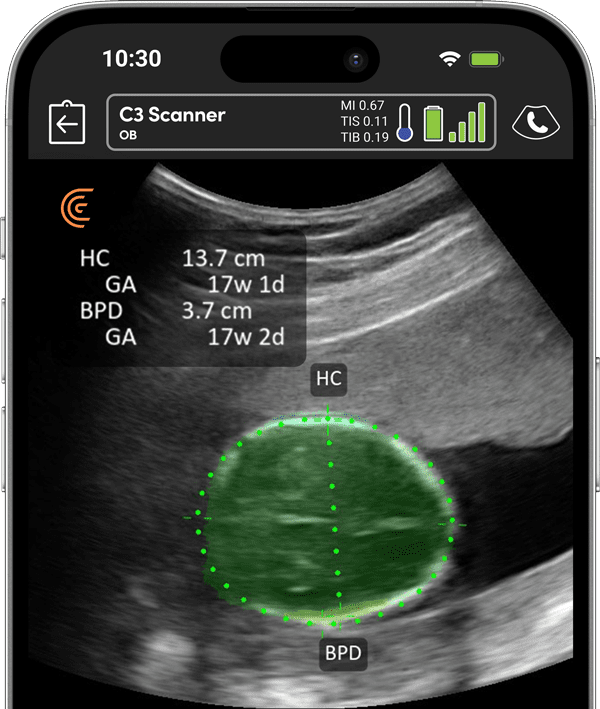
Qt OpenGL for easy rendering of the AI images interpolated with the ultrasound visuals

Cross-platform Companion App created entirely with Qt

Secure software updates to future-proof products

Assuming that, without Qt, a dedicated resource would have to be used for cross-platform adaptation, I think in 2 years we saved 6 months of the development cycle and about 500 hours of development time.

Kris Dikie, CTO, Clarius

Stages_20

Efficient Cross-Platform Development 

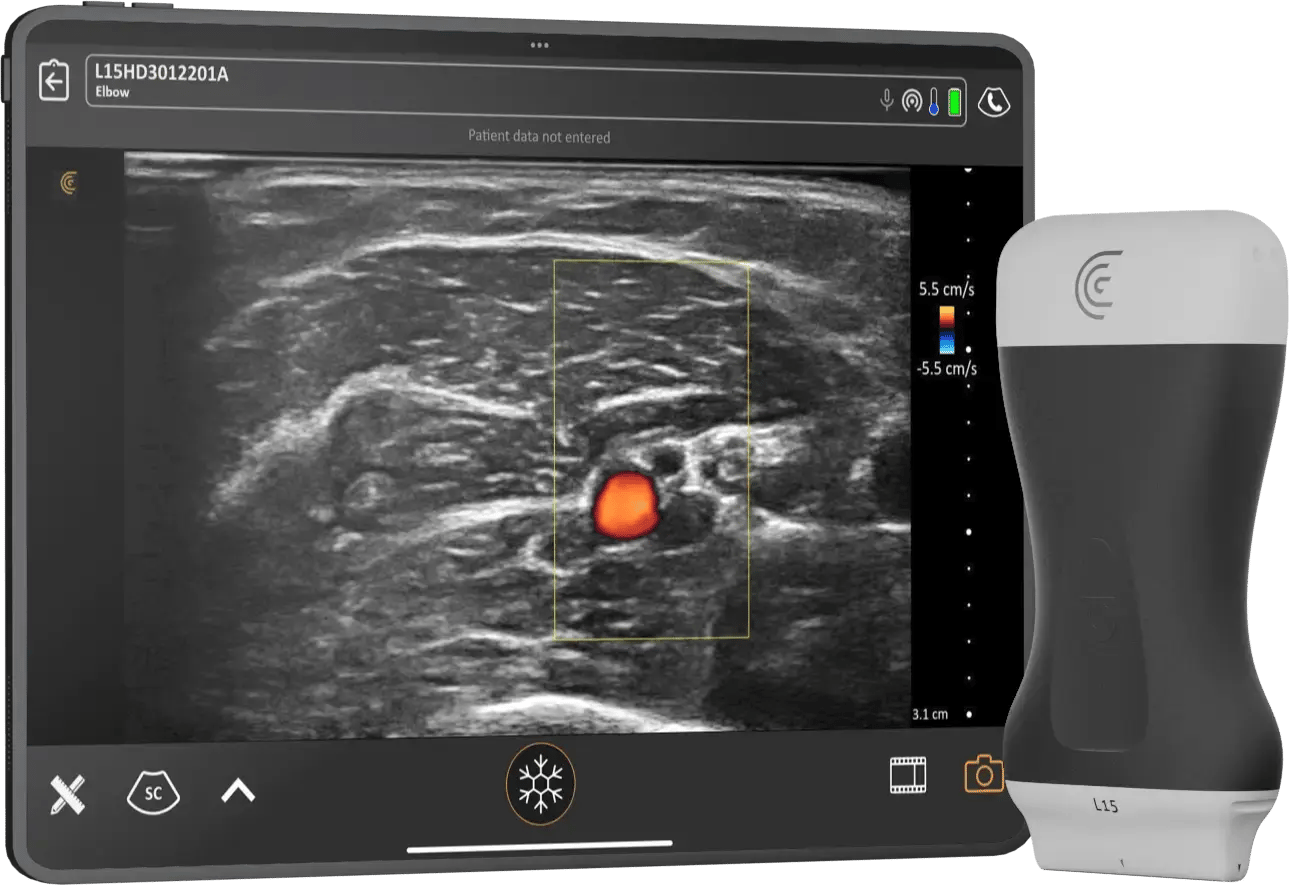
The Clarius ecosystem consists of embedded firmware, a mobile App that runs on Android and iOS, and a cloud-based platform for storage, reporting, and telemedicine. For mobile app development, Clarius selected Qt for the ability to work on a single codebase to deploy a feature-filled, yet intuitive, UI across a variety of platforms.

 Only about 1% of our App codebase is native (i.e. Java or Swift/Objective C), meaning we can do a lot with Qt. Kris states.

The team leveraged QML for front-end development from day one, as it allows rapid prototyping, early testing, and quick iterations. The ready-made intuitive and responsive controls cover recurring UX use cases. Thus, as their adoption speeds up development, it also ensures high quality out of the box.

QML runs 100% of our App's front-end, and all our developers use it to prototype and test new UI components and features. He continues.


Read More about Qt in Medical

Our App is 100% Qt written and performs all of our HMI functionality. It also integrates with many core libraries that run many important algorithms after receiving the ultrasound image over Wi-Fi,  including: OpenGL for image interpolation and TensorFlow for real-time AI model processing.

Kris Dikie, CTO, Clarius

iphone-ob-ai

Ready-Made Functionality 

In addition to the ability to develop for multiple target platforms from a single codebase, Qt provides Clarius team with a rich set of ready-made functionalities beyond the UI layer. These include networking and connectivity functionality such as Bluetooth and Wi-Fi support, and cloud connectivity.

We benefited from the baked-in cloud connectivity options found in Qt, enabling connection with AWS using REST APIs and JSON. Says Kris.

In addition to the extensive use of Qt libraries, the ability to integrate with third-party technology is highly valued at Clarius.

We used the Boost C++ libraries for communication between the app and the device, and when setting up our DICOM image formation export functionality. He continues.

Such flexibility and openness to third-party integrations also make Qt suitable for expanding the App ecosystem with latest tech innovations, like AI. 

Read about Qt Connectivity and Networking Capabilities

QRhi has saved us thousands of hours of work in writing platform specific code for Open GL and various shader technologies that make our AI deployments possible.

Kris Dikie, CTO, Clarius

phone_shoulder-tmoded_horizontal-1024x701

Smart and Effective Ultrasound Scanning

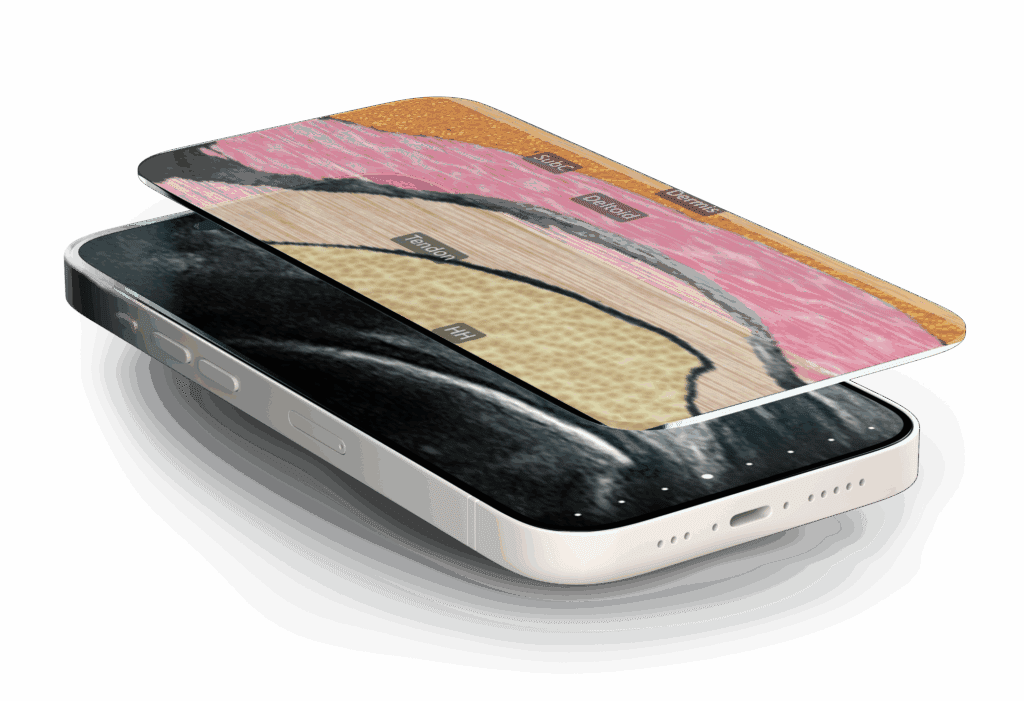
Today, Clarius devices leverage AI to create a smart technology that simplifies scanning, enhances accuracy, and speeds up decisions.

Clarius develops, trains, tunes, and deploys all of our AI in-house. Here Qt is foundational for us, as it provides a framework for some important steps in our AI workflow. Says Kris.

Clarius' team uses QRhi extensively for the development and deployment of their Smart Health AI solutions. QRhi, Qt Rendering Hardware Interface, is Qt's internal graphics abstraction where 3D APIs, such as OpenGL, Vulkan, Metal, and Direct 3D, are involved. By abstracting over the underlying graphics APIs, QRhi allows leveraging multiple GPU backends without the need for platform-specific code. As writing platform-specific shader code is a complex and time-consuming task, the time saving by using Qt is estimated in the order of thousands of hours

Concretely, Qt acts as the UI and rendering framework that manages how the ultrasound feed and the AI overlay are displayed together on screen:

Qt renders our AI images and outputs either on top of or alongside the ultrasound. We utilize OpenGL and shader code, and Qt integrates well with these technologies to provide a seamless interface. He continues.

Additionally, Qt connectivity libraries provide secure access to the AI models stored in the cloud.

We use Qt Framework's network modules and classes to download our AI models from our cloud using a secure REST API. Says Kris.

We were recently awarded a development grant by the Gates Foundation for a new project aimed at introducing a lower-cost ultrasound to developing countries.

As part of the project, we are developing a custom app to pair with the new low-cost ultrasound.

Qt modularity will play a big role here by allowing us to port the core building blocks of our codebase to our new app, while keeping the UI simple and intuitive.

Kris Dikie, CTO, Clarius

Clarius_logo

About Clarius

Clarius sold their first wireless handheld ultrasound scanner in December 2016. Since then,more than 40,000 devices have been sold, covering more than 10 million scans.  Clarius' next-generation product is smaller and offers even better performance thanks to feedback from our customers and advancing technology.

Oh, there's more

Read More about Qt in the Medical Sector

Qt in Medical