Published On
Aug 27, 2025
Read Time
4 mins
Industry Insights Blog Series

Qt Group launches Qt for MOSA: a FACE® Conformant version of Qt Framework empowering developers to create high-performance, feature-rich HMIs for mission-critical systems and defense platforms.
Modern defense systems require high-quality software capable of operating seamlessly across platforms. Traditionally, many of these systems rely on closed, proprietary architectures—leading to vendor lock-in and making technology integration difficult. As defense technology becomes more complex, legacy systems often struggle to keep up due to their lack of flexibility. This is why open standards such as the Modular Open Systems Approach (MOSA) and the Future Airborne Capability Environment (FACE) were introduced to promote open architectures that enable faster upgrades, reduced costs, and greater vendor independence, by promoting modularity, portability, and interoperability.
The Modular Open Systems Approach
MOSA is a Department of Defense (DoD)-mandated strategy emphasizing the use of open standards and modular design principles in military systems. The goal of MOSA is to create more adaptable, cost-effective, and interoperable defense systems by reducing reliance on proprietary solutions and vendor lock-in. It is required by U.S. law for all major defense acquisition programs and is a key enabler of innovation and rapid technology insertion.
The Future Airborne Capability Environment
Managed by The Open Group FACE Consortium, the FACE® Technical Standard is a set of software specifications designed to align with the principles of MOSA. By promoting open architecture standards, interoperability, and rapid integration, the FACE® Technical Standard fosters agility, innovation, and cost efficiency. While MOSA serves as a high-level directive promoting modularity and openness in defense acquisitions, the FACE® Technical Standard provides detailed software guidelines to implement those principles, ensuring systems meet MOSA's interoperability, portability, and efficiency goals.
Overall, the FACE® Technical Standard and MOSA represent a shift away from rigid, monolithic defense systems toward more adaptable and cost-effective solutions. By enabling software components from multiple vendors to work together, the FACE® Technical Standard simplifies integration efforts and lowers long-term costs.
Qt in Aerospace and Defense
As we recently discussed in [1], Qt Framework plays a critical role in powering a wide array of applications in Aerospace and Defense, ranging from drone ground control stations and radar systems to ground vehicles, simulation platforms, and even autopilot systems. Designed with modularity and openness at its core, Qt Framework allows easy third-party integrations and seamless interoperability, in accordance with MOSA principles. However, FACE Conformance is necessary to demonstrate this approach for DoD acquisition.
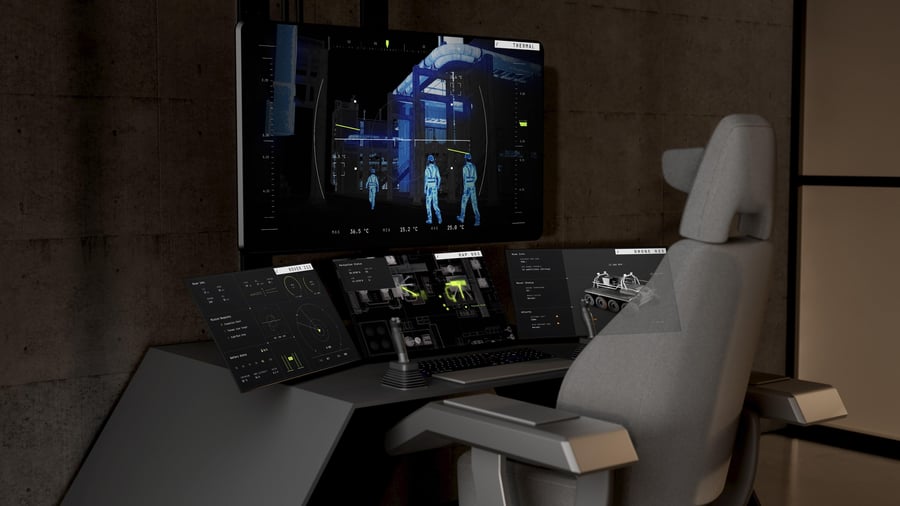
The FACE® Technical Standard has expanded considerably into non-airborne programs, but the need for advanced graphics and functionality in the HMI hasn't yet been addressed.
In response to these requirements, Qt for MOSA has been certified to conform to the FACE® Technical Standard.
Qt for MOSA—An Overview
Qt for MOSA adapts to the General-Purpose Profile of the FACE Technical Standard, Edition 3.2. Qt for MOSA is available only to commercial users and ships with Extended Security Maintenance and Extended Support included. It is a subset of Qt Framework—including core modules such as Qt Quick, Qt Widgets, QML and more—and provides an abstraction over the FACE Operating System Segment to make it easier for defense contractors to rapidly build screen-reliant software for mission-critical applications, such as:
-
Mission Systems Software: Target tracking, Mission planning, Weapons systems control
-
Sensor and Surveillance Systems: Radar, infrared, and EO/IR systems
-
Navigation and Flight Control Systems: Advanced map rendering, Terrain awareness overlays for mission-enhancing functions
-
Ground Support and Mission Planning Systems: Desktop or portable mission prep tools that share code with airborne counterparts
Defense UIs are typically barebones, leaving much untapped potential. With Qt, system builders and integrators can achieve a new level of flexibility and innovation not previously possible in this sector.
In general, Qt for MOSA provides the power and efficiency of Qt Framework—such as cross-platform capabilities, modern C++ features, advanced graphics, efficient data handling, and more—to the common operating environment established under the FACE® Technical Standard, making development in such environment similar to development in other environments and industries.
Qt for MOSA retains most of the core capabilities of Qt Framework, among others:
-
Development using either traditional Qt Widgets for static, desktop-style UIs, or Qt Quick, for modern, dynamic UIs optimized for embedded systems
-
Event-driven programming through the signals and slots language construct
-
Metaobject compiler for introspection and asynchronous functions calls independent of the C++ language runtime
Qt for MOSA provides the power and efficiency of Qt Framework to the common operating environment established under the FACE® Technical Standard.
And in addition to the gain coming from the libraries, the tooling developed around Qt (e.g. Qt Creator, BootToQt, etc) helps teams streamline common operations such as debugging, profiling, testing, and deploying to target hardware.
The Qt for MOSA conformance package includes an example application demonstrating how Qt applications can be created within the FACE® Technical Standard.

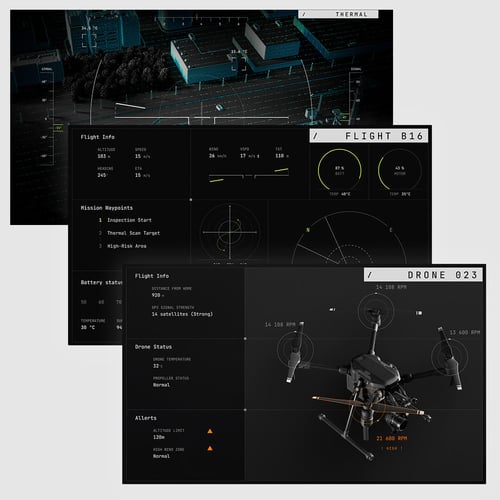
The FACE® Technical Standard establishes a standardized software architecture that facilitates reuse, scalability, and integration across different A&D platforms.