-1-1.png?width=1200&height=1200&name=CUDA%20PR%20social%20image%20V2%20(2)-1-1.png)
Physical AI isn't Built on Software Quality Shortcuts
Every organization has quality gaps in their development process. Until now, those gaps were expensive but manageable. Software failures meant user complaints, bug fixes, maybe reputation damage. In safety-critical industries, the consequences could extend to recalls and regulatory action.
Physical AI changes the stakes. When AI moves from screens into surgical robotics, autonomous vehicles, and industrial systems operating alongside humans, quality shortcuts stop being technical debt. They become safety incidents.
The organizations building Physical AI today are discovering this firsthand. The ones succeeding already understand: the quality and verification infrastructure that was "good enough" for digital systems becomes catastrophically insufficient the moment AI enters the physical world.
The gap isn't regulatory.
The regulatory requirements and standards haven't fundamentally changed. The gap is between what teams are building and what their quality processes can actually verify.
Why Verification Gaps Matter Now
Physical AI isn't another technology trend. It's the test of every assumption you've made about acceptable software quality.
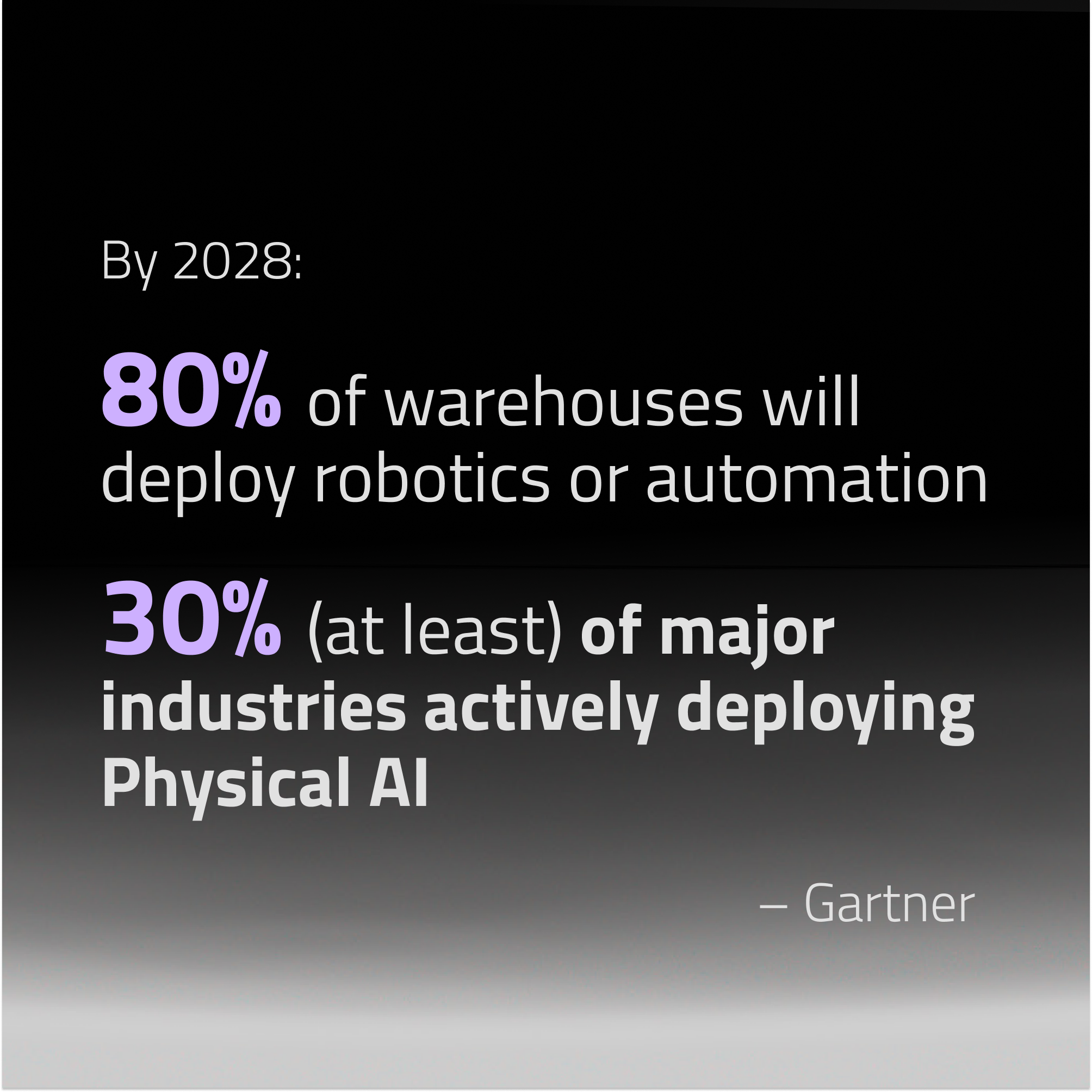
AI in robotics, autonomous vehicles, and industrial systems is moving from pilot programs to production deployment.
The growth is real. The foundation it's being built on is shaky.
Physical AI operates under constraints digital AI never faced. The physical world doesn't accept patches. A recommendation algorithm fails, you push a fix. A Physical AI system fails, someone gets hurt. You don't get a second chance to validate after the forklift hits someone or the surgical system makes a wrong cut.
This is why verification before deployment becomes non-negotiable. Gartner's research is explicit: virtual development and validation are the only viable approaches for safe, reliable Physical AI systems. You prove safety in simulation and testing before the system ever touches the physical world.
But here's the problem. Most organizations are building these complex systems on verification infrastructure and quality processes designed for simpler ones.
The physical world doesn't give you do-overs. You need verification infrastructure that can prove safety before deployment, because you can't patch your way out of a physical failure.
That's the verification gap. And it's widening.

Pattern Lessons from The Automotive Industry
The automotive industry is a good example of your future right now. It demonstrates what happens when innovation outpaces verification infrastructure.
According to Recall Masters' State of Recalls report over 28 million vehicles were recalled in 2024. Of these, 174 campaigns affecting 13.8 million vehicles were linked specifically to software and electronic system failures.
The global automotive cybersecurity market, valued at USD 3.5 billion in 2024, is projected to grow at 11.6% CAGR through 2034 (GM Insights). That growth represents billions being spent to retrofit security into architectures that should have been secure by design.
We can all admit that this is not careless engineering. These are teams building autonomous capabilities on architectural foundations that weren't designed for continuous software updates, let alone full autonomy.
It's a collision of two (or more) different eras.

But here's a pattern you need to recognize:
Organizations are innovating and building AI capabilities on existing quality processes "from the past", designed for a previous era. Those processes couldn't scale. Now organizations are spending more on fixing failures than they should, and will continue to do so if the focus doesn't shift back into prioritizing quality infrastructure and AI risk management.
Defects found post-release cost 100 to 1000 times more to fix than those caught during development. When those defects involve Physical AI systems, multiply that by regulatory sanctions, recalls, and liability costs.
The recent Tesla Autopilot crash verdict serves as a warning for every organization across all safety-critical sectors. The jury found significant responsibility on the manufacturer's side.
The same pattern is forming across industries building Physical AI: quality gaps that seemed acceptable in traditional software become legal exposure when AI operates in the physical world.
.png?width=2400&height=2400&name=CUDA%20PR%20social%20image%20V2%20(1).png)
Where Current AI Testing Tools and Quality Infrastructures Break
Now add AI coding assistants to this equation. Industry research on AI testing trends confirms that AI-generated code quality has significantly higher defect rates than human-written code. The majority of samples contain logical or security flaws, while also a majority of developers routinely rewrite or refactor AI-generated code before it's production-ready.
The CrowdStrike incident in July 2024 showed how quality failures cascade into safety crises. A configuration file missing a single array bounds check crashed 8.5 million computers globally. Airlines and airports were impacted. Emergency services failed. Hospitals canceled surgeries. The economic damage exceeded $10 billion.
This is the state of the foundation we're relying on to build systems with full autonomy.
.png?width=2008&height=2008&name=Physical%20AI%20-%20blog%20(1).png)
What breaks when Physical AI meets current quality infrastructure:
Most software quality and AI testing tools weren't designed for the parallel processing architectures that power AI perception stacks. Traditional testing frameworks assume deterministic behavior in systems that are probabilistic by nature. Compliance workflows depend on manual documentation that can't scale to continuous deployment.
The quality testing and verification solutions stop at language boundaries, missing the critical interfaces where AI models coordinate with control systems.
A significant portion of safety-critical code in modern AI systems runs on specialized hardware that these traditional quality testing tools can't process. When perception stacks, sensor fusion algorithms, and decision-making logic execute on GPUs or other accelerators, the code doing the heavy lifting exists in a verification blind spot.
When an incident occurs, and suitable quality solutions exist to meet required safety standards, incomplete AI validation and verification is a liability risk, instead of being solely a technical limitation.

1. Prove architectural integrity across every computational boundary.
Physical AI systems span CPUs, GPUs, edge processors, and specialized accelerators coordinating perception, cognition, and actuation stacks. You cannot prove safety for systems you cannot trace. Architecture verification must follow implementation wherever it executes, detecting when systems drift from design before that drift becomes a safety incident.
2. Verify the code that actually runs your AI systems.
A brilliant architecture is worthless if built with faulty components. Your static analyzers and testing tools need to identify errors before they become safety failures. They need to verify safety-critical code against domain-specific guidelines and standards, regardless of where that code executes. Partial verification is not verification. If your tools can't properly process the code running your AI perception stack, you're basically flying blind.

3. Generate compliance evidence continuously and automatically.
Organizations mastering Physical AI don't treat compliance as an end gate. AI compliance automation means code coverage measures what actually runs, traceability connects every line back to safety requirements, and architectural governance solutions ensure Freedom from Interference and software segregation across computational boundaries.
4. Validate human-AI interfaces with the same rigor as AI models.
When operators monitor AI behavior through dashboards and control systems, those interfaces become safety-critical surfaces. Test that humans can actually understand what the AI is communicating and respond before incidents occur. Your human-in-the-loop design only functions as a safety architecture if the loop actually closes in time.
5. Enable virtual validation before physical deployment.
As Gartner emphasizes in "Adopting Physical AI for Real-World Use Cases", use simulation and digital twin platforms to test Physical AI systems before deploying them in live environments. Develop cross-functional teams with focus on governance, integration, and safety. Procure only solutions that comply with industry safety standards.
Strategic Playbook
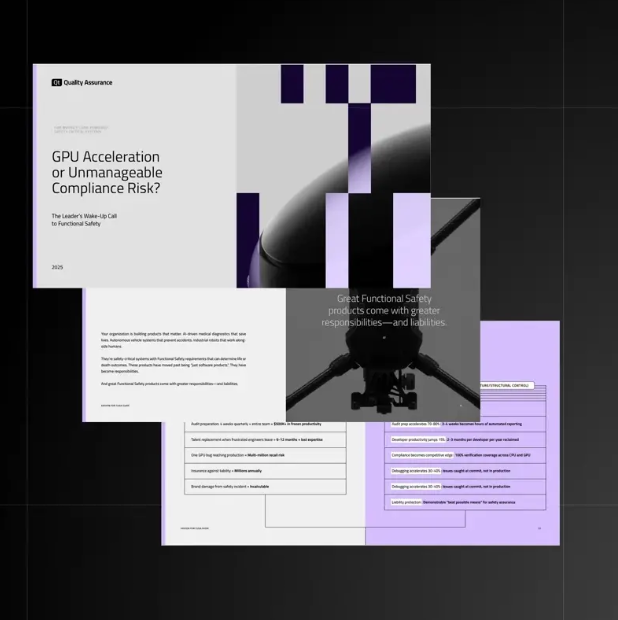
GPU Acceleration or Unmanageable Compliance Risk? The Leader’s Wake-Up Call to Functional Safety
This is your playbook for speed AND safety through a proper compliance verification infrastructure.
Your organization is building the future: AI-driven MedTech products, Autonomous Vehicles, and Industrial Robots – all with strict quality and safety requirements.
You're forced to choose between shipping fast or shipping safe, when the whole point was to have both.
If your best engineers are drowning in manual verification, if compliance has become your bottleneck, if you're one GPU bug away from disaster; this guide is your roadmap out.

Explore The Success Stories
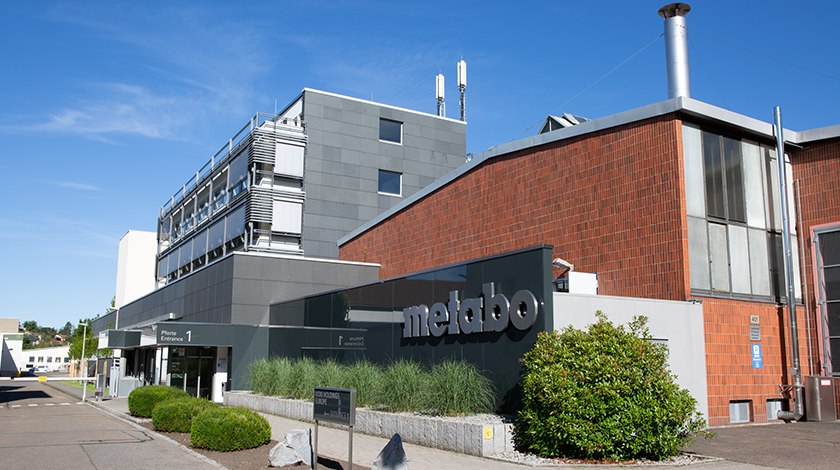
Success Story: Metabo | KOKI Group
Thanks to Axivion, Metabo not only integrates static analysis across a wide range of IDEs and toolchains, but also catches maintainability issues earl...
Read More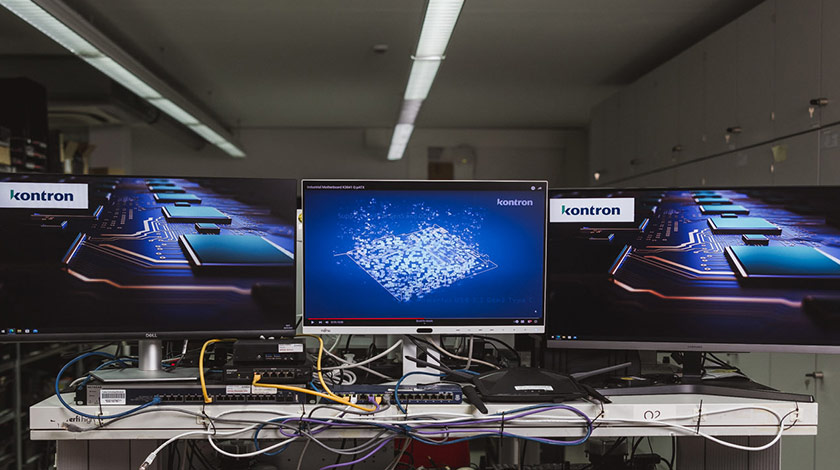
Success Story Kontron | Axivion
Thanks to Axivion Kontron now is not only CRA compliant, but also has improved the quality of their code.
Read More
Success Story Heartland.Data | Axivion
A leading software development company replaced its static analysis tools with Axivion Suite to reduce setup and maintenance time resulting in an high...
Read More
JSOL | Tested with Squish
JSOL Corporation enhances quality assurance in JMAG using Squish, automating 40% of test cases and reducing workload by 85%, ensuring efficient and re...
Read More
Success Story Schaeffler | Axivion
Architecture Verification of the Axivion Suite demonstrates Freedom from Interference in a Mixed ASIL Approach according to ISO 26262
Read More
Success Story ABB | Squish for Qt
Discover the winning combination of stability and convenience with Squish for Qt with the ABB Group. Elevate your testing process today!
Read More