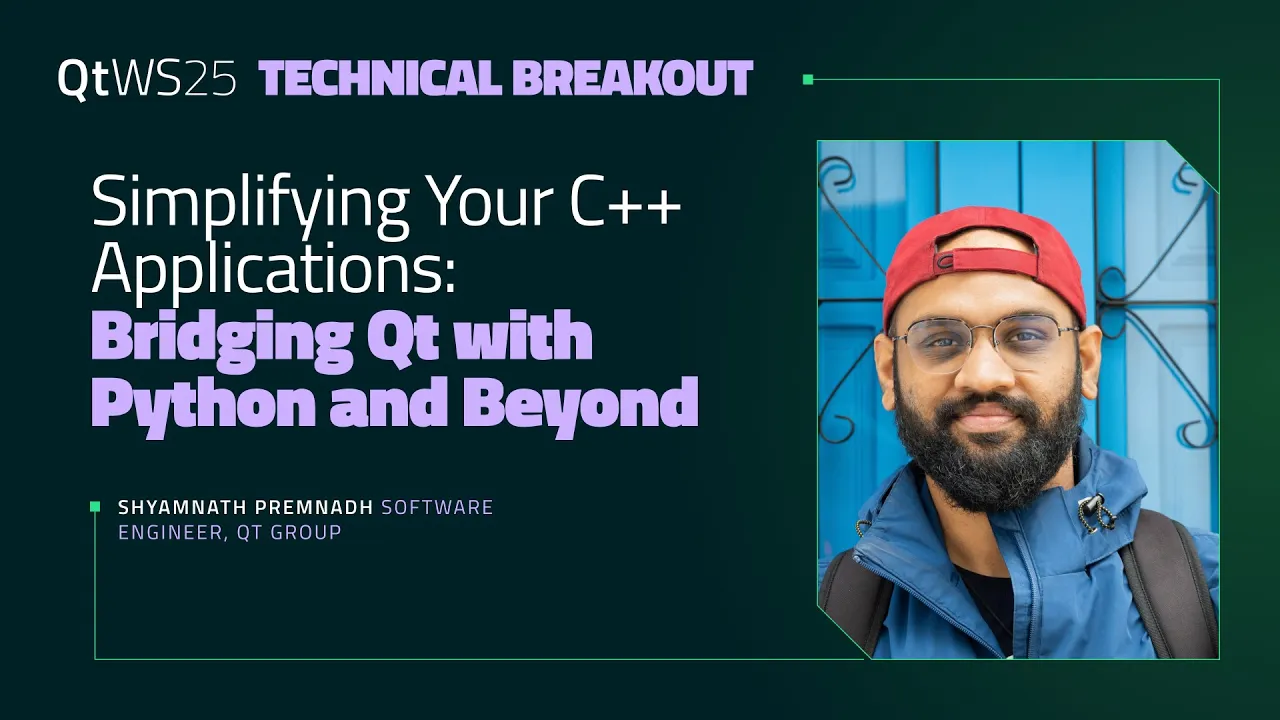
Simplifying Your C++ Applications: Bridging Qt with Python and Beyond
In an era of multi-language development, frameworks must evolve to meet the demands of modern developers. Qt, a powerful and mature framework for C++, has long been a leader in cross-platform development. While other frameworks like React, Flutter, and Tauri are beginning to explore multi-language support, Qt stands out with its comprehensive language binding ecosystem, particularly through Python integration. However, what truly matters isn't just the availability of bindings, but their completeness and seamless integration with the target language's idioms and patterns. This talk explores how Qt, through tools like shiboken and PySide6, achieves this by enabling Python developers to write idiomatic Python code while leveraging Qt's full capabilities. We'll demonstrate this through real-world examples, showing how C++ applications can be simplified and exposed to Python naturally. We'll also preview upcoming innovations that aim to streamline QtQuick/QML integration with Python, reducing the learning curve for developers new to Qt. Join us to discover how Qt is bridging the gap between tradition and innovation, making cross-platform development more accessible while preserving the power and reliability that Qt developers expect.
Oh, here is more

Webinar: The Cyber Resilience Act: What Waiting is Costing US Software Teams
Starting September 11, 2026, the EU Cyber Resilience Act (CRA) requires companies to report actively...
Watch Video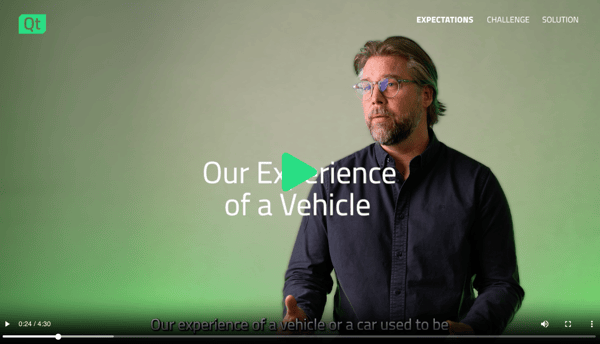
Video: The Making of The Outpace Project
Project Outpace – Qt's Reference Panoramic 3D Automotive Cockpit. Don't Choose Between The Design Yo...
Watch Video
On-Demand Webinar: CI/CD and Continuous Compliance of Embedded Software for Aerospace and Defense
Today, CI/CD for pure software products is well understood. But hardware dependencies and embedded d...
Watch Video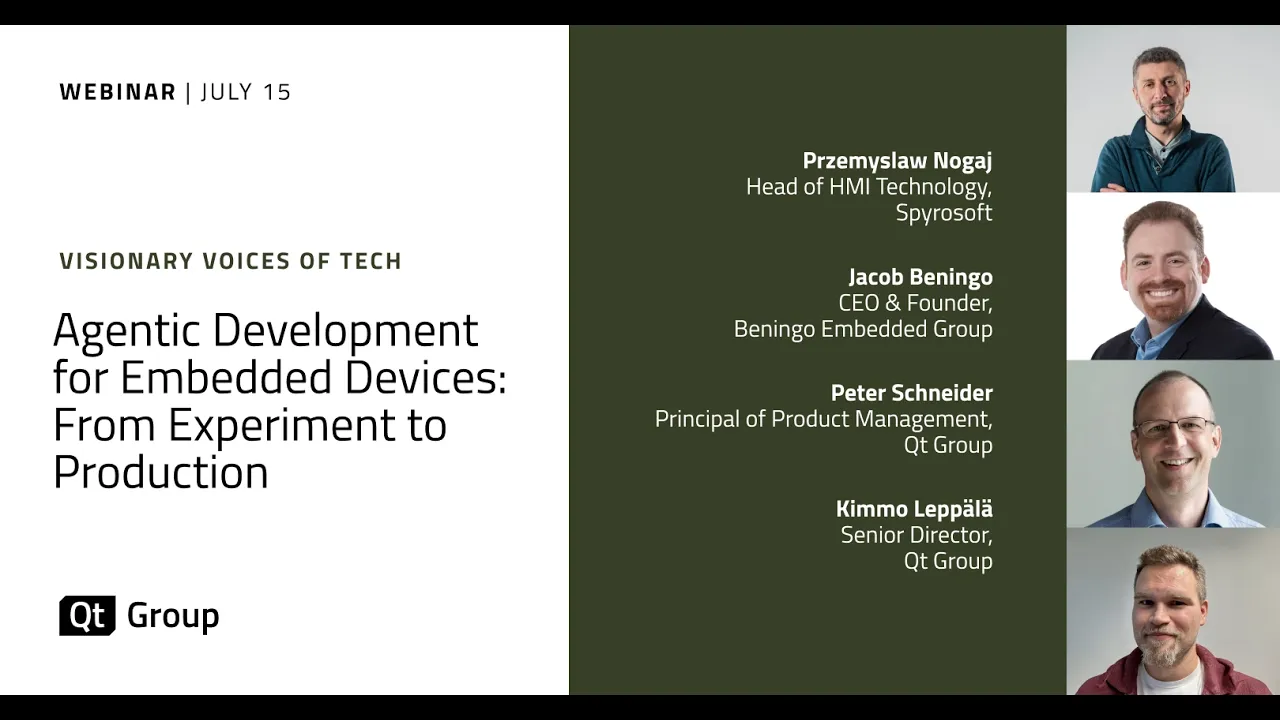
On-Demand Webinar: Agentic Development for Embedded Devices: From Experiment to Production
Agentic development for embedded devices is moving from experiment to production, and regulated indu...
Watch Video