Apr 28, 2026
Comments
Today, we are releasing the first set of skills for agentic Qt development, designed to multiply your productivity when writing, documenting, and reviewing Qt code.
If you want to know more about Qt's vision for agentic development and what agentic development with Qt is, then do check out the related article here: Agentic Workflows for Cross-Platform Frameworks
Qt C++ and QML Code Review Skills
Frontier LLMs have gotten better at writing Qt code. However, AI-generated code often contains systematic flaws. With more code written by agents like Claude Code or GitHub Copilot, the bottleneck shifts to code reviews, especially in regulated industries. Organizations need to rethink how they orchestrate and automate code reviews to meet legislative requirements and protect themselves from technology debt.
The Qt Code Review Skills are a powerful new addition to the agentic workflow that brings structured, multi-layered analysis to your Qt/C++ and QML codebases. When triggered, the skills first run a deterministic linter across 60+ rules to catch surface-level issues instantly. They then unleash up to six specialized sub-agents running in parallel, each performing a deep dive into a distinct quality dimension.
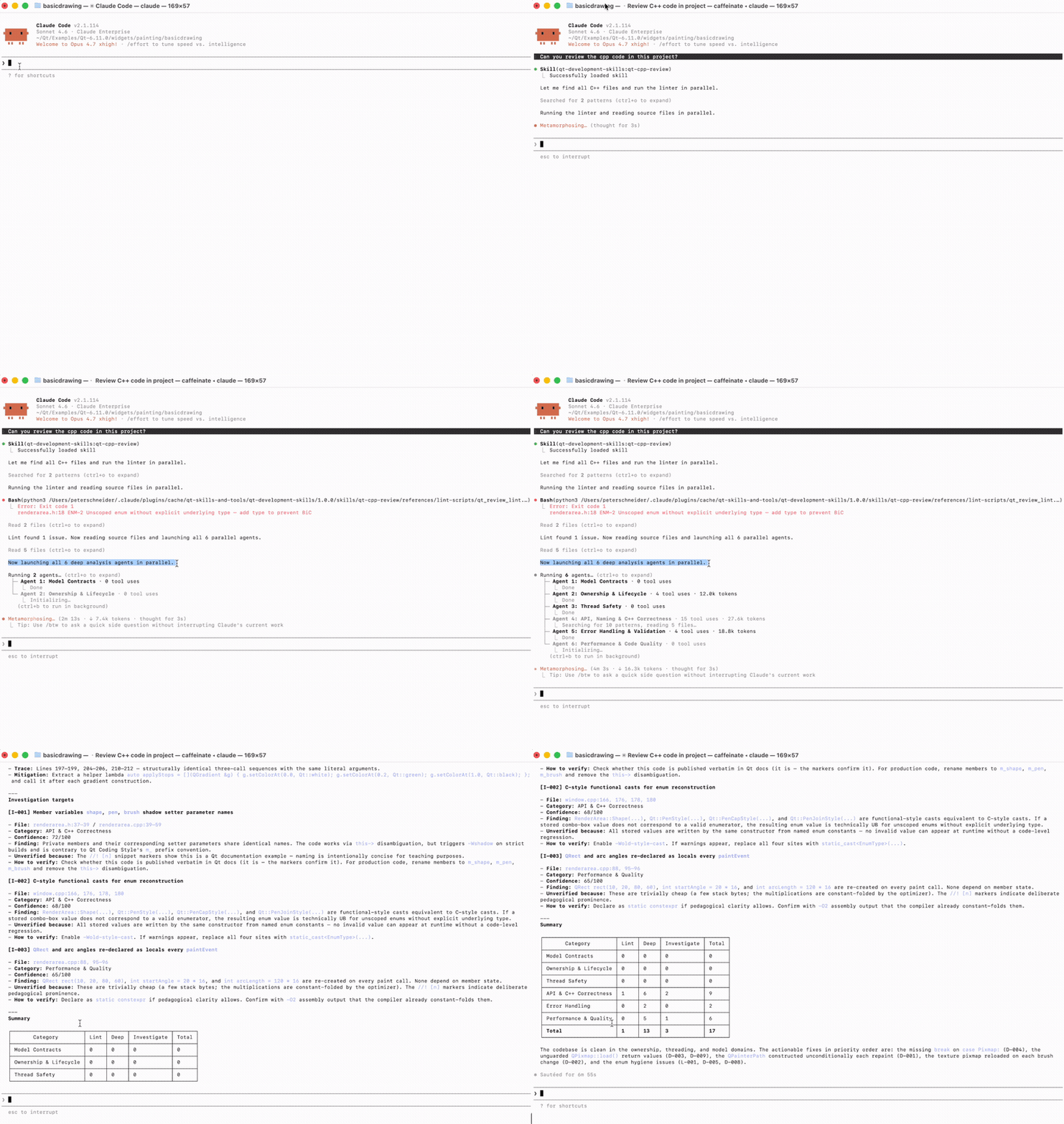
Illustration: Qt C++ Code Review Skill using Claude Code CLI (Sequences shortened and accelerated)
For Qt C++ code, the review skill checks: Qt model rule compliance, memory ownership and lifecycle management, thread safety, API naming and C++ correctness, error handling and validation, and performance and dead code elimination. The result is a comprehensive, high-confidence review delivered in a single pass — the kind of thorough analysis that would typically require multiple expert reviews, now available as a seamless step in your AI-assisted development workflow.
Qt C++ and QML Code Documentation Skills
Code Documentation Skills reduce the average code documentation effort significantly allowing technical writers to focus on the substance. The skills generate structured Markdown reference docs for Qt C++ and QML components and applications, covering slots, properties, signals, methods, and inter-component interactions. The skill steers AI agents to create a .md document for each C++ or QML file.
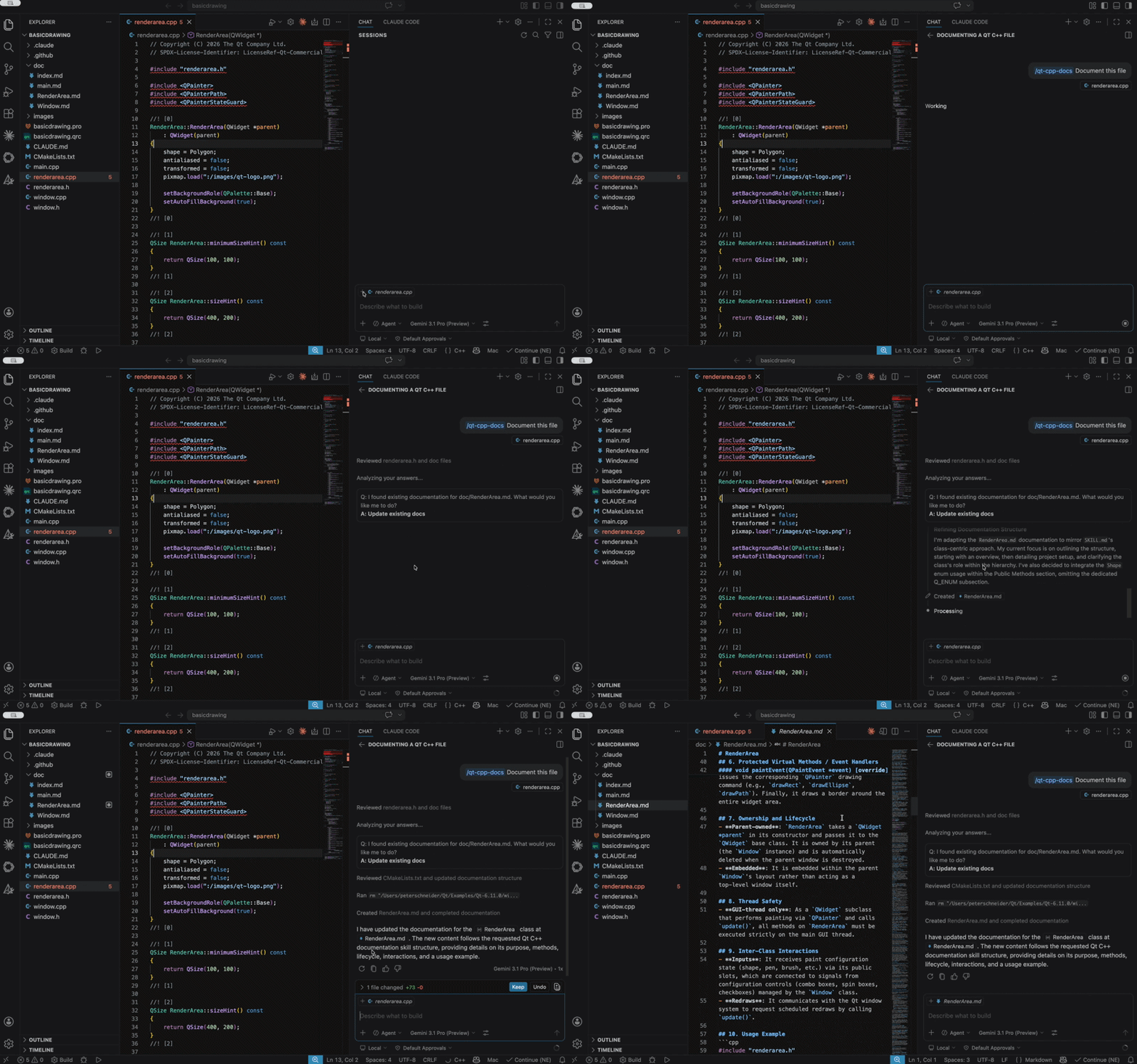
Illustration: Qt C++ Code Documentation Skill using GitHub Copilot in VS Code (Sequences shortened and accelerated)
Like all Qt Agentic Development Skills, code documentation skills work with agentic development solutions such as Claude Code or GitHub Copilot. The skills have been tested with frontier models, such as Claude Sonnet 4.6, GPT 5.4, and Gemini 3.1 Pro.
QML Coding Skill
The Qt QML Coding Skill acts as a silent expert helper whenever the AI is writing, fixing, or refactoring QML code. Rather than reviewing code after the fact, it applies a comprehensive set of best practices during code generation — covering everything from correct import syntax and layout rules, to binding safety, delegate performance, animation efficiency, and accessibility. The skill encodes hard-won Qt knowledge that is easy to get wrong, such as never mixing anchors with Layout properties, always guarding Loader item access, or using Animator types instead of Animation for smoother render-thread performance. The result is that AI-generated QML code is idiomatic, performant, and cross-platform ready from the first output — reducing the back-and-forth of catching avoidable mistakes in review.
The QML Coding Skill delivers up to 11% better QML code quality over pure LLM-generated code in the QML100 coding benchmark (Claude Sonnet 4.6 from 64% to 75% success rate), helping R&D teams to write cleaner, more reliable Qt applications straight out of the box.
Get started
You can get your Qt agent skills from our GitHub repository: https://github.com/TheQtCompanyRnD/agent-skills
Alternatively, you can install the official Qt skills directly from Claude’s marketplace as plugin (search for "qt-development").
You can learn more about Qt's AI-powered development tools, and keep up-to-date with what's available, on our website.
More skills and MCP tools...
Since the initial release, we have published the following additional capabilities:
-
QML Profiler Skill
https://www.qt.io/blog/introducing-the-qml-profiler-skill-for-agentic-development -
Qt Documentation MCP Service
https://www.qt.io/blog/introducing-the-mcp-tool-for-qt-documentation - Qt GUI Design Skill
https://www.qt.io/blog/introducing-qts-gui-design-skill-design-for-developers-in-agentic-workflows - Qt Quick Test Skills (Generate & Run)
https://www.qt.io/blog/introducing-agentic-test-generation-skills-for-qt-quick - Figma Design System Extraction Skills (Tokens & UI Components)
https://www.qt.io/blog/introducing-the-agentic-figma-design-extraction-skills - Qt CMake Project Management Skill
https://www.qt.io/blog/introducing-the-qt-project-cmake-skill-for-ai-agents
Blog Topics
Related Articles
Canvas2D: New QML canvas element using Qt Canvas Painter
In the earlier blog posts about Qt Canvas Painter we have looked at what..
Read Article
A Cross-Platform C# UI Framework via Qt’s Bridging Technology
Every C# UI framework comes with a familiar pattern: Windows-first, Linux..
Read Article
QML and C# without C++: Qt Bridge for C# 0.4.0 Beta Released
As part of the on-going development of Qt Bridges, and beyond the two Beta..
Read Article