May 20, 2026
Comments
Qt Bridges is a project we have been developing since 2025 to bring Qt’s UI framework capabilities to other programming languages, without going through the full set of bindings. The focus is on the interaction with backend data objects, seamlessly integrated as QML components in a Qt Quick interface.
Since the announcement back in QtWS2025, we have been working to develop our initial proof of concept to a point where our users can give it a try. Today we are very happy to announce that we’re ready to move to public beta with our first language, C#, as it’s in a good shape for you to try it out.
This milestone includes the following features:
-
Create C# objects as QML elements
-
Invoke C# methods
-
Handle C# events
-
Read and write C# properties
-
Bind QML properties to C# properties
-
Bind QML views to C# collections
-
Write backend code with little or no Qt-specific patterns, in a way that is familiar to C# developers and not just a translation of Qt/C++ code
Learn how to start using Qt as your next C# UI framework, try it out, and send us your feedback.
Why C# First?
Programming language trends will fluctuate over time, and language adoption depends on each individual developer, their projects, communities, or even circle of friends. Still, some languages remain consistently popular throughout the years. This is notably the case with C#. As a reference, we can see how this is indeed the case by looking at the following publicly available analysis of programming language adoption:
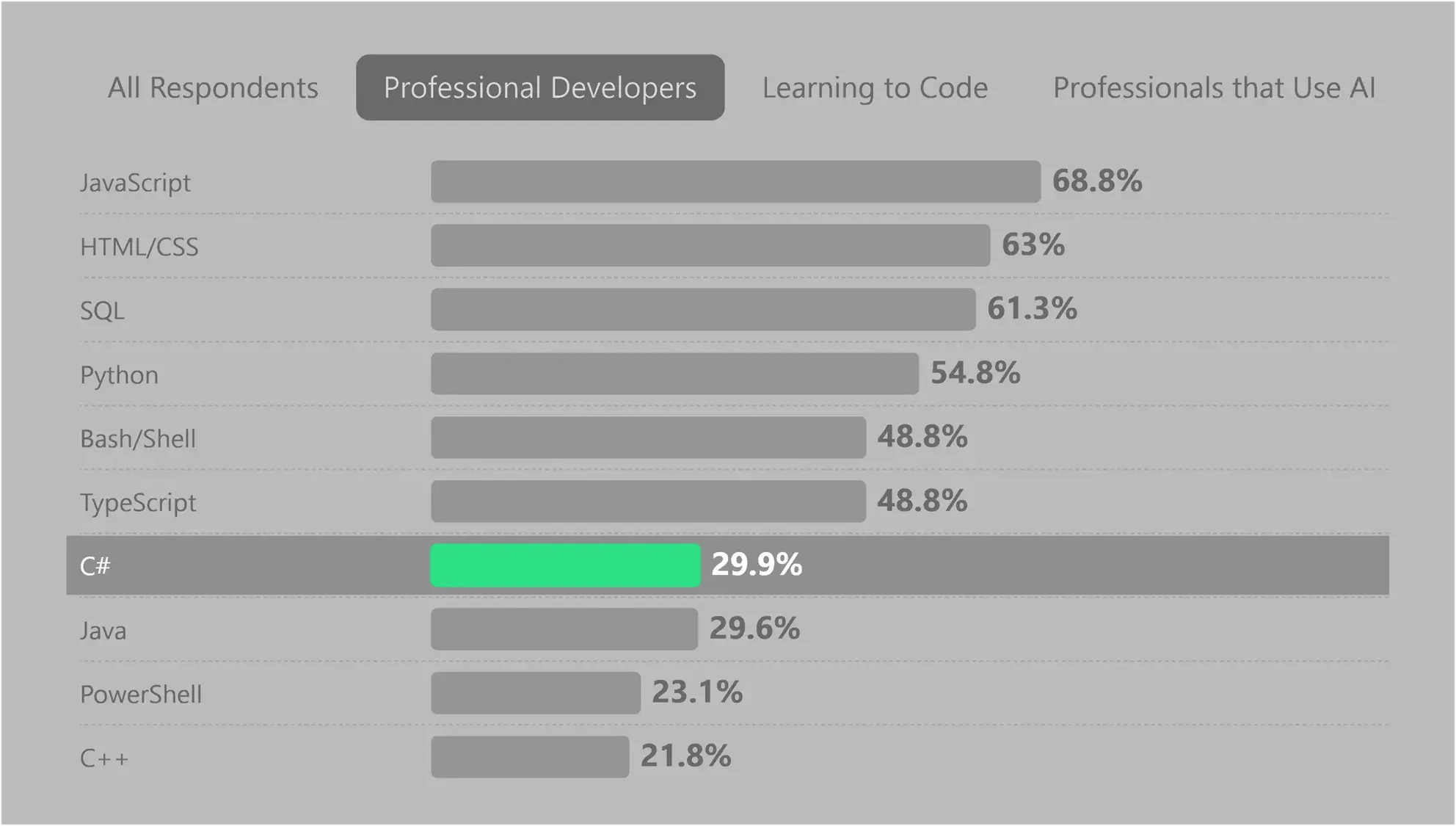
C# at the 7th place for Professional Developers on the Stackoverflow Survey 2025. Click the image to enlarge.
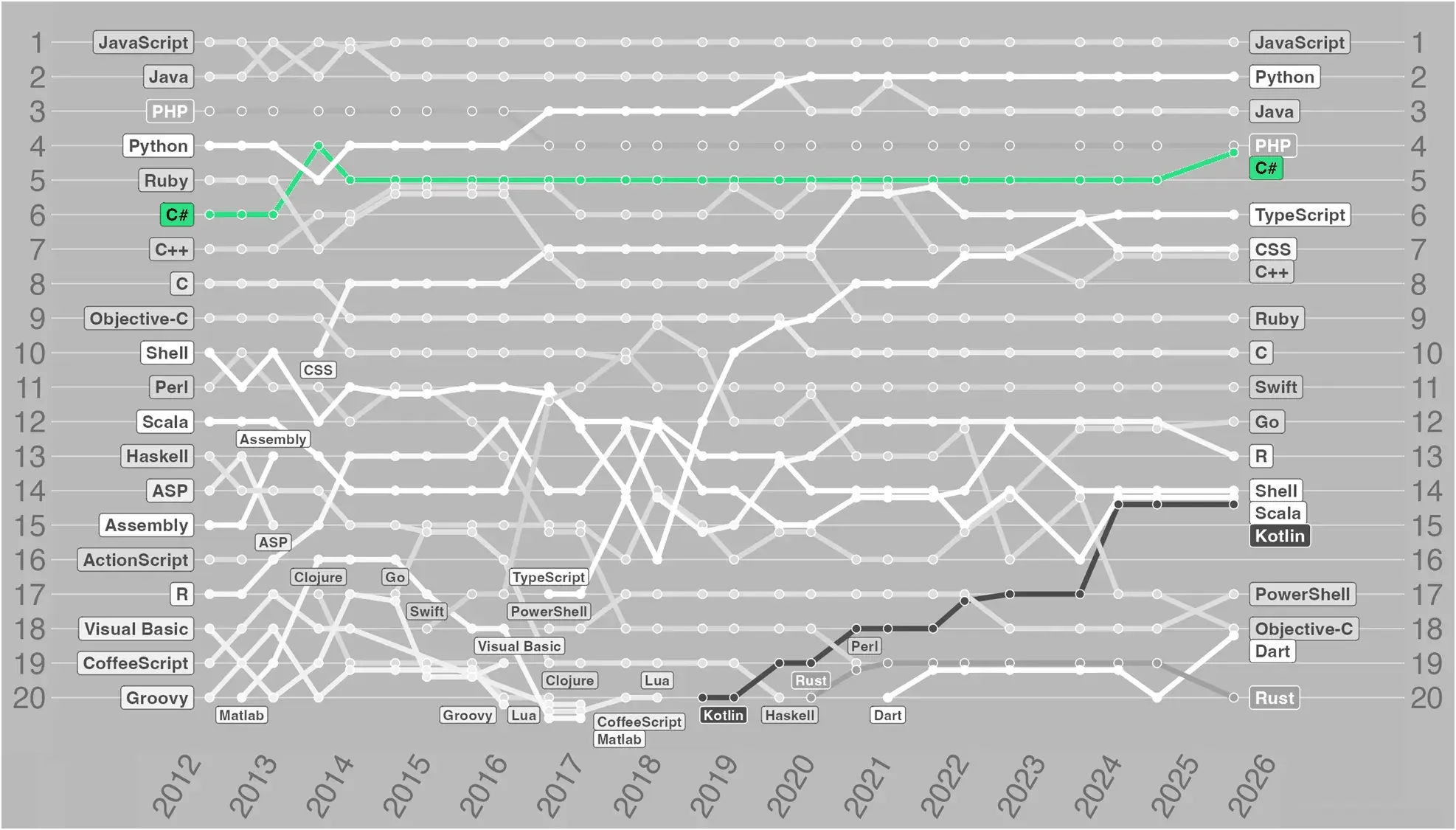
C# at 5th place on average for the past 14 years on the RedMonk Rankings 2012-2026. Click the image to enlarge.
Download statistics for NuGet, the package manager for .NET, also point to a well-established ecosystem around C#, with 900+ billion packages downloaded to date. Another indication of how relevant the language is can be gleamed by the number of companies currently looking in the job market for expertise in C#. These include major players across several industries, such as Cloud/Information technology, Fintech/Payment, Aerospace/Defense, Automotive, Gaming, Food/Agriculture, Health tech, etc.
Furthermore, some companies that have developed Qt applications with C++ have since shown an interest in also using Qt in their C# projects.
These are some of the major factors that contributed to the decision to support C# interoperability with Qt, and to move to public beta as the first Qt Bridges language.
What’s Next?
Try it out and share your feedback with us. Start from the dedicated blog for more details and instructions on how to use Qt as your new C# UI framework.
The next step for our C# bridge is to reach a Technology Preview (TP) state, where we will refine and complement the current offering. Your feedback is very valuable for reaching this milestone, so we hope to hear from you.
Use the Qt Bridges Forum for any related discussions, as well as our bug tracking platform (JIRA) to report issues that you may find once our TP is released.
Future Qt Bridges Releases
C# is part of the first phase of the project; the next language planned for public beta is Rust, so stay tuned for new updates.
Once the bridging for these languages reaches the maturity we are aiming for, we will continue with the second phase.
Blog Topics
Related Articles

Qt Creator 21 Beta2 released
We are happy to announce the release of Qt Creator 21 Beta2. Please head..
Read Article
Qt for Python Release: 6.12 is here!
Qt for Python 6.12 is here, alongside the Qt 6.12 LTS release. This is the..
Read Article
Introducing the QML Live Preview MCP Tool for Agentic Development of Embedded Devices
Agents Edit QML, But Don’t See the Result Without Building, Compiling, and..
Read Article