Clear Separation of Frontend and Backend
Qt Framework's support for different programming languages allows combining QML for modern, declarative UI and application development with C++ and Python for application logic.
All three languages integrate with Qt’s cross-platform capabilities, so developers can flexibly switch between them without sacrificing consistency.
Learn More about the Officially Supported Languages:
Languages Supported by the Qt Company

A Couple of the Languages Backed by the Community

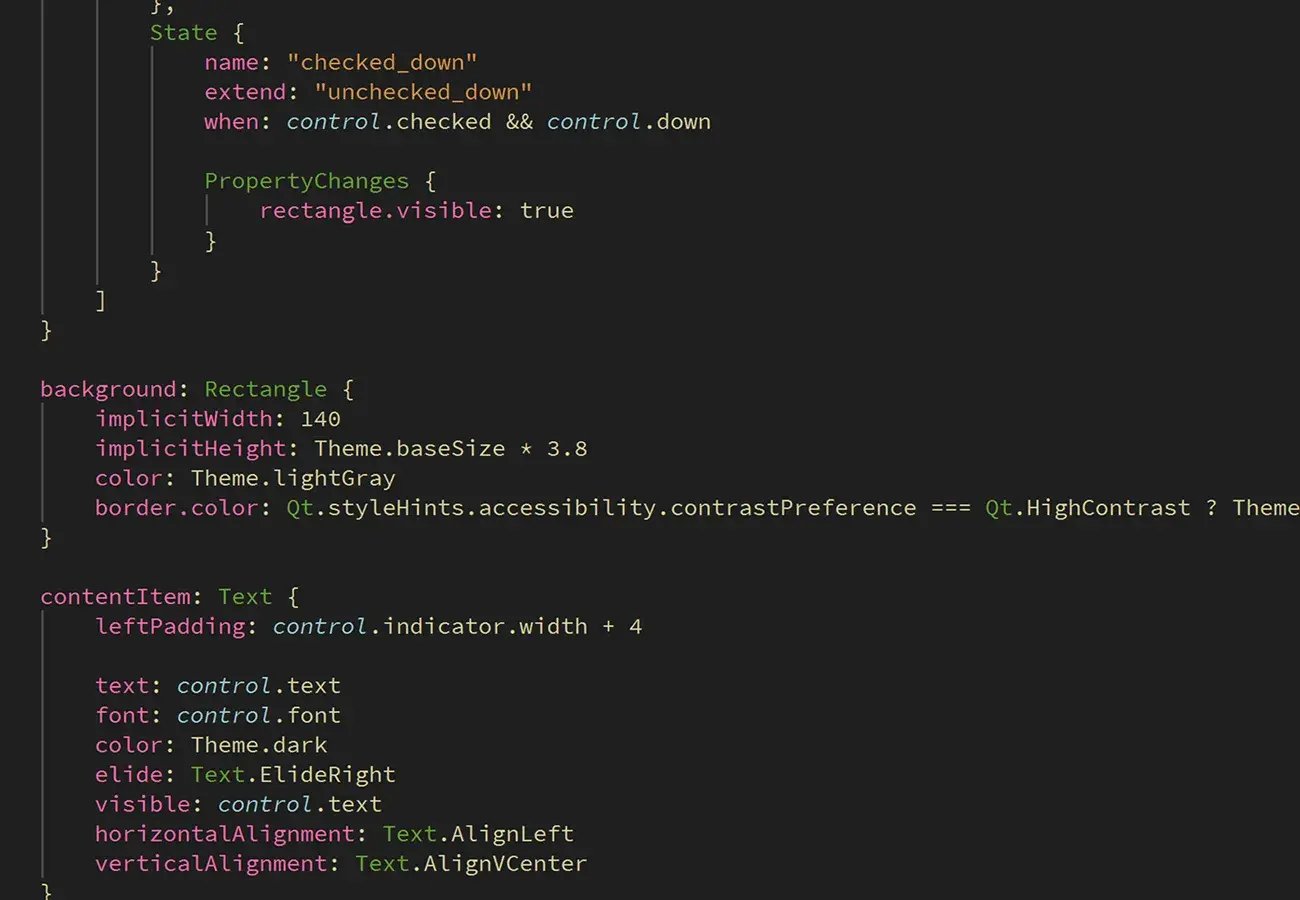
The Declarative QML Language
QML is a declarative, memory-safe language used to develop cross-platform applications with the user interface tightly coupled to the backend and the Qt objects system.
The QML language enables:
- Writing clean, readable, and re-usable code,
- Expanding the UI description with imperative JavaScript,
- Efficient event handling,
- Fast learning with intuitive syntax,
- Easy prototyping.
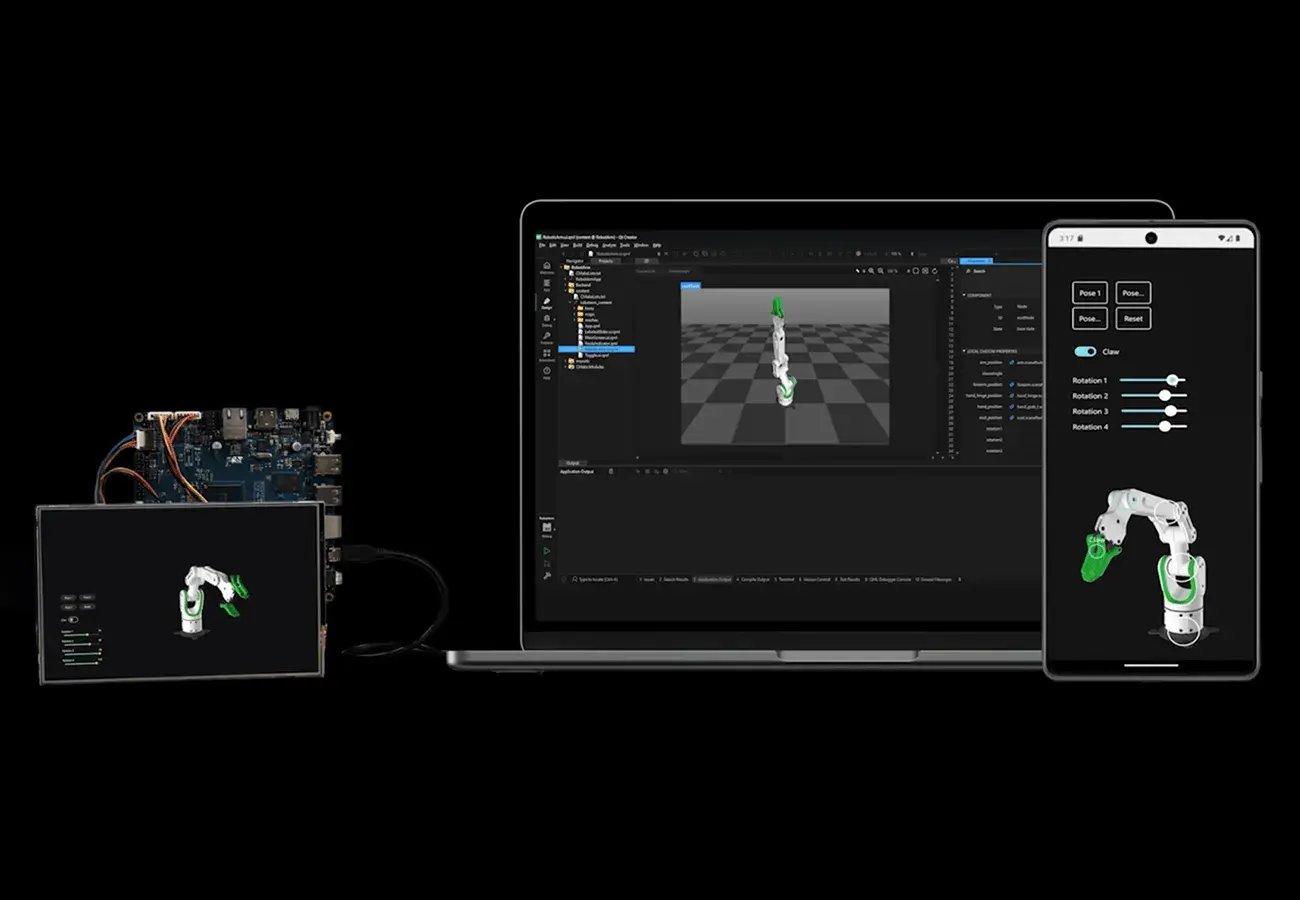
C++ for Direct Access to Qt APIs
Qt's C++ APIs provide powerful concepts and features for cross-platform development.
Qt enriches C++, enabling:
- A number of modern language features,
- Creating re-usable components with very few dependencies,
- Consistent behavior across platforms (embedded systems, desktop, mobile) without sacrificing performance.
For applications already in C++, Qt makes it easier to integrate a new user interface or improved functionalities without rewriting the core logic.
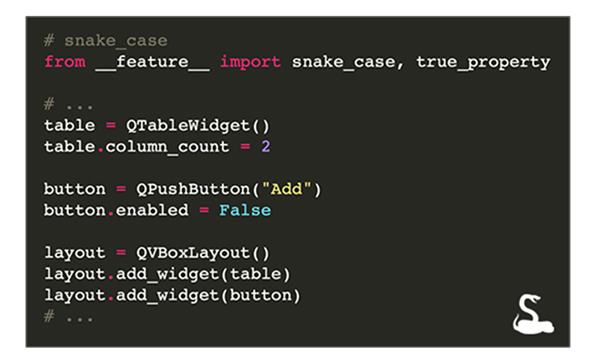
The Official Python Bindings for Qt
Qt for Python provides the official set of Python bindings and a binding generator, making Qt's functionality accessible in your Python project. It allows using all of Qt’s modules in Python to build modern, cross-platform, and feature-rich applications.
Qt is your best option for Python:
- Easy UI building for modern multi-platform and traditional desktop use,
- Time-savers such as connectivity, hardware integration, and graphs,
- High-performant 2D and 3D graphics, animations, and effects.
You don’t need to know C++ to use Qt for Python.