Book a Demo

FACE® Conformance · Edition 3.2 · General-Purpose Profile

Advanced HMIs for FACE® Conformant Defense Systems


Qt for MOSA brings the power and efficiency of Qt—advanced graphics, ready-made controls, and rapid development—to the common operating environment established under the FACE® Technical Standard.

Contact Us

TSS Transport Services Segment

Segment that abstracts transport mechanisms and data access from software components, facilitating integration into disparate architectures and platforms using different transports.

OSS Operating System Segment

Segment where foundational system services used by all other segments, and vendor-supplied code, reside.

IOSS I/O Services Segment

Segment where normalization of vendor-supplied interface hardware device drivers occurs.

PSSS Platform-Specific Services Segment Qt for MOSA sits here

Segment comprised of sub-segments including Platform-Specific Common Services, Platform-Specific Device Services, and Platform-Specific Graphics Services.

PSGS Platform-Specific Graphics Services

Sub-segment that abstracts the interface specifics of a graphics device driver from software components within the FACE Reference Architecture.

UoC Unit of Conformance

Software component or domain-specific data model designed to meet the applicable requirements defined in the FACE Technical Standard.

Registered in The Open Group FACE Conformance registry

Unit of Conformance in the Platform-Specific Services Segment 

Conformance package and reference application included

Defense interfaces have traditionally remained minimal, leaving considerable capability untapped. Qt affords system builders and integrators a degree of flexibility not previously available in this sector.

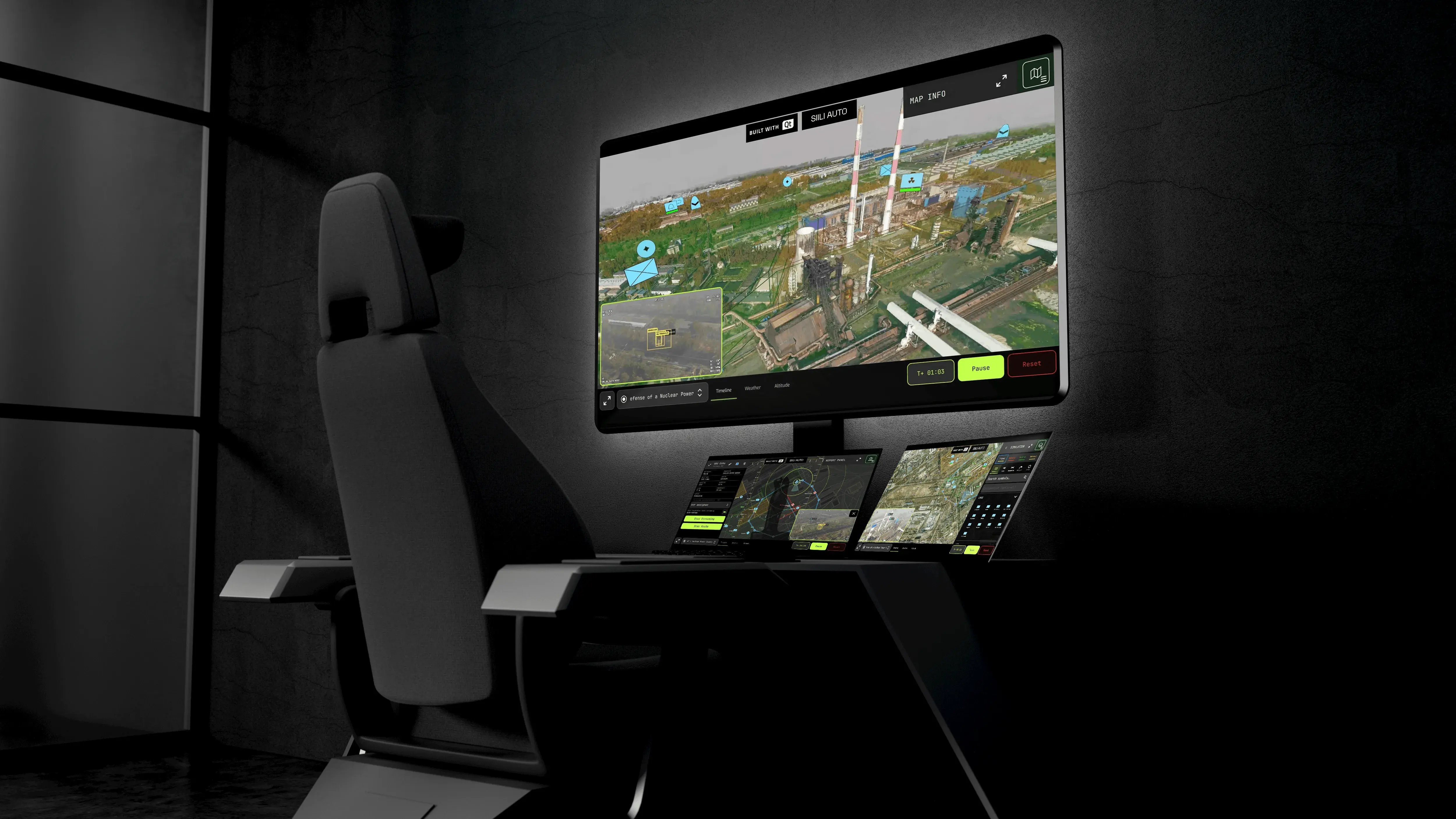
Argus - Drone Control Room

Qt Framework: Adapted to the FACE® Technical Standard

Qt for MOSA is a version of Qt Framework conformant with the General-Purpose Profile of the FACE® Technical Standard, Edition 3.2. It is a Unit of Conformance (UoC) in the Platform-Specific Services Segment (PSSS), supplying an adapted Qt Framework alongside a reference application.

It retains a large subset of Qt Framework, including Qt Quick, Qt Widgets, and Qt Charts, so teams with an existing Qt codebase carry most of that investment forward.

By abstracting over the API permitted by the FACE Operating System Segment, Qt for MOSA makes the development of FACE Conformant HMIs as straightforward as conventional Qt development.
Qt for MOSA retains most of the core capabilities of Qt 5.15 LTS. The following modules are provided:

Qt Charts · Qt Core · Qt GUI · Qt Image Formats · Qt QML · Qt Quick · Qt Quick 3D · Qt Quick Controls · Qt Quick Dialogs · Qt Quick Layouts · Qt Quick Particles · Qt Quick Test · Qt Test · Qt Virtual Keyboard · Qt Widgets · Qt XML

Composition 1

Target Programs and Applications

The FACE® Technical Standard began in safety-critical airborne systems and has since spread much further, carried by the MOSA mandate into mission-critical but less safety-constrained programs: ground vehicles, surveillance suites, sensor and radar systems. These programs may use the less restrictive General-Purpose Profile, for which a general-purpose framework such as Qt is well suited.

  • Mission systems software — target tracking, mission planning, weapons system control.

  • Sensor and surveillance systems — radar, infrared, and EO/IR.

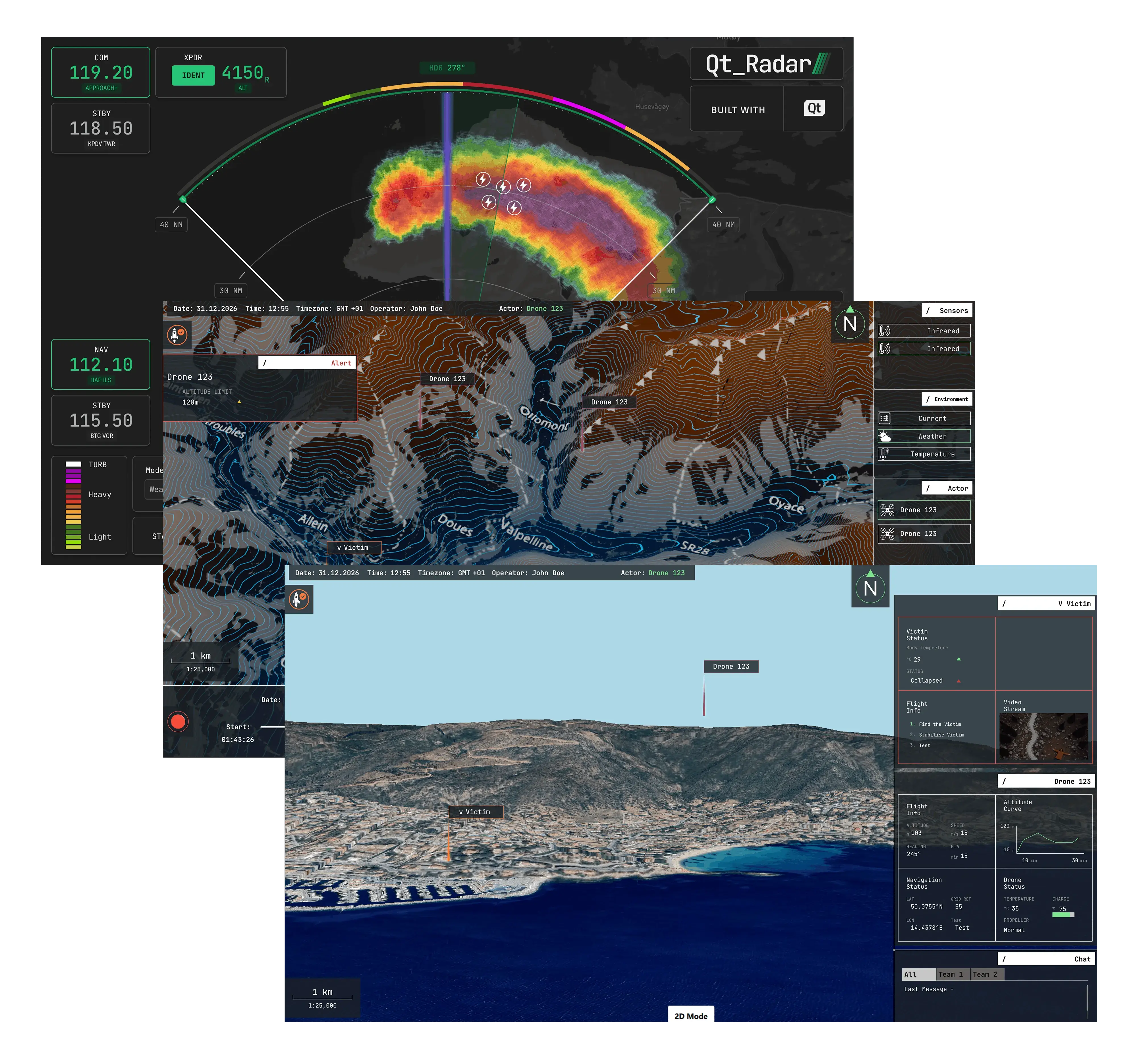
  • Navigation and flight management — advanced map rendering and terrain awareness overlays.

  • Ground support and mission planning — desktop or portable preparation tools sharing code with their airborne counterparts.
graphs-02_1

Dev Efficiency Within Qt for MOSA

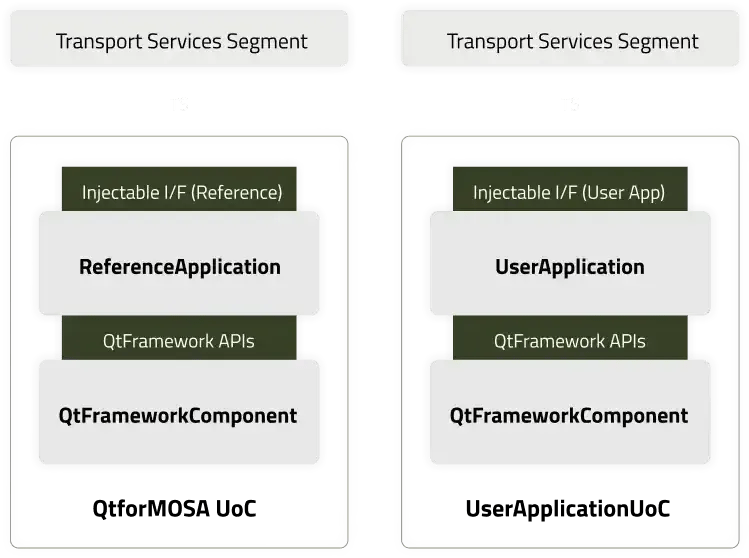
A reference application enables new projects to begin from a verified UoC. Users replace it with their own business logic, retaining the verified framework beneath.

Qt for MOSA retains many of the core Qt capabilities for HMI development, among others:

  • Traditional Qt Widgets for static, desktop-style interfaces, and Qt Quick and QML for dynamic interfaces for embedded targets.

  • Event-driven programming through signals and slots.

  • The metaobject compiler enables introspection and asynchronous function calls independent of the C++ language runtime.

Additionally, development can rely upon the standard tooling supporting Qt, e.g. Qt Creator for backend development and debugging, Qt Design Studio and Figma to Qt for converting designs into code, and Boot to Qt for prototyping on embedded targets. 
Architecture Details

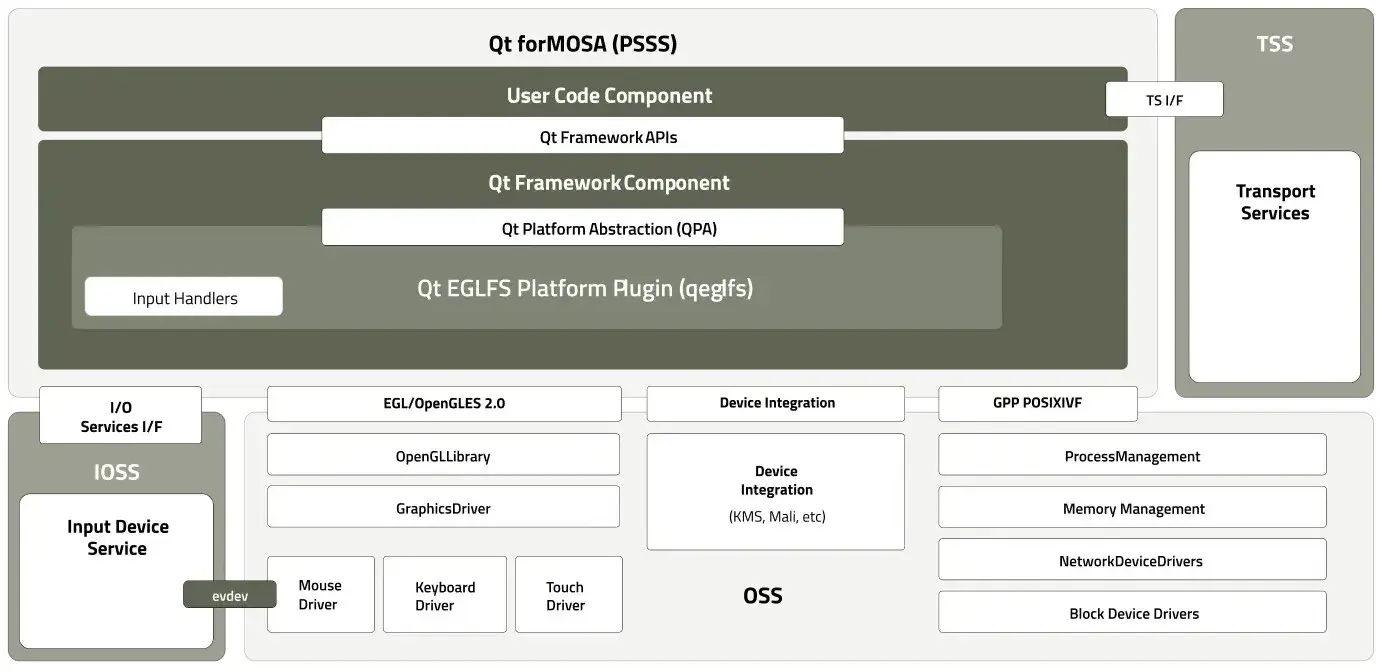
The Qt for MOSA Unit of Conformance occupies the Platform-Specific Services Segment. Inside it, the user code component sits above the Qt Framework component, and the two combine to form the UoC. The Qt Framework API is unchanged.

Below the framework, the Qt Platform Abstraction and the Qt EGLFS platform plugin reach the graphics stack through EGL and OpenGL ES 2.0. Input device drivers move out of the framework and into the I/O Services Segment. There are no direct Linux system calls: process, memory, and device services come from the Operating System Segment through the General-Purpose Profile POSIX interface, and communication with other components runs through the Transport Services Segment.

Qt Foundation Images Security

An Established Framework and a Long-Term Partner

With 30 years of history, Qt Framework powers billions of devices. Manufacturers in more than 70 industries use Qt to build production-grade software for regulated sectors, including medical, automotive, and defense.

  • Long-term maintenance. Qt for MOSA ships with Extended Security Maintenance (ESM) and Extended Support included, so a program's software stays serviceable across its fielded life.
  • Quality assurance across the toolchain. Axivion Static Code Analysis, Squish, and Coco carry DO-330 Tool Qualification Kits for teams working within DO-178C and DO-278A programs.
  • Transparency and compliance. A detailed Software Bill of Materials and consistent, backward-compatible APIs.
  • Customizable installations adapt to specific requirements while maintaining robust security. For example, support for offline installations ensures the protection of air-gapped networks.

More Resources

Qt in Aerospace and Defense

Accelerate speed of delivery, continuous adaptation, and modular tech upgrades with Qt Group's technologies for A&D.

Read More

Software Quality Assurance in A&D

Qt Group supplies the static analysis, code coverage, and GUI test automation that DO-178C, DO-278A, and DO-330 demand

Explore Now

Ground Control Software for Drones and Uncrewed Vehicles

Advanced HMI capabilities for drone ground control, mission planning, and operator interface.

Read More

Using QGroundControl and Qt

QGroundControl (QGC), the leading open source ground control station for uncrewed aerial vehicles, is built on Qt. Learn what modules it leverages, what its licensing requires, and how to build compliant proprietary products on QGC and Qt.

Frequently Asked Questions

Does Qt for MOSA support safety-critical development?

  • Qt for MOSA
Qt for MOSA targets the General-Purpose Profile of the FACE Technical Standard. Teams with functional safety requirements should contact Qt Group regarding Qt Safe Renderer, which is certified by TÜV NORD to ISO 26262:2018 (ASIL D), EN 50128:2011 (SIL 4), IEC 61508:2010 (SIL 3), IEC 62304:2015, and ISO 25119-3 (AgPL e).

Is there an open source version of Qt for MOSA?

  • Qt for MOSA

No. Qt for MOSA is available only to commercial users, under a commercial Qt license.

Do I have to recertify if I build on Qt for MOSA?

  • Qt for MOSA
Yes. The Qt Framework and the customer application together form the Unit of Conformance, so the complete UoC is recertified. Certification evidence for the Qt Framework component is reusable, which is the principal benefit of starting from a conformant base.

How does Qt for MOSA differ from Qt Framework?

  • Qt for MOSA
Qt for MOSA is a version of Qt Framework adapted to the General-Purpose Profile of the FACE Technical Standard, Edition 3.2, and branched from Qt 5.15 LTS. It is a large subset of Qt Framework, restricted to the capability the FACE Technical Standard allows. It is available only under commercial Qt licenses.

Is Qt FACE® Conformant?

  • Qt for MOSA
Yes. Qt for MOSA is registered as FACE Conformant against the General-Purpose Profile of the FACE Technical Standard, Edition 3.2. The registered version is Qt for MOSA 5.15.19, listed under the Platform-Specific Services Segment in The Open Group FACE Conformance registry.

Experience the Potential of Qt for Aerospace and Defense Firsthand

Contact Us