
5 Reasons Why You Should Use the Latest Qt for Python | #QtWS22
C++ has evolved tremendously in the last decade in its quest to become a safer, more elegant language while giving more fine-grained control to the user. However, C++ has a steep learning curve associated with it. People don’t want to invest much time into learning the intricacies of C++ and Qt with C++. Alternatively, Python has gained a strong popularity among programmers due to its extensive usage in Data Science, Deep Learning, and its flat learning curve. It was imminent that Qt, being the best GUI development framework, made its way into Python. Qt for Python not only provides a GUI framework for users in Python ecosystem, but also paves way for rapid prototyping with Qt for C++ developers. With Qt for Python, we offer not one but two solutions to Python developers; PySide – Qt Bindings for Python, and Shiboken – a tool to bring your C++ code into Python. Just like C++, Qt for Python has greatly improved with every release always heeding ideas and requests from our users.
But how can this help your current project? How can you bring one of the most popular ecosystems to your application scope?
This talk will discuss the top 5 features in the 6.3 release and demonstrate how each of these features can benefit your PySide6 application. Hear about topics ranging from improving the speed of your PySide6 application, cross-compiling PySide6 to arm64 platform, to improved support for PySide6 QML applications.
You will also learn about all the features that are being planned and developed for the next releases which will boost your project reach and workflow even more.
Prerequisites:
Qt knowledge (Basic)
Qt for Python (Basic)
Python Knowledge (Basic)
C++ Knowledge (Null to Basic)
Oh, here is more
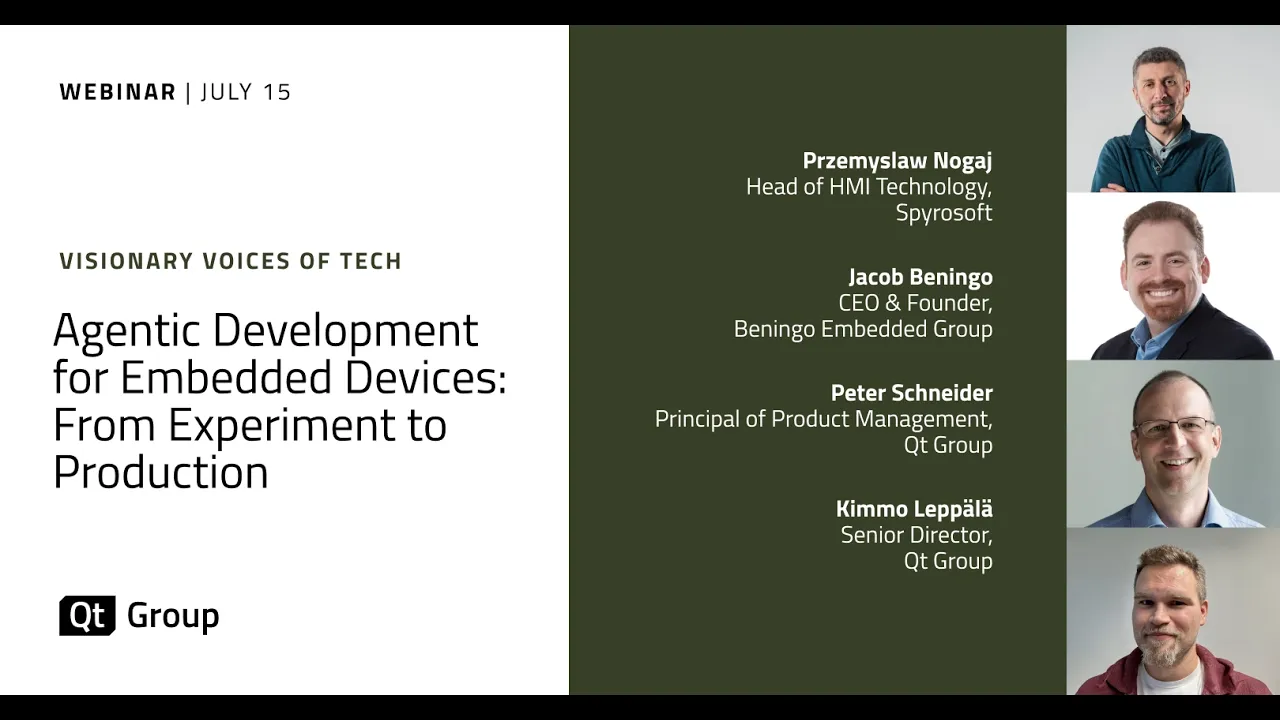
On-Demand Webinar: Agentic Development for Embedded Devices: From Experiment to Production
Agentic development for embedded devices is moving from experiment to production, and regulated indu...
Watch Video
CRA-ready in der industriellen Automatisierung: Von der Entwicklung bis zur Integration
Industrielle Softwareteams arbeiten unter zunehmendem Druck - knappe Budgets, CRA-Compliance-Fristen...
Watch Video
Video Podcast: Five Things From Auto China 2026 That Should Change Your SDV Roadmap
The modern in-vehicle experience starts in the architecture underneath the cockpit. The world’s bigg...
Watch Video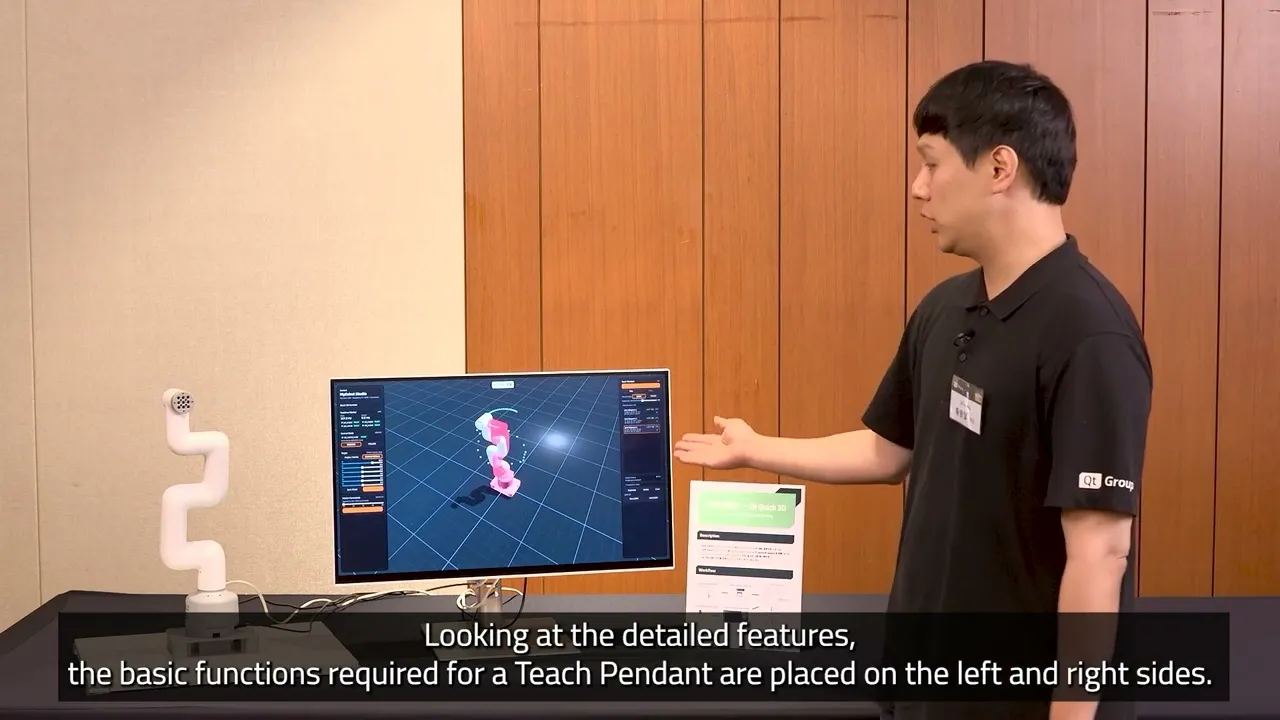
URDF to QML: Prototyping a Teach Pendant App with Qt Quick 3D
In this demo, Eric Hwang, Business Development Engineer, shows how to build a Teach Pendant by conve...
Watch Video