Common Graphics Performance and Rendering-Related Issues when Moving from Qt 5 to 6
Qt 6.0 introduced some important changes in the Qt graphics stack, further followed in the 6.x series by many improvements, with more coming in Qt 6.8 and 6.9. Over the course of the Qt 6 releases, some users found that migrating existing projects from Qt 5 (and occasionally Qt 4) sometimes tend to run into visual issues, rendering performance regressions, unexpected CPU, GPU, and memory usage profiles, or perceived "memory leaks"; problems that were not there before with Qt 5. Sometimes these turn out to be misunderstandings. Sometimes they turn out to be real problems. And sometimes they turn out to be something in-between. Taking Qt 6.8 LTS as the basis, while also looking at a few upcoming Qt 6.9 improvements, this talk is going to walk through a number of typical problems and questions that tend to pop up when moving graphics-intensive Widget and Qt Quick applications onto modern Qt 6 versions, focusing on painting, windowing, 3D acceleration, and various application-level consequences of rendering engine internals.
Oh, here is more

On-Demand Webinar: Agentic Development for Embedded Devices: From Experiment to Production
Agentic development for embedded devices is moving from experiment to production, and regulated indu...
Watch Video
CRA-ready in der industriellen Automatisierung: Von der Entwicklung bis zur Integration
Industrielle Softwareteams arbeiten unter zunehmendem Druck - knappe Budgets, CRA-Compliance-Fristen...
Watch Video
Video Podcast: Five Things From Auto China 2026 That Should Change Your SDV Roadmap
The modern in-vehicle experience starts in the architecture underneath the cockpit. The world’s bigg...
Watch Video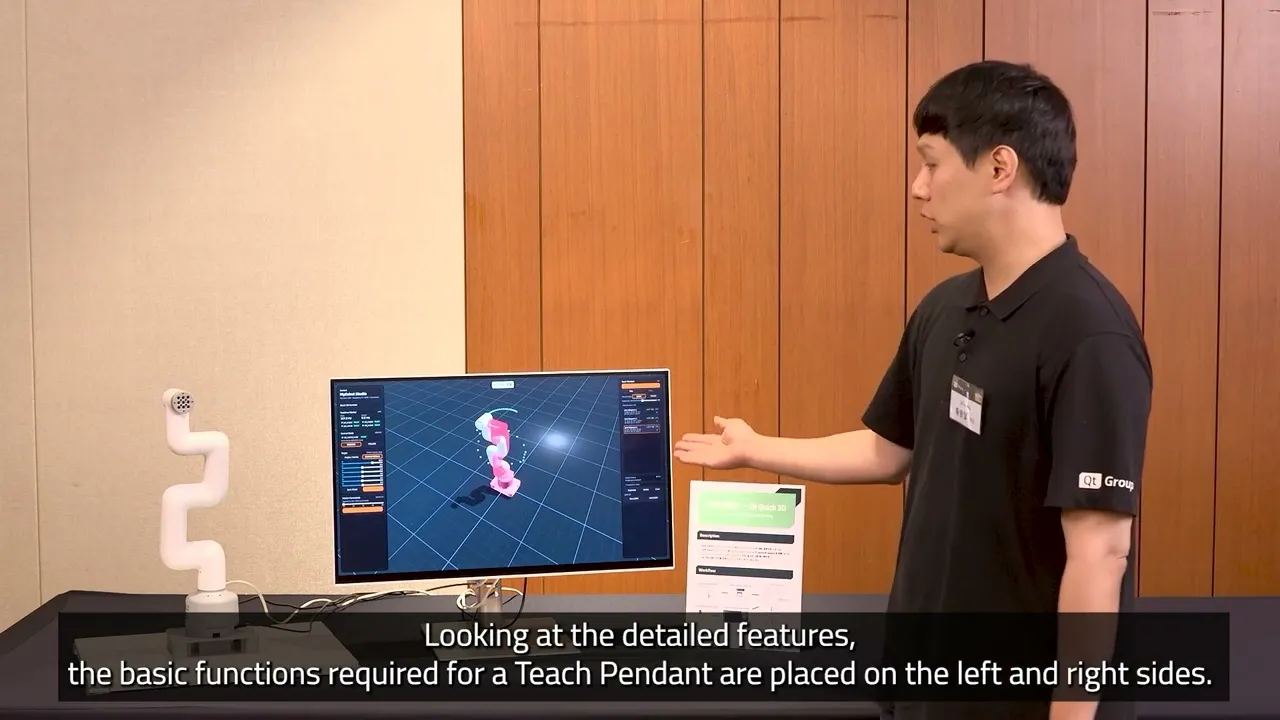
URDF to QML: Prototyping a Teach Pendant App with Qt Quick 3D
In this demo, Eric Hwang, Business Development Engineer, shows how to build a Teach Pendant by conve...
Watch Video