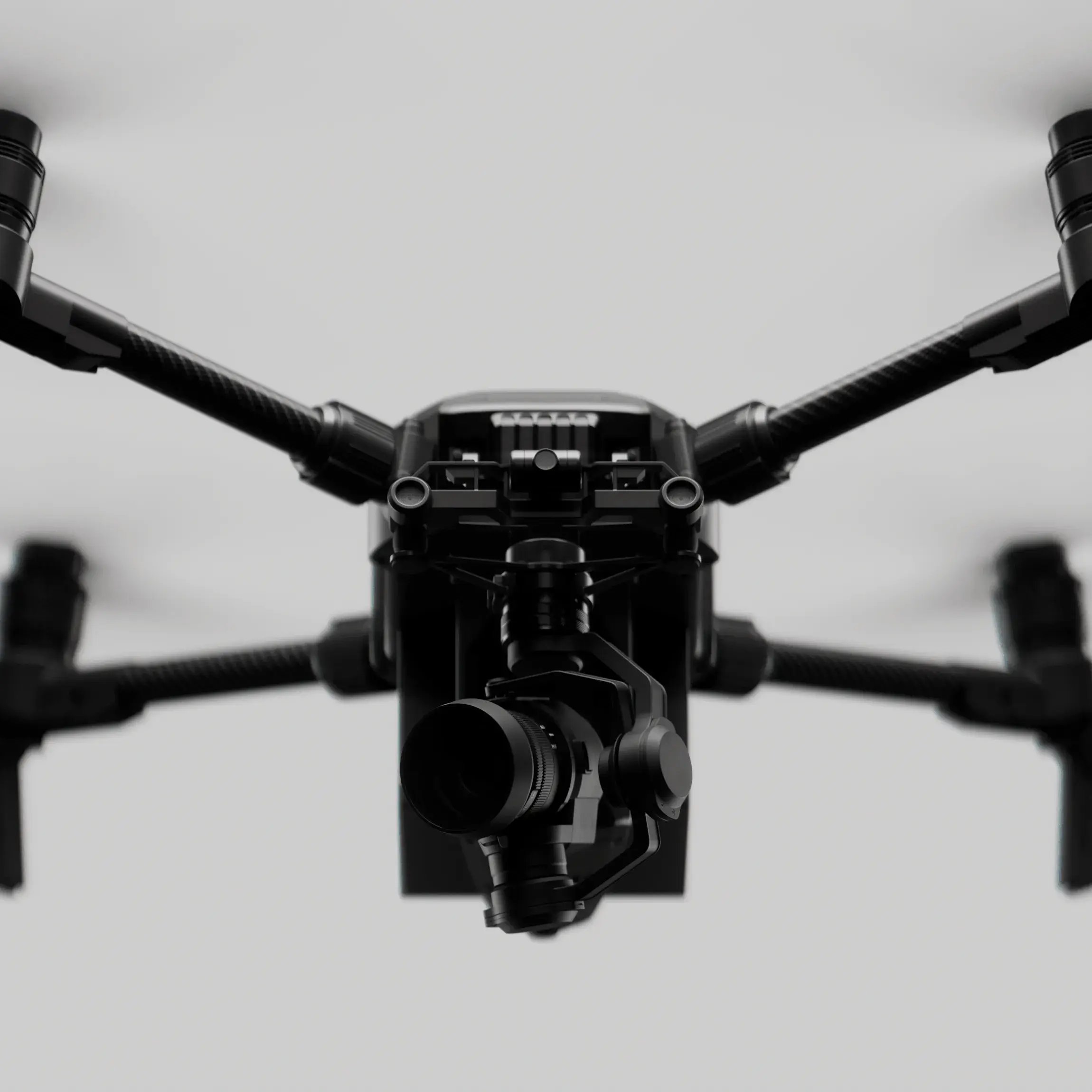
Building Drones and Uncrewed Vehicles with QGroundControl and Qt
QGroundControl (QGC), the leading open source ground control station for drones and uncrewed vehicles, is built largely in Qt.
Commercial Qt lets teams ship proprietary products on QGC without disclosing source code, backed by maintenance, expert support, and long-term support releases.
Qt and QGroundControl
QGroundControl (QGC) is the leading open source ground control station for uncrewed vehicles, providing flight control and mission planning for any vehicle running the MAVLink protocol—including PX4 and ArduPilot autopilots—across air, ground, and water autonomous systems. It is governed by the Dronecode Foundation, a vendor-neutral non-profit that also stewards PX4, MAVLink, and MAVSDK, and is used by hobbyists, researchers, and commercial operators alike.
By building on Qt as its core cross-platform framework, QGC inherits the ability to run on all major desktop, mobile, and embedded platforms from a single codebase. Additionally, Qt Framework powers QGC's user interface, maps and navigation, live video feeds, and more.
Building a proprietary application on QGroundControl requires a commercial Qt license. Without one, GPL v3 applies to the software and the complete source code must be made available to everyone receiving the software.
Licensing QGroundControl and Qt
QGroundControl is dual-licensed under Apache 2.0 (permissive) and GPL v3 (copyleft). Which license applies depends on how Qt is licensed. QGC uses Qt modules that are open source only under GPL, such as Qt Graphs, Qt HTTP Server, and Qt Quick 3D, so a build with open source Qt falls under GPL v3.
As the QGC license information states, two combinations of QGC and Qt are permitted:
| Open Source | Commercial | |
|---|---|---|
| QGroundControl | GPL v3 | Apache 2.0 |
| Qt Framework | Open source Qt (GPL v3) | Commercial Qt |
| Source code | Available to everyone receiving the software | Can remain proprietary |
| Hardware lockdown | Restricted on consumer devices | Permitted |
NOTE: GPL software can be used in commercial projects, but the resulting product cannot be kept proprietary. Organizations should verify compliance with GPL obligations through internal legal review.
The Added Value of Commercial Qt
A commercial Qt license is required to keep a QGC-based product proprietary. Where source code is shared anyway, for example with a government customer, a Qt subscription still adds:
-
Long lifecycles—Long-Term Support releases with up to five years of security patches and bug fixes, from Qt 6.8 onward.
-
Expert help—Qt Support for day-to-day technical questions, and Qt Professional Services for customization and faster time to market.
-
Faster hardware bring-up—Qt Board Support Packages for prototyping on select hardware.
-
Air-gapped development—offline installers, with no need to build Qt from source.
-
Real-Time Operating System support—for INTEGRITY, QNX, and VxWorks.
-
Security and compliance—a Software Bill of Materials. Qt 6.12 is compliant with the EU Cyber Resilience Act under commercial Qt licenses.
More Resources for Aerospace & Defense Software
Qt Group in the Drone Sector
Ground Control Software for Drones and Uncrewed Vehicles providing advanced HMI capabilities, mission planning, and operator interface.
Qt Group in the Aerospace and Defense Sector
Accelerate speed of delivery, continuous adaptation, and modular tech upgrades with Qt Group's technologies for cross-platform software design, development, and testing.
Qt Open Source and Commercial Licensing in Aerospace and Defense
Defense programs require source code transparency to satisfy certification, procurement, and export control requirements — a structural barrier for binary-only software products.