



Maximize Productivity and Quality with Scalable Industrial HMI Software
Create efficient, flexible, and reliable industrial automation HMI solutions and SCADA systems that scale across devices, use cases, and functions.
Watch On-Demand Webinar: Accelerating Industrial AI Applications
One Framework for Any Device
Join the leading players of Industry 4.0 in using Qt for high-performance SCADA, DCS, PLC, and CNC systems.
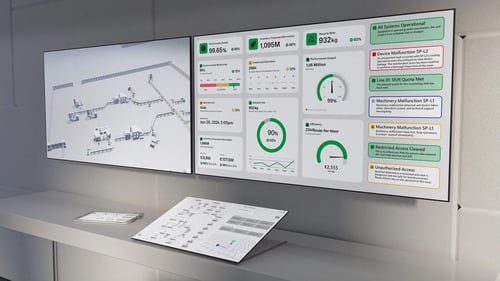
High-Accuracy Factory Monitoring
Leverage fast and accurate real-time usage intelligence, for data-driven decision-making.
Remote Accessibility and Control
Support for connectivity with multiple platforms and devices for full control over factory operations.
Quality, Reliability, and Security
Efficiently create intuitive industrial software meeting quality regulation standards.
Comprehensive Tools for Industrial Software
From design to development and testing, deliver quality in less time with tools that speak the same language.
Trusted by Leaders in Industrial Automation
Efficient Development with Cross-Platform Industrial Software
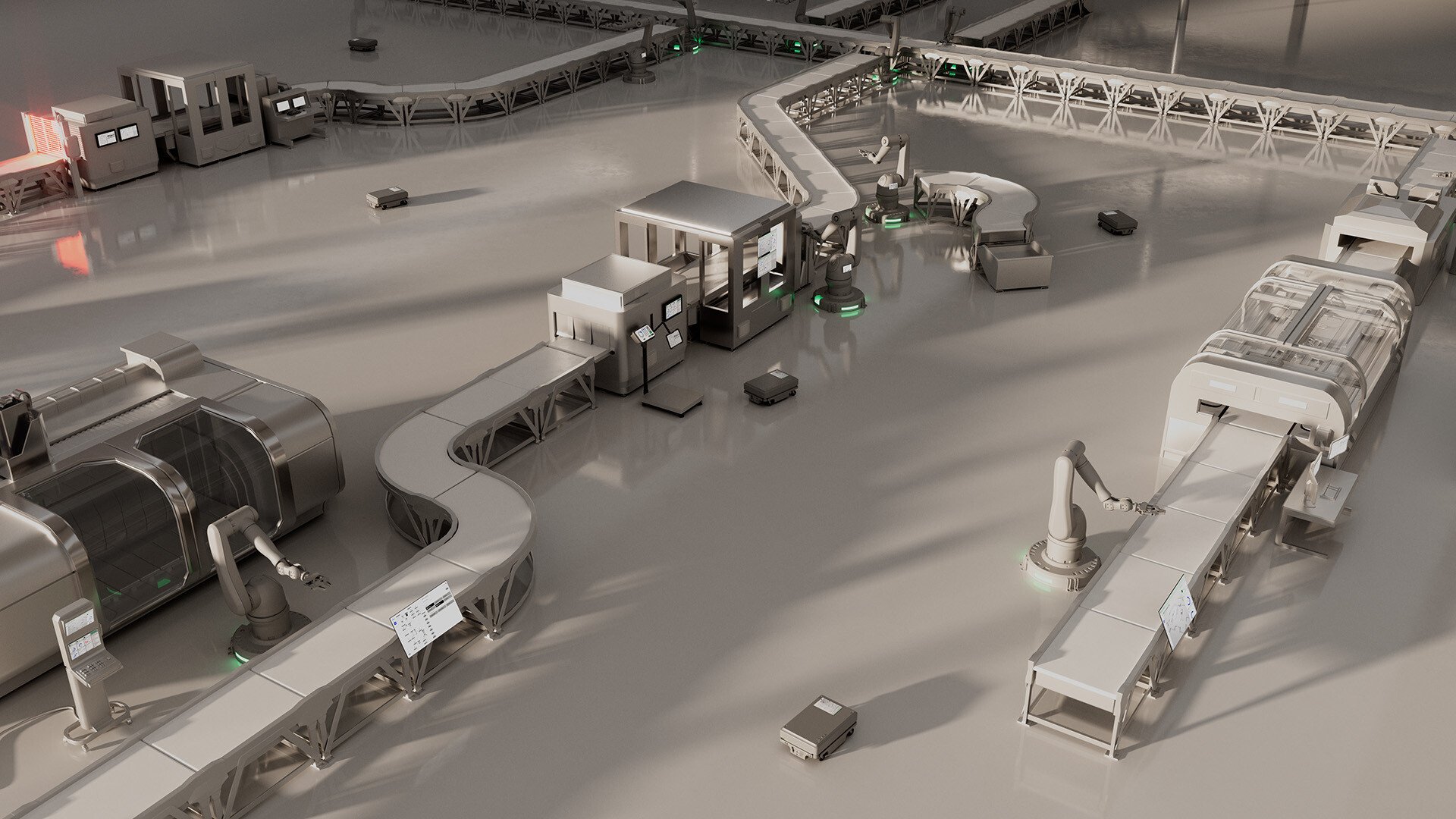
Maximize efficiency and cost savings with a single end-to-end technology for your entire IoT factory—covering design, development, and quality assurance across a spectrum of devices ranging from low-end microcontrollers to high-end MPUs, spanning from embedded to desktop and mobile.
Be it the SCADA systems in your control room, the PLCs controlling the factory machines, or the rugged tablets used by operators, Qt cross-platform capabilities enable seamless reuse of software components on any devices. In the context of Industry 4.0, where connected devices communicate, exchange data, and automate processes, Qt serves as a comprehensive middleware for industrial automation. With APIs for networking, threading, database access, location, and more, Qt powers fully connected, high-performance factories.
High-Accuracy and High-Performance Industrial HMIs and Automation Software
Build fast and accurate real-time industrial software capable of efficiently handling multiple concurrent processes, huge data loads, and real-time graphics.
Industrial software applications need real-time control over complex decentralized processes involving large amounts of data from remote sensors and advanced 2D and 3D graphics. Qt’s architecture is designed for high-performance industrial applications and optimized for real-time graphics, with built-in tooling for multi-thread execution of concurrent processes, on-demand behavior, and memory management, to mention only a few. Qt’s optimized data structures enable handling large datasets and real-time graphics with unparalleled performance on embedded systems.
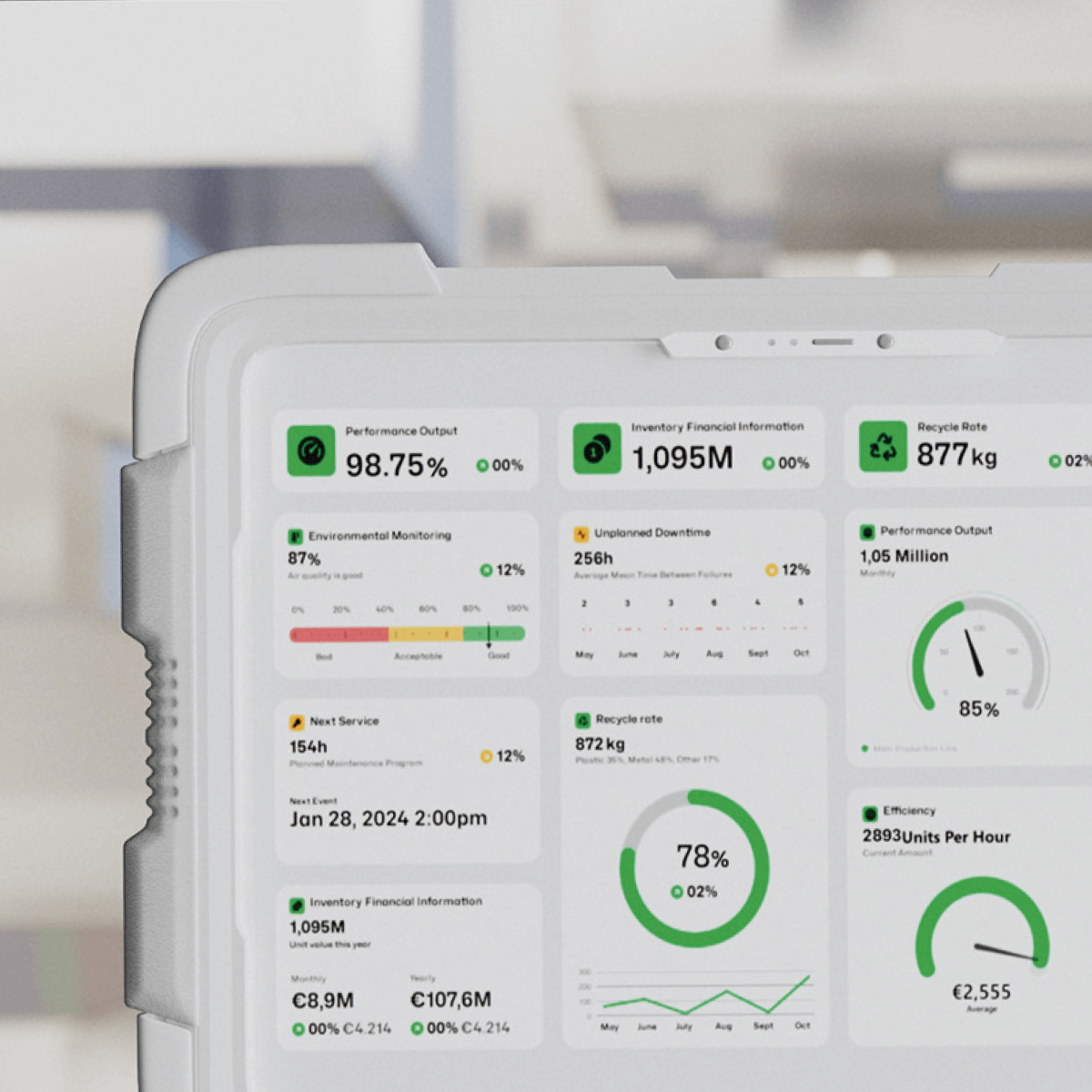
Power Factory Operations with a Scalable Industrial HMI Framework
Tame the complexity of industrial automation by means of flexible, easily customizable SCADA systems enabling real-time control of any machine from any location.
For the implementation of advanced SCADA systems, Qt Framework’s connectivity tooling and real-time graphics deliver intuitive, responsive, and effective UI applications enabling data-driven decision-making in the industrial process. Beyond the UI layer, Qt is a middleware for industrial automation with out-of-the-box support for connectivity with multiple platforms and devices (Qt Serial Bus), remote desktop accessibility (Qt WebAssembly), cloud and edge connectivity (Qt HTTP Server), and machine-to-machine interaction (Qt Serial Bus, Qt MQTT, Qt OPC UA, Qt GRPC).
Meet Industrial Regulatory Compliance
Create dependable industrial automation software and devices that can be operated in full safety and security, with or without wireless connectivity, through any type of input/output interface—including physical knobs and touch screens.
With its transparent, well-documented code development practices and continuous integration and testing process, the Qt code meets the highest requirements of reliability, resiliency, and functional safety—including possible adherence to the Safety Integrity Levels defined in IEC61508 or DO-178C.
In terms of tooling, the Axivion code analyzer helps you comply with coding guidelines and safety requirements. The Qt Safe Renderer ensures that safety-critical information (e.g., alarms) is promptly displayed under any circumstances. Qt LTS releases deliver stable APIs, ensuring long-lasting competitiveness in the market.
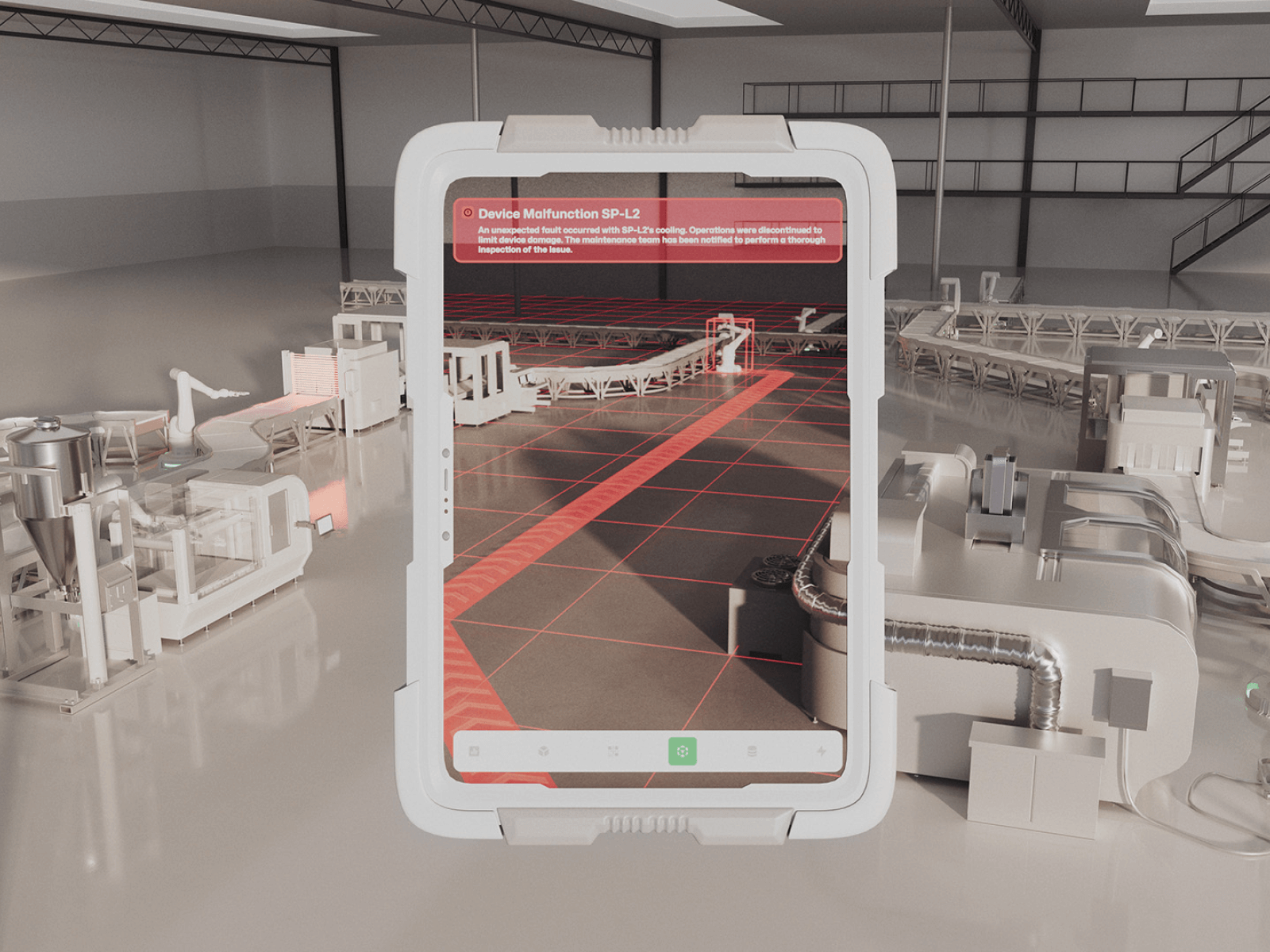
Upgrade Your SCADA System with Advanced 2D and 3D Real-time Graphics
Visualize your industrial data and processes, control the status of your equipment, simulate environments and machines, detect and optimize trends with real-time 2D and 3D graphics.
Qt state-of-the-art real-time graphics enable the visualization of complex data in the form of 2D charts and graphs to quickly identify patterns and trends, but also the creation of immersive 3D experiences for the implementation of simulations and digital twins for testing and optimizing processes, of VR environments for remote maintenance and training, and of robot fleet management systems.
Frequently Asked Questions
What applications can you build with Qt in Industrial Automation?
- Industrial Automation
Qt Framework enables development of cross-platform industrial automation software, including SCADA systems, DCS interfaces, PLC visualization, CNC control panels, robot teach pendants, fleet management platforms, simulation tools, digital twins, and XR/VR operator training applications.
Because Qt runs on embedded devices, industrial PCs, and edge systems, it supports both machine-level interfaces and enterprise-level industrial applications.
Is Qt only suitable for industrial HMIs or GUIs?
- Industrial Automation
No. While Qt is widely used for industrial HMI development, it is a full software framework for industrial systems.
Qt includes libraries for:
- Networking & industrial connectivity (OPC UA, MQTT, Modbus)
- Data handling & multithreading
- 2D/3D graphics & visualization
- Media & device integration
- Functional safety support
This makes Qt suitable for complete industrial software stacks—not just graphical user interfaces.
How do Qt’s graphics capabilities benefit industrial automation systems?
- Industrial Automation
Qt’s high-performance 2D and 3D graphics enable real-time data visualization, simulation, and digital twin applications in industrial environments.
This improves:
- Operator situational awareness
- Safety and usability
- Real-time monitoring dashboards
- Robotics visualization
- Factory simulation systems
Hardware-accelerated rendering ensures smooth performance even in embedded and edge devices.
How does Qt support remote operations and process automation?
- Industrial Automation
Qt enables secure connectivity across devices, edge systems, and cloud platforms.
It supports:
- Industrial communication protocols (OPC UA, MQTT, Modbus)
- Serial communication (Qt Serial Bus)
- Web-based interfaces (Qt WebAssembly)
- Cloud and REST integration (Qt HTTP Server)
- Machine-to-machine communication (gRPC)
This makes Qt suitable for remote monitoring, fleet management, predictive maintenance, and distributed industrial systems.
How does Qt help meet regulatory and safety compliance in industrial systems?
- Industrial Automation
Qt supports safety-critical industrial systems through:
- Qt Safe Renderer, certified to IEC 61508 (SIL 3)
- Compliance support for ISO 25119 (AgPL e)
- Long-Term Support (LTS) releases
- Software Bill of Materials (SBOM) initiatives
- Security updates and extended maintenance
These capabilities help manufacturers meet functional safety, cybersecurity, and regulatory requirements in industrial automation.
Can Qt run on microcontrollers?
- Industrial Automation
Yes. Qt for MCUs is a lightweight version of Qt designed for microcontrollers and resource-constrained embedded systems.
It enables:
- Touchscreen HMIs on ARM Cortex-M devices
- Real-time graphical interfaces
- Deterministic memory usage
- Small footprint deployments
Qt for MCUs is commonly used in industrial control panels and compact embedded devices.
What operating systems does Qt support in industrial environments?
- Industrial Automation
Qt supports a broad range of operating systems used in industrial automation, enabling deployment across embedded devices, industrial PCs, and edge systems.
Common industrial platforms supported by Qt:
Embedded & RTOS
- Embedded Linux
- Yocto-based systems
- Real-time operating systems (via Qt for MCUs)
Industrial & edge computing
- Linux (Ubuntu, Debian, Red Hat, custom distributions)
- Windows 10/11 IoT Enterprise
- Windows Embedded variants
High-reliability & specialized systems
- QNX (used in safety-critical and transportation systems)
- INTEGRITY and other RTOS environments (via Qt Safe Renderer support)
This flexibility allows manufacturers to standardize software across hardware platforms and avoid vendor lock-in.
Can Qt replace legacy HMI systems?
- Industrial Automation
Yes. Qt is widely used to modernize and replace legacy HMI and SCADA interfaces while preserving existing control logic and backend systems.
Legacy HMIs often suffer from outdated graphics, limited usability, vendor lock-in, and aging operating systems. Qt enables manufacturers to redesign the user interface and operator workflows without replacing PLCs, field devices, or control infrastructure.
Qt-based modernization enables:
- Modern, touch-friendly operator interfaces
- Improved usability and operator efficiency
- High-performance 2D/3D visualization
- Cross-platform deployment (embedded, Linux, Windows)
- Integration with existing PLC and SCADA systems
- Long-term maintainability and hardware independence
Qt can be deployed incrementally, allowing modernization of visualization layers while maintaining production continuity.
Is Qt suitable for robotics software development?
- Industrial Automation
Yes. Qt is widely used in robotics for operator interfaces, control software, simulation, and fleet management systems.
Robotics systems require real-time visualization, intuitive control interfaces, and cross-platform deployment—areas where Qt provides strong advantages.
Qt enables robotics development for:
Operator & control interfaces
- Robot control panels and dashboards
- Teach pendant user interfaces
- Remote robot operation interfaces
Visualization & simulation
- 3D robot motion visualization
- Digital twin environments
- Simulation and virtual commissioning
Fleet & system management
- Robot fleet monitoring dashboards
- Remote diagnostics and telemetry
- Predictive maintenance visualization
Integration & connectivity
- ROS and middleware integration
- Industrial protocol support
- Edge and cloud connectivity
Qt is commonly used alongside robotics frameworks and control systems to deliver production-grade user experiences and system visualization.
Explore Innovation in Industrial Automation
with Our Demo
Customer Stories Written with Qt
Learn how Siemens uses Qt Framework in Industrial Automation for its industrial stability, robustness, and industry-grade quality.
Learn how Bosch Software and Digital Solutions partners with Qt to help global customers accelerate their digital transformation journeys.
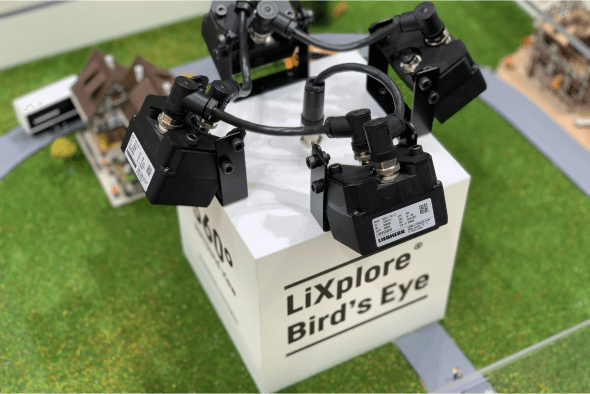
Liebherr-Electronics and Drives GmbH offers mobile machine operators detailed views of their working environment, with strong technical support from Qt and responsive contacts.
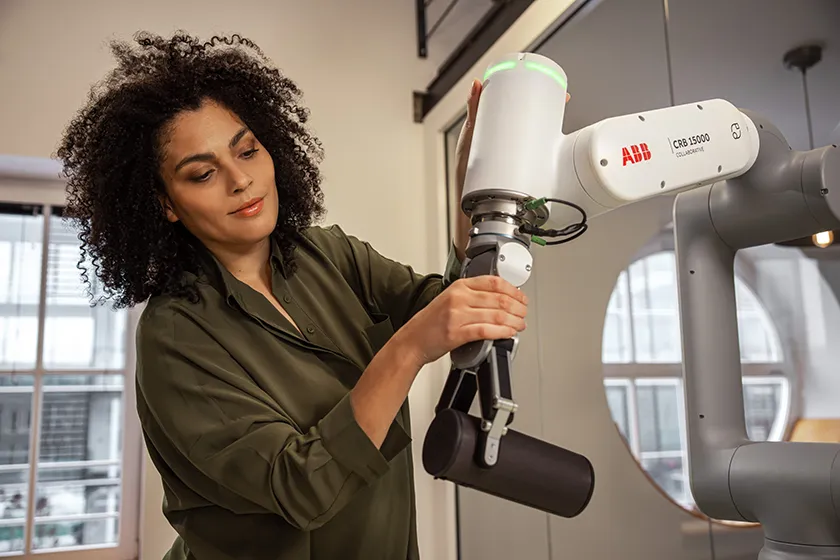
The ABB Group uses Squish GUI Tester in protection relay development to ensure quality and safety, with scripts built by modeling the UI structure rather than recording.
Novatron uses the Qt framework in heavy-duty equipment control systems for seamless data flow and sensor-based visualizations, emphasizing the need for reliable systems in their work.
The project aimed to reduce machinery cabin displays by creating an app-based product that integrates multiple applications into one display, with QML offering impressive ease-of-use and efficiency.
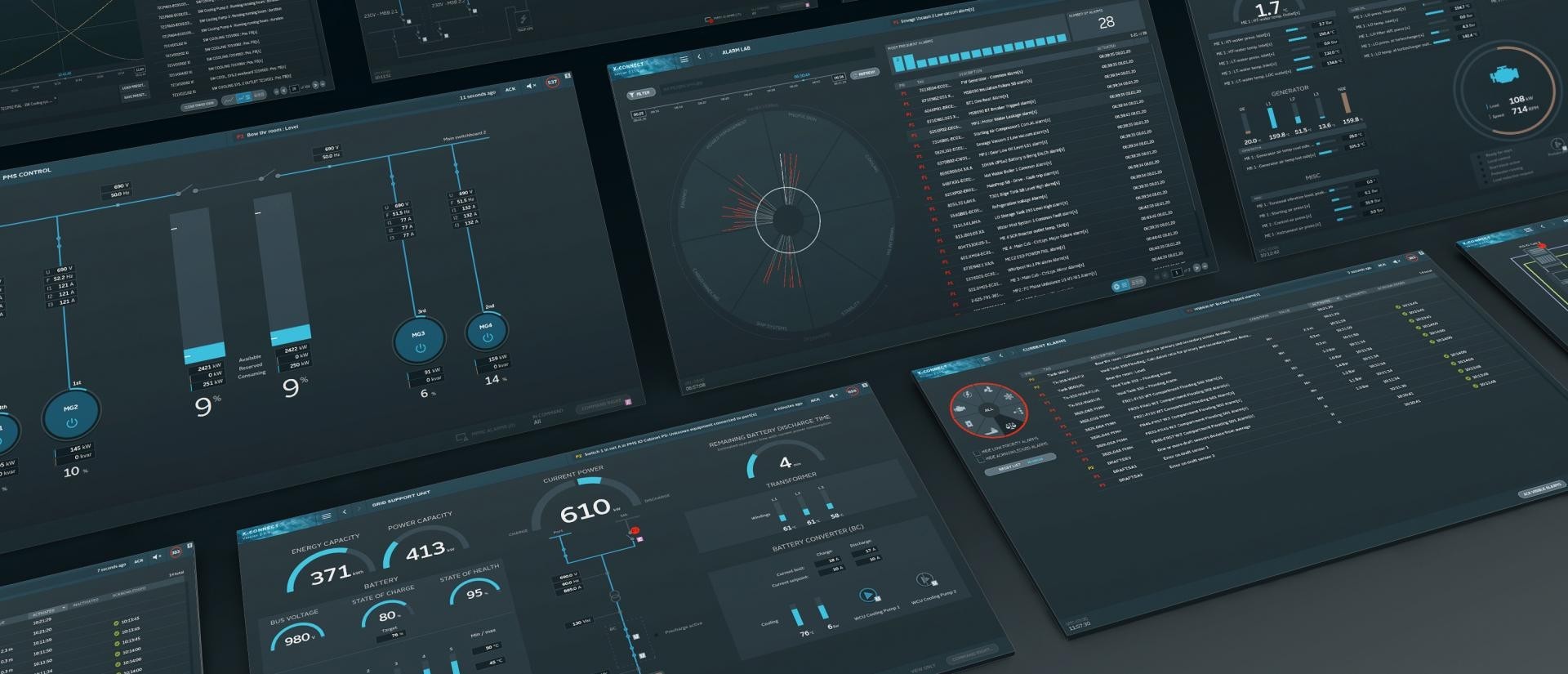
lue Ctrl AS develops marine automation systems using their X-CONNECT® platform, built entirely on Qt, allowing efficient configuration of vessel operations, handling both backend and GUI aspects.
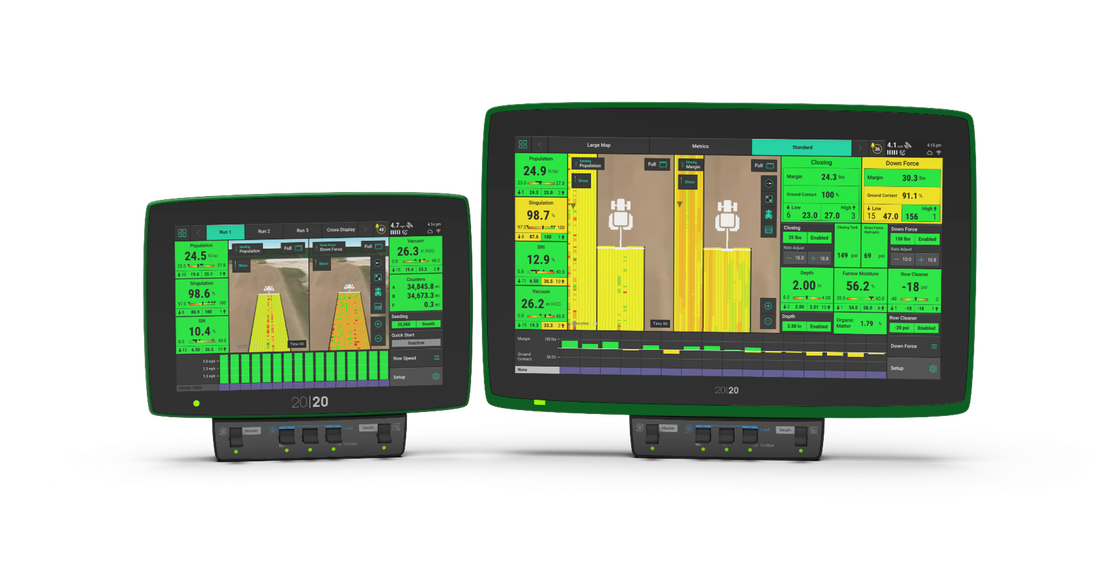
Precision Planting used Qt for their 20|20 GUI system, offering farmers real-time equipment insights during planting and harvest, opting for Qt over switching to JavaScript or HTML.
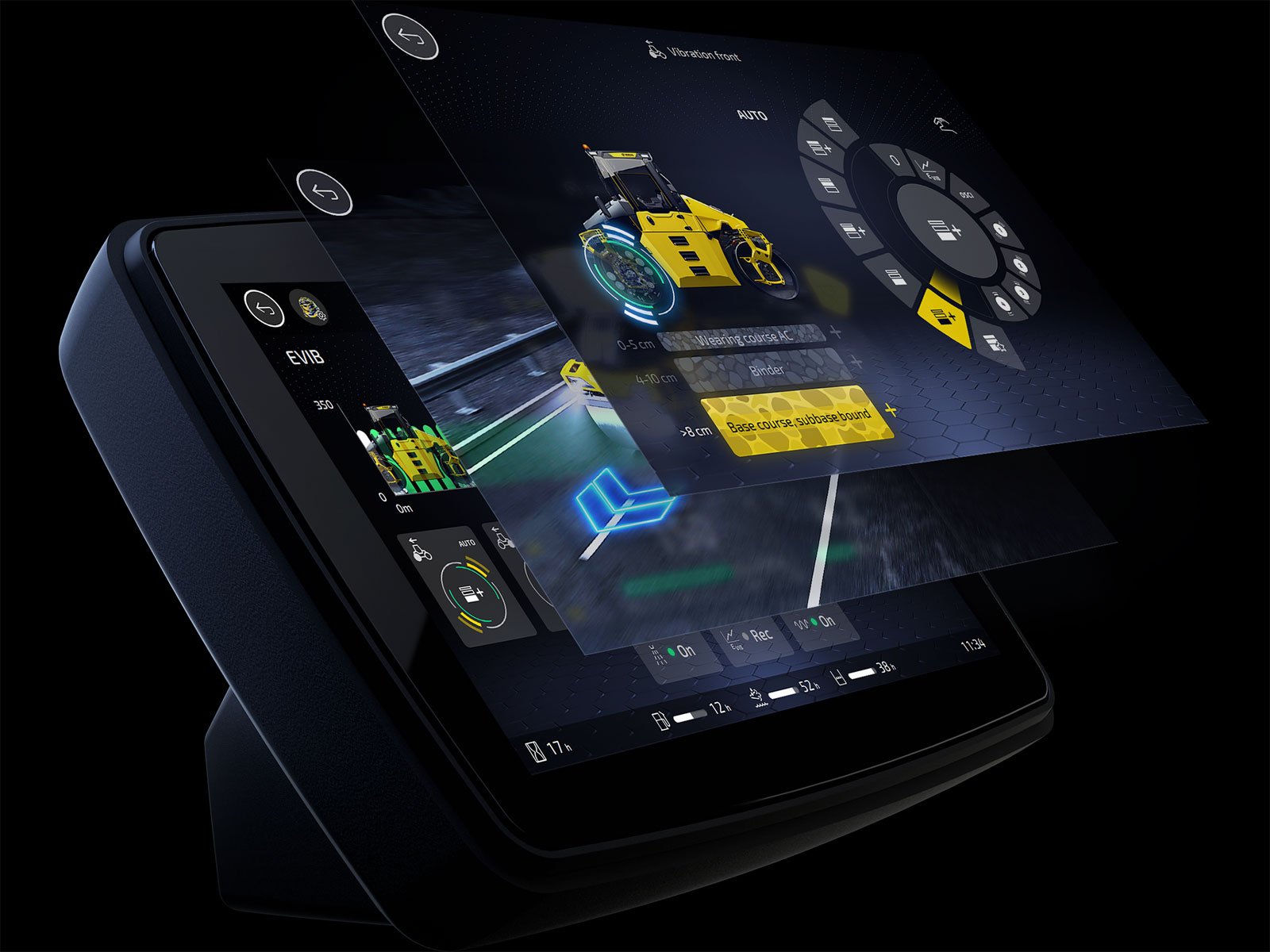
BOMAG uses Qt for their myCOCKPIT HMI, enabling efficient operation of complex systems with integrated camera displays, process parameters, and system status.
Read Our Industry Insights Blog Series
QtHttpServer routing API
Hi everybody. First of all, I want to say thank you for all of you for...
Qt Virtual Tech Summit Registration is Open!
Did you miss Qt World Summit 2018? Fear not. On 12-14 February, the Qt...
More on UX, Product Planning, and Industrial Applications
Cybersecurity in Industrial Automation
Industrial automation is increasingly relying on software. To safeguard against advanced cyber threats, manufacturers and software providers need to meet rising regulatory demands to prevent financial and reputational harm. T
Adapt or Fall Behind: Scalable Solutions Reshaping Manufacturing
From code reusability to decentralized control systems, scalable solutions are not just reshaping manufacturing automation; they're revolutionizing it.
Read ArticleThe Future Landscape of Industrial Automation
World-leading industrial manufacturers leverage connectivity, advanced 2D and 3D graphics, and AI to increase performance, minimize downtime, and boost competitiveness.
Designing for Efficiency: UX Solutions for Industrial Automation
Spurred by the implementation of AI, robotics, and other technologies, the global industrial automation market is projected to reach USD 265 billion by 2025. UX is one solution to the challenges presented by this scramble to automate.
The Critical Role of GUI Design for Safety, Efficiency, and Interoperability
Discover the importance of GUI design in industrial automation for safety, efficiency, and interoperability.
Qt in Industrial Vehicles
Optimize your production processes with intelligent digital solutions for Commercial, Construction, Naval, and Agricultural Vehicles by developing connected, integrated machines operable with ease and security.
Learn MoreCreate Your Next Industrial Automation Project with Qt
Take advantage of an end-to-end solution for industrial product design, development, quality assurance, and deployment.
The Qt framework allows you to build your Industrial IoT applications in conjunction with AI, VR, and cloud computing, enabling advanced business intelligence, new insights into industrial processes, and data-driven decisions that lead your business to a new level of efficiency, productivity, and profitability.