
Design and Code Generation

Enhance productivity with visual modeling and automated, error-free code generation, enabling a seamless transition from design to implementation while ensuring functional safety and compliance.

Efficient Design-to-Code with IAR

develper with mutlipe screens writting and debugging code

Faster Time-to-Market with Automated Code Generation

Eliminate manual coding, reduce development errors, and accelerate production cycles with real-time validation and visual design tools that optimize embedded software efficiency. By using state machine-based design, teams can streamline workflows, ensuring structured and predictable system behavior in safety-critical applications.
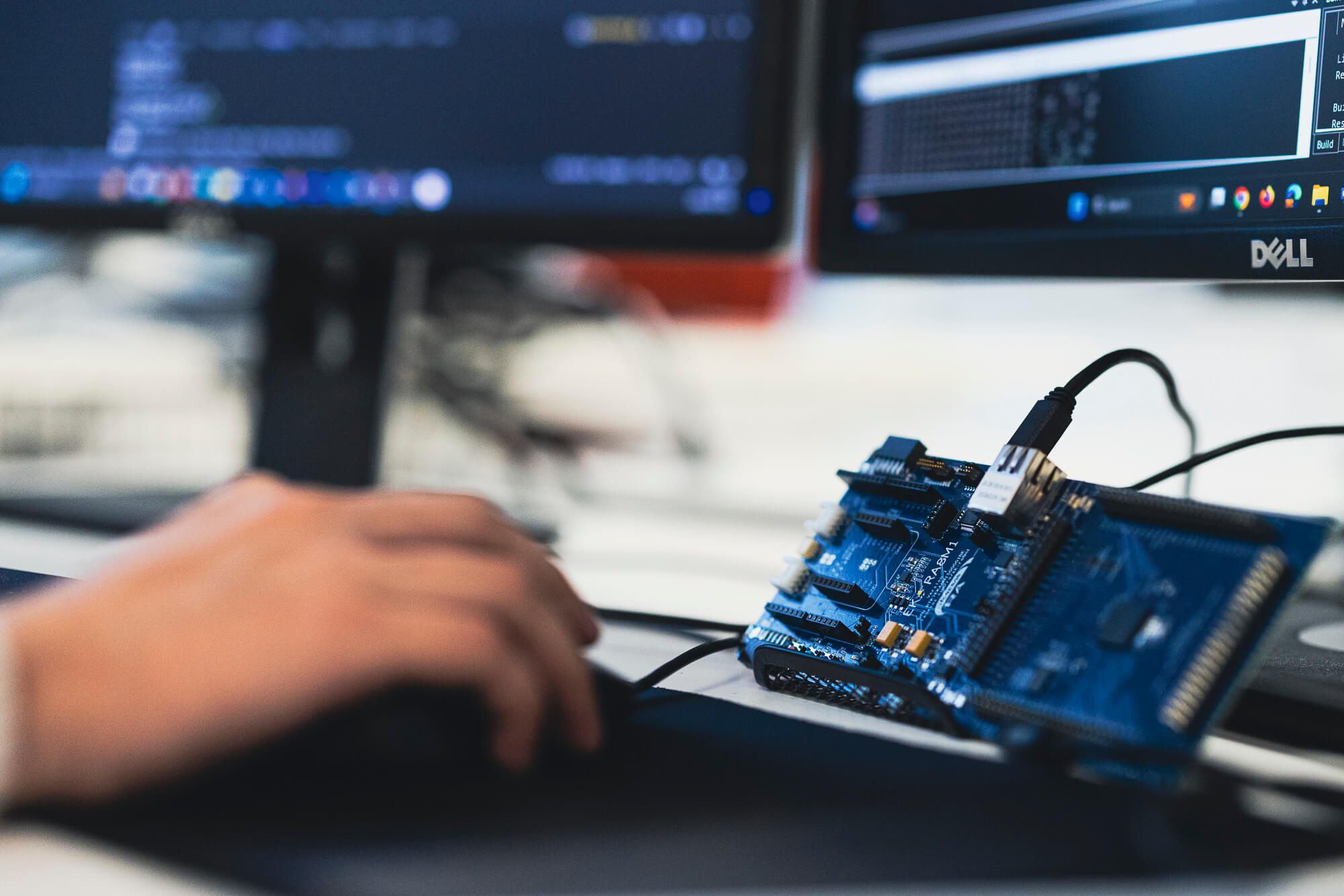
debugging focus on development board renesas

Consistent Quality and Maintainability

Automated code generation ensures consistency across embedded applications, reducing variations, minimizing debugging efforts, and enhancing long-term software lifecycle management. The generated C/C++ code complies with MISRA C/C++, ensuring reliability and maintainability according to the IAR Visual State MISRA C/C++ Statement of Compliance.
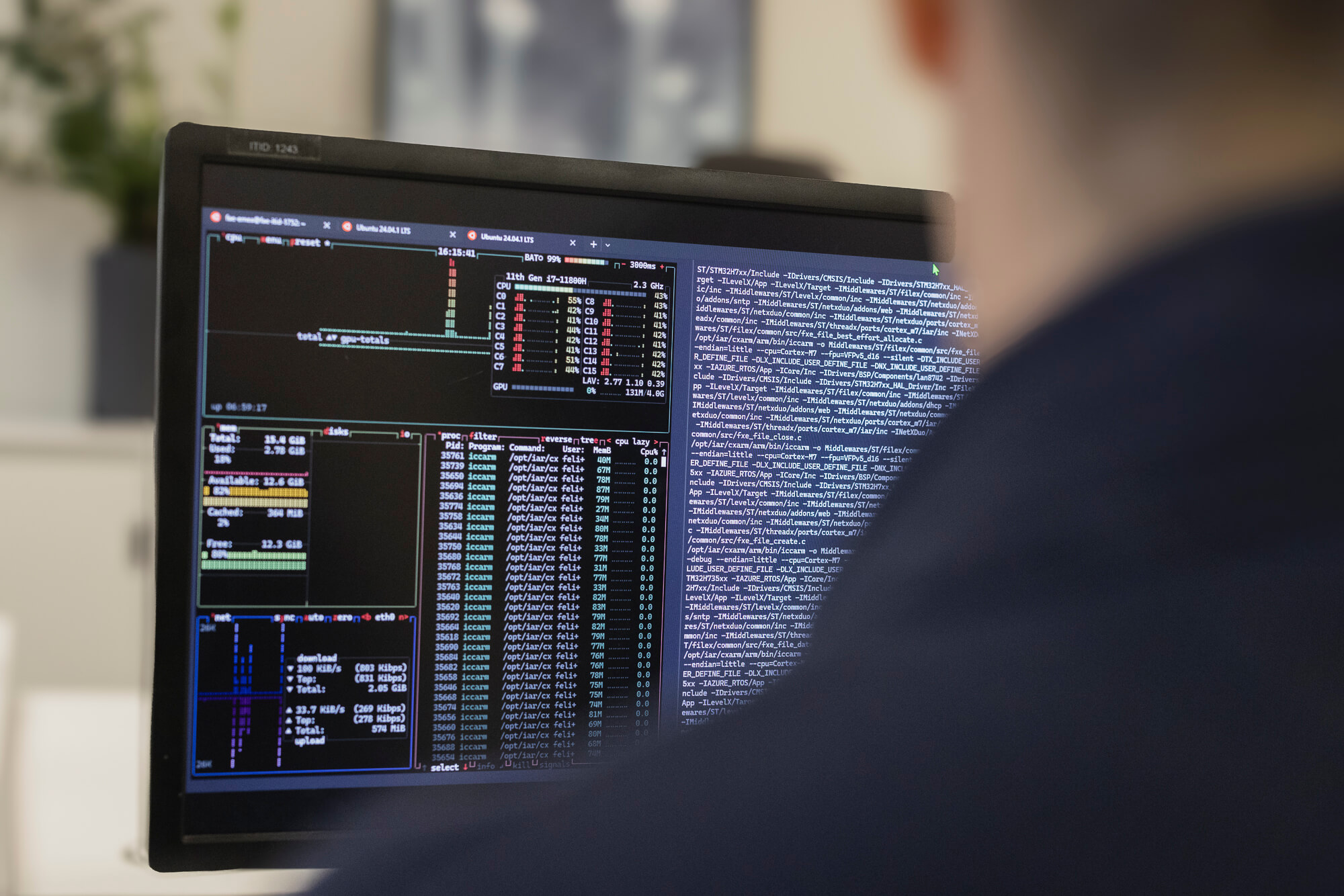
analyzing CI build performance

Seamless Workflow from Design to Deployment

A fully integrated design-to-code process aligns software design with hardware constraints and system requirements, ensuring robust and efficient embedded applications. IAR Visual State provides state-machine-based modeling, which is particularly suited for safety-critical environments like automotive, industrial automation, and medical devices.

development team

Accelerating Embedded Development with Model-Based Design

Model-based design simplifies embedded software development with graphical modeling, reducing complexity and improving efficiency. This structured approach ensures predictable execution, faster development, and is ideal for safety-critical and industrial applications.

Low-code development, a key part of model-based design, minimizes manual coding through automated code generation, enabling rapid prototyping and deployment. State-machine-driven development enhances consistency, eliminating translation errors and streamlining the transition from design to implementation.

Modern embedded development requires collaboration across engineers, domain experts, and software developers. Graphical state-machine modeling acts as a universal language, improving communication and maintaining consistency across teams.

IAR Visual State automates C, C++, C#, and Java code generation, eliminating hand-coding bottlenecks while supporting embedded and app development for desktop, mobile, and HMI applications. With architecture-agnostic compatibility across 8-, 16-, 32-, and 64-bit systems, it integrates with various RTOS/OS environments. Variant handling simplifies configuration, and hierarchical coding optimizes performance, making scaling projects easier.

Integrated Debugging, Compliance, and Functional Safety

Ensuring software reliability and compliance is critical as designs move from modeling to implementation. Real-time hardware debugging provides visibility into active states and transitions, reducing troubleshooting time. Automated MISRA C:2012-compliant code generation enhances integrity, while built-in validation detects deadlocks, unreachable states, and conflicting transitions early, minimizing deployment risks.

Aligned with IEC 61508 SIL3+ recommendations, IAR Visual State accelerates safety-critical development in automotive, industrial automation, and medical devices. By integrating model-based design, low-code development, automated code generation, and compliance enforcement, it ensures a seamless transition from concept to deployment.
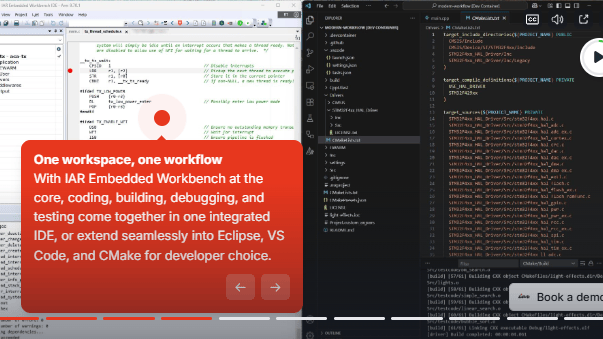
Supademo screen

TRY OUT IAR'S PLATFORM

Interactive Demo

Experience IAR's platform and get an introduction to how it works.

BUILDING BLOCKS

Explore IAR’s Model-Based Design Components

Accelerate embedded development with state-machine-driven modeling, automated code generation, and seamless integration for efficient, high-quality software development.

Consistent Integration of Design, Code, and Compliance

Visual Modeling Tools

Graphical state-machine-driven design simplifies system architecture representation, reducing complexity while improving collaboration across large, distributed teams. Model-based design serves as a universal language, enabling engineers, domain experts, and software developers to align on system behavior, ensuring consistency across all development phases.

Automated C, C++, C#, and Java Code Generation

Low-code automation eliminates manual coding bottlenecks, accelerating development cycles and reducing human errors. Code is MISRA C:2012-compliant, ensuring high-integrity software and seamless integration into functional safety and cybersecurity standards such as IEC 61508 SIL3+. The ability to generate Java and C# code extends applications beyond embedded systems, supporting desktop, mobile, and HMI interfaces.

Scalable, Architecture-Agnostic Development

Supporting 8-, 16-, 32-, and 64-bit systems, IAR Visual State integrates with various RTOS/OS environments. Features like variant handling simplify configuration management, while hierarchical coding optimizes performance and memory efficiency. These capabilities allow teams to scale projects efficiently while maintaining software consistency.

Integrated Workflow from Design to Deployment

Automated workflows bridge the gap between system architecture and execution. Real-time debugging visualizes active states and transitions, reducing troubleshooting time and improving development efficiency. Built-in validation detects deadlocks, unreachable states, and conflicting transitions early in development, mitigating risks before deployment.

Functional Safety and Compliance Enforcement

Model-based design is recommended by IEC 61508 for SIL3+ applications. By automating compliance and integrating verification tools, teams can accelerate certification for safety-critical systems in automotive, industrial automation, medical devices, and more.

SEE HOW IT WORKS

Why choose the IAR platform for design from day one?

See how the IAR platform accelerates embedded design with seamless toolchain integration and modern code generation workflows, laying the foundation for scalable, production-ready systems.

TRANSFORMING CHALLENGES IN TO SUCCESS

Customer Cases

Get inspiration on how world-leading companies enhance their embedded development with our platform.

Casio — Improving Time to Market

Although we increased performance, we also had to maintain power consumption, which is why we divided processing into two cores. It was a lot of work, but we were able to find a balance between improved performance and power efficiency.

Osong Medical Innovation Foundation – Ensuring Medical Software Certification

Quality and certification are critical for the future of high-tech medical devices. By using C-STAT, we can improve code quality while preparing for IEC 62304-certified functional safety upgrades to meet regulatory standards.

NEWGIN – Strengthening Software Quality for the Future

As firmware complexity grows, we see an increasing need for tools that help ensure software quality. Static analysis and CI tool integration will be key to improving reliability and maintaining high standards in development.

VICTEK – High-Quality Code for Secure IoT Systems

Developing low-power IoT systems requires defect-free, high-quality code to ensure secure integration with optimized applications and networks, while minimizing cybersecurity risks.

Landis+Gyr – Early Bug Detection with Static Analysis

To maintain high product quality, we need tools that catch defects early in development. C-STAT allows us to find bugs faster, reduce time to market, and streamline development costs, making it a core tool across our sites.

FAQ

Can IAR Visual State integrate with existing development environments

Yes, it seamlessly integrates with IAR Embedded Workbench and other toolchains, supporting a smooth design-to-code workflow for embedded applications.

Do I have to modify the generated code?

No. The code generated by IAR Visual State focuses on the control logic of a state machine system. The design is always the only explicit representation of the control logic. The model and the executing code should always stay synchronized. Modifying state machine code by hand carries the risk of introducing hard-to-find errors in the internal bookkeeping of states and conditions.

How can automated code generation improve efficiency and reduce engineering overhead?

By eliminating manual coding errors and reducing debugging time, automated code generation increases developer productivity and accelerates product delivery.

How can automated code generation reduce development errors while maintaining flexibility?

Automated code generation eliminates human errors, ensures consistency, and accelerates development by producing optimized and validated C/C++ code.

How does model-based development help teams scale embedded projects with consistent quality?

A standardized, automated process ensures consistency across projects, allowing teams to reuse proven components and reduce time spent on rework.

Get Access to All

Scale development operations with freedom and flexibility, accelerate innovation with code confidence and simplify compliance while strengthening security.

  • Architecture and device agnostic
  • Cloud-ready, tailored for enterprises
  • Functional safety always included
  • End-to-end embedded security

With our platform, you get access to everything.
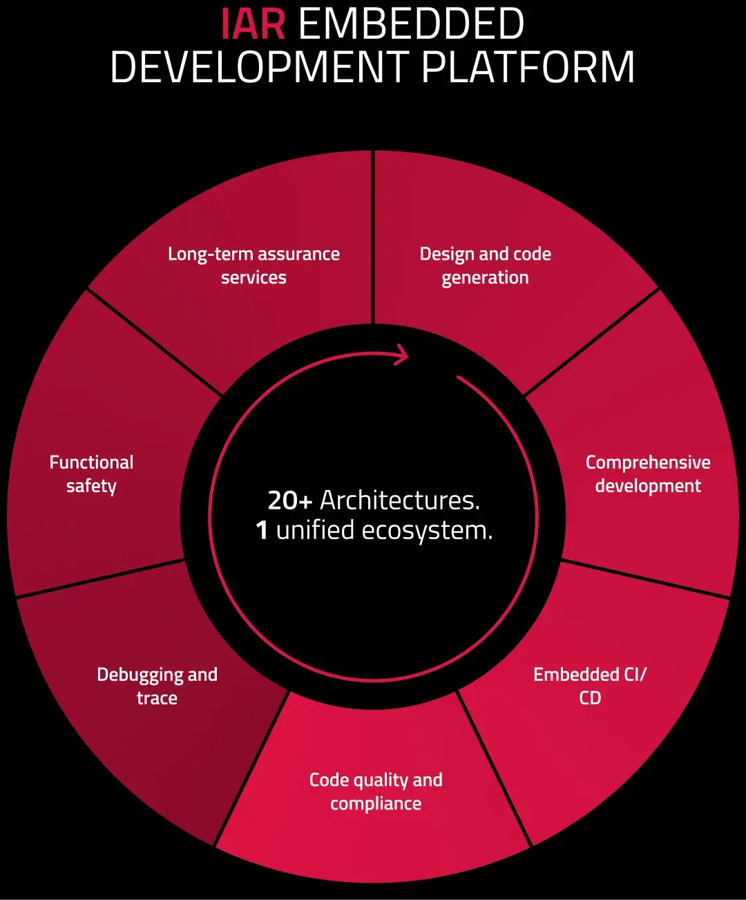

Explore the Platform

Platform wheel without header bigger canvas


Get started today.
Our worldwide sales team is here to guide you.