Scaling Digital Cockpit Development
The in-vehicle digital experience often falls short of user expectations, with drivers choosing instead to use their smartphones in the car to satisfy infotainment needs. This is surprising given the comparatively small size of the smartphone screen. When mirroring the phone's screen to the in-vehicle display, it will not be integrated with the vehicle in a way that the driver can enjoy a truly convenient and safe driving experience. This is largely owing to the traditional project-by-project car development cycle. Each car brand undertakes a new development project, from scratch, for new vehicles. Foundational cockpit components are repeatedly rebuilt, requiring integration and a new UI design which leads to lengthy and costly development cycles. But, does this have to be the case? What if we could re-use core digital cockpit components and interface elements? What if we could offer developers and designers the tools to easily configure and customize the in-vehicle infotainment experience across screens, models, and brands? This talk discusses scaling the digital cockpit development and how TomTom IndiGo empowers carmakers to differentiate where it matters most to them.
Speaker: Eva Jennings, TomTom
Oh, here is more

Webinar: The Cyber Resilience Act: What Waiting is Costing US Software Teams
Starting September 11, 2026, the EU Cyber Resilience Act (CRA) requires companies to report actively...
Watch Video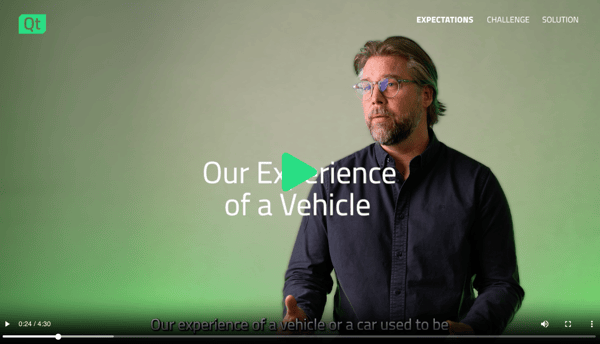
Video: The Making of The Outpace Project
Project Outpace – Qt's Reference Panoramic 3D Automotive Cockpit. Don't Choose Between The Design Yo...
Watch Video
On-Demand Webinar: CI/CD and Continuous Compliance of Embedded Software for Aerospace and Defense
Today, CI/CD for pure software products is well understood. But hardware dependencies and embedded d...
Watch Video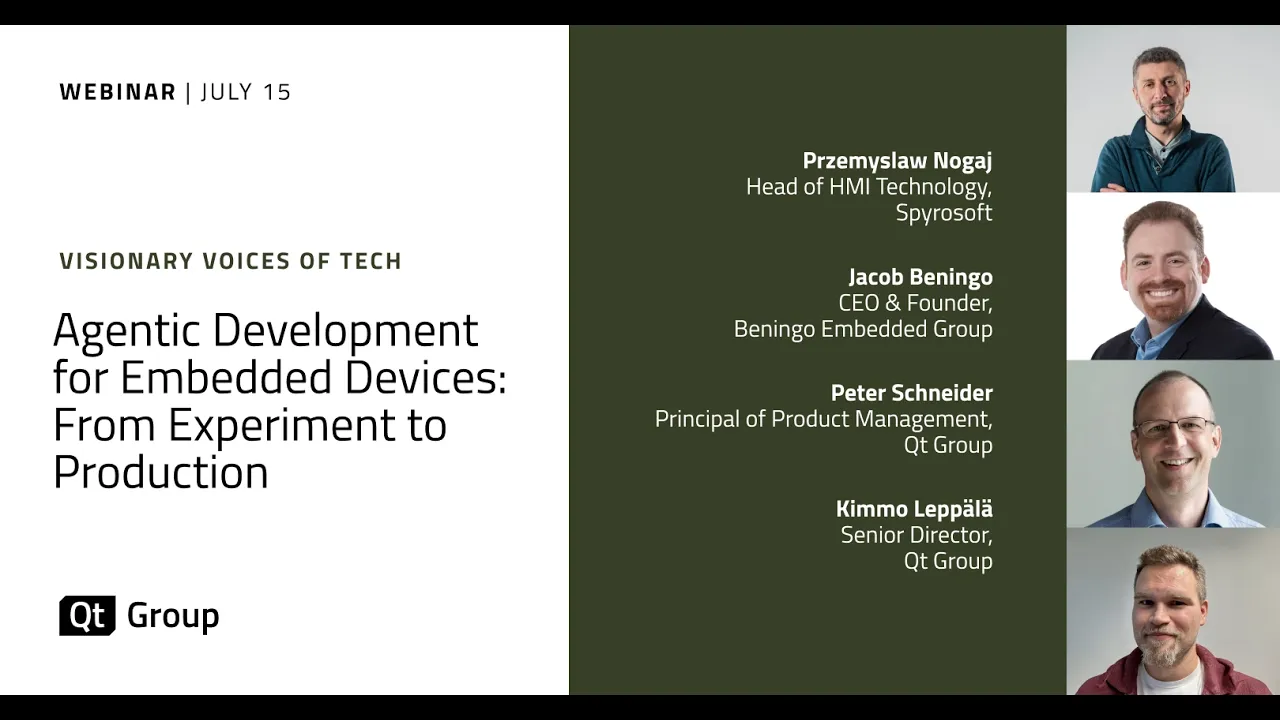
On-Demand Webinar: Agentic Development for Embedded Devices: From Experiment to Production
Agentic development for embedded devices is moving from experiment to production, and regulated indu...
Watch Video