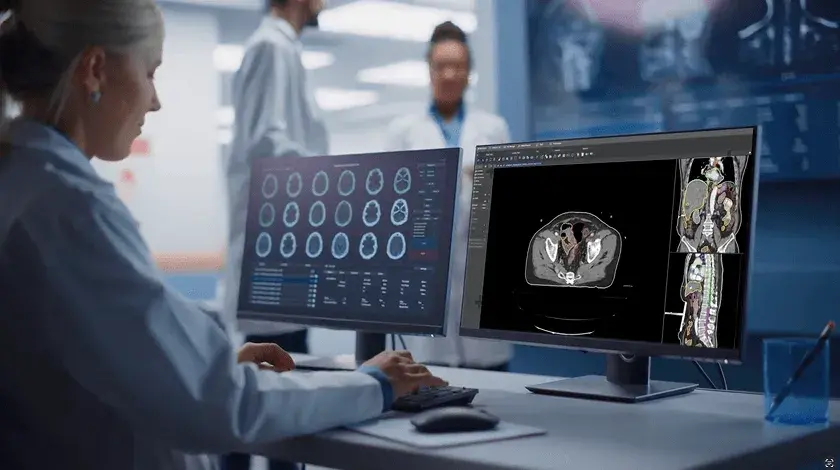
Vision Paper

From Conservative to Bold: How MedTech is Transforming Itself

Innovation in MedTech is no longer optional. Do you have the software infrastructure to keep up?


The debate between regulation and innovation in the MedTech sector has been ongoing for years. Many developers believe that compliance requirements can hinder progress, while regulators view them as essential for ensuring patient safety. Teams are under pressure to innovate rapidly; yet, even minor compliance gaps can prevent a product from reaching the market.

Is there a solution? Yes.

This vision paper explores the drivers of modern MedTech innovation and outlines how a strong, reliable software foundation equips leaders to innovate without compromising regulatory integrity.


Most Relevant For:


  • Leaders and architects building medical devices

  • Teams designing diagnostic and lab automation systems

  • Healthcare IT and digital health decision-makers focused on secure, interoperable platforms

Cybersecurity and Compliance as Drivers of Modern Medical Software Development


Cybersecurity now shapes MedTech software from the earliest planning stages, with 70% of healthcare organizations integrating it into initial investment decisions. This shift reinforces the need for software architectures that evolve safely—where innovation, security, and compliance are engineered together rather than managed in sequence.

Remi Roux Image 1

MedTech companies will focus on two fronts. On the hardware side, keeping things nimble. Providing high performance while keeping the device small. On the software side, having a stack to develop the capabilities you want to integrate into the system in the future. AI, machine learning, better UI, etc.

Remi Roux

Head of Applications, Witekio
Roger Image

While integrating modern user experiences into MedTech devices, we must balance innovation with regulatory compliance and patient safety. It requires careful planning and execution to deliver the best outcomes for both healthcare providers and patients.

Roger Mazzella

Global Medical Industry Leader, Qt Group

 

Chad Holmes Image 1

Securing healthcare environments must involve private industry and those providing care. The regulatory environment should then provide guidance and funding. If we can get these three working together, we can make significant progress.

Chad Holmes

Cybersecurity Evangelist, Cynerio
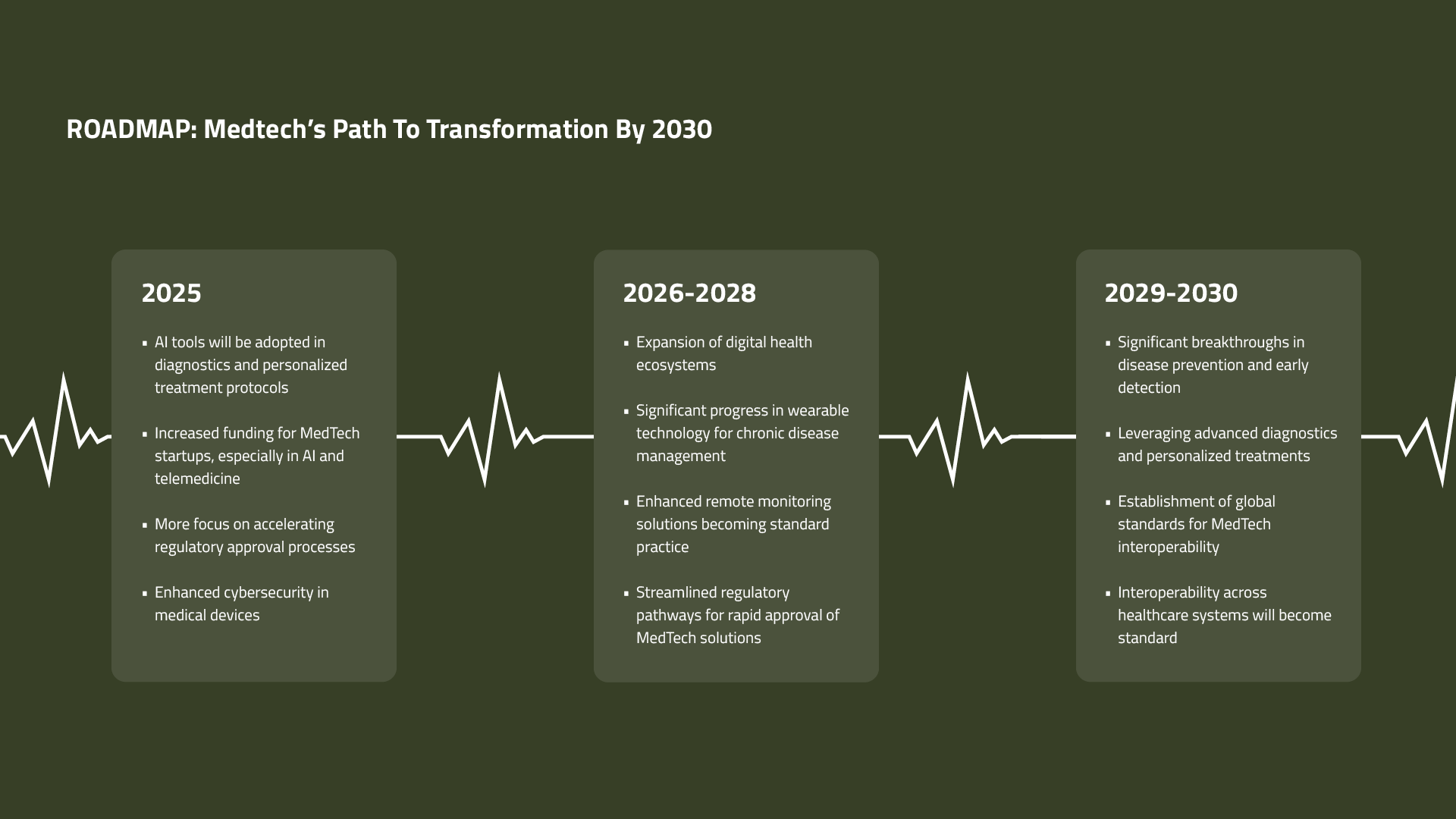
 

Discover in the Vision Paper:


   Why software has become the foundation of MedTech innovation

MedTech devices now face rising complexity, increased connectivity, and higher user expectations. As the paper explains, these shifts require a software foundation built for quality, maintainability, and architectural integrity so innovation does not introduce new safety or compliance risks.

  How to build resilient and future-proof software for modern MedTech systems

The paper emphasizes that medical software development must be able to withstand hardware changes, prevent software decay, and support continuous verification, ensuring that every update reinforces long-term stability.

  Why intuitive, human-centered UX is essential 

As MedTech moves into clinical, home-care, and diagnostic environments, intuitive UX reduces cognitive load, streamlines workflows, and improves access to critical information. The paper highlights how modern devices increasingly rely on adaptable, human-centered interfaces to support both professionals and patients.

  How escalating cyber risks are reshaping MedTech design and development

The paper details how frequent cyberattacks, device vulnerabilities, ransomware incidents, and emerging AI-driven threats are pushing MedTech toward secure-by-design engineering and early-stage cybersecurity involvement in every product decision.

 How MedTech leaders can turn regulatory pressure into an innovation advantage

Rather than slowing development, the paper shows how secure-by-design practices, resilient software architecture, and continuous verification enable MedTech teams to meet regulatory demands more efficiently—turning compliance from a development bottleneck into a competitive edge.


Qt-Vision Paper_Image 5

Explore Qt Group's Success Stories in Medical
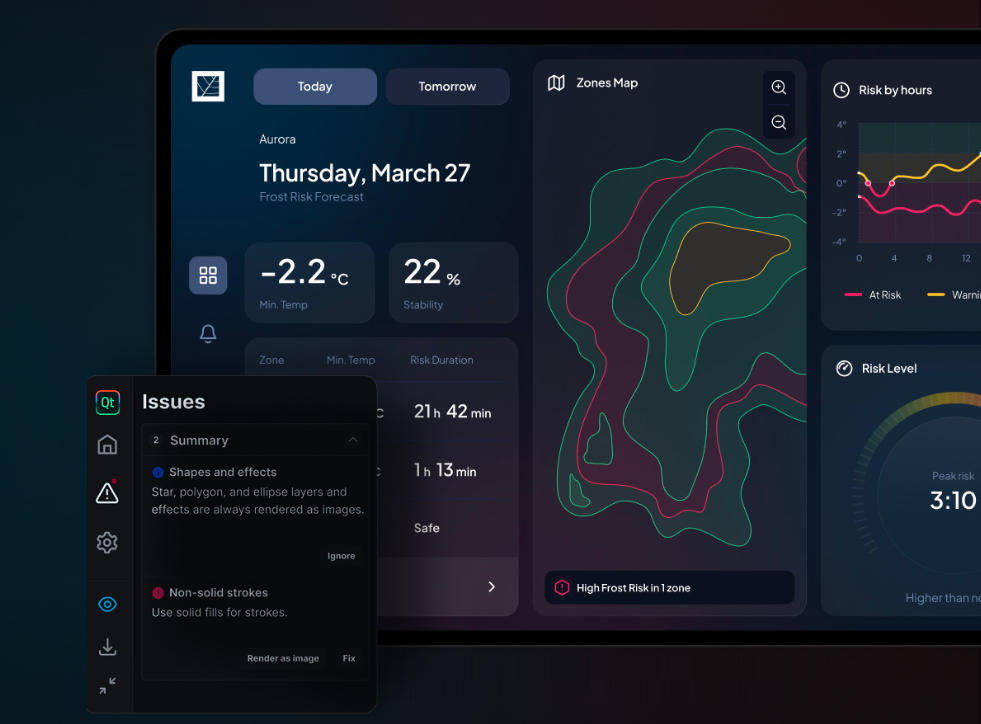
Oncosoft | Built with Qt

Oncosoft | Built with Qt

Oncosoft uses Qt to boost real-time 3D medical imaging and more than double development efficiency.

Read More
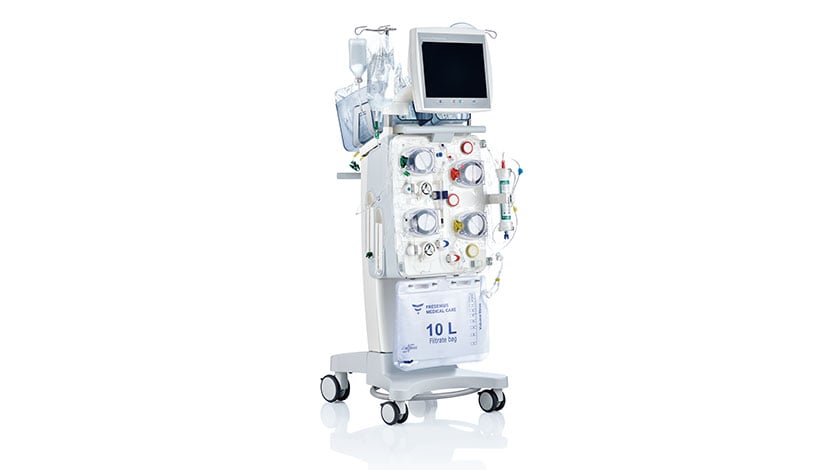
Success Story Fresenius Medical Care | Axivion

Success Story Fresenius Medical Care | Axivion

Software erosion protection for long-lasting software in the field of medical technology

Read More
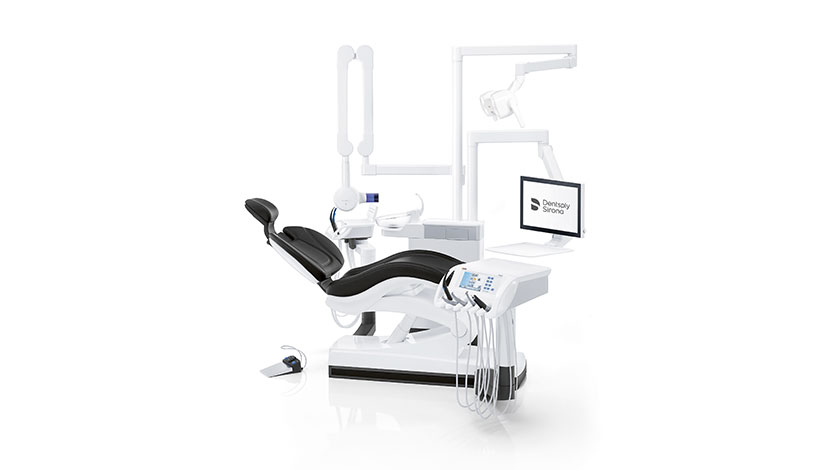
Success Story Dentsply Sirona | Axivion

Success Story Dentsply Sirona | Axivion

Rule-compliant code and uniform architecture for dentistry technology

Read More
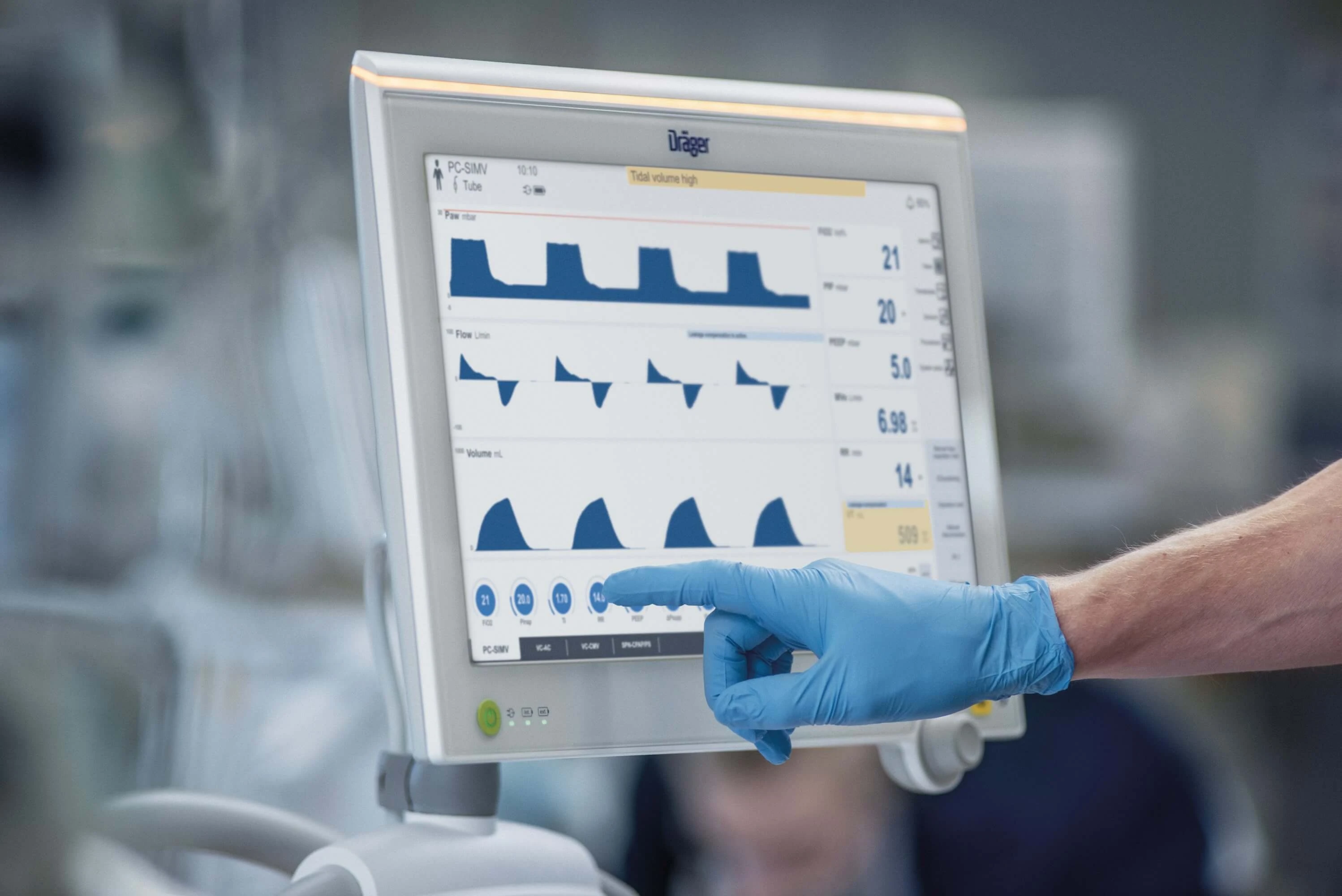
Dräger | Built with Qt

Dräger | Built with Qt

The Qt framework powers Dräger digital displays.

Read More
Fresenius Kabi | Built with Qt

Fresenius Kabi | Built with Qt

The Qt framework powers Fresenius Kabi digital displays.

Read More

Qt in Medical

Build safe, intuitive, scalable software for medical devices, lab equipment, and healthcare IT. Qt Group offers end-to-end solutions for medical UI design, early usability testing, and faster development with reusable components.


Visit Page

Medical Software Quality Solutions

Qt Group's Software Quality Solutions strengthen Architectural Integrity and Code-Level Integrity, enabling you to detect issues early, streamline documentation, and support secure updates throughout the product lifecycle.


Visit Page

Related Content on Medical UI Design and Medical Software Development


Acing MedTech with Regulatory Intelligence

How do forward-looking companies in healthcare technology navigate the evolving regulatory environment and accelerate innovative medical software development?

Read Article

Why MedTech Can No Longer Afford Poor UX/UI

Poor medical UI design can lead to serious risks in patient care. Intuitive UX design is thus no longer optional in medtech, also for its role in reducing costly errors and recalls.

Read Article

Uniting Usability, Safety, and Security in Medical Devices

Intuitive UX design is not just for ease of use, but for ensuring patient safety and device security. Medical software usability cannot be separated from safety and cybersecurity.

Read Article

Strengthening Healthcare Against Cyberattacks

The risk of cyberattacks is greater than ever in healthcare technology. We examine the strategies needed to safeguard patient data and maintain the integrity of life-saving systems.

Read Article

Enhancing Medical Device Software Quality - Part 1

In medical software development, software reliability and safety are crucial due to their role in patient care. Static Code Analysis and Architecture Verification are vital for ensuring dependable software.

Learn More

Enhancing Medical Device Software Quality - Part 2

Automated UI/UX testing, unit testing, and code coverage are vital in medical software development to ensure software reliability, safety, and compliance, preventing patient harm.

Learn More