
QGroundControl and Qt Open Source Licensing
QGroundControl (QGC) is the leading open-source ground control station software, governed by the Dronecode Foundation. It is dual-licensed under either Apache 2.0 (permissive) or GPL v3 (copyleft).
Largely built on Qt, QGroundControl inherits GPL conditions from Qt modules that open source users may use only under GPL, not the more permissive LGPL—among others Qt Graphs, Qt HTTP Server, and Qt Quick 3D.
As a strong copyleft license, GPL forces any product derived from the QGC codebase to inherit the GPL terms.
When developing software under GPL v3, two obligations follow:
The source code must be made available to everyone receiving the software.
The software cannot be locked to specific hardware.
The commercial Qt license lifts both these conditions.
NOTE: Using GPL software in commercial projects is possible, but the resulting product cannot be kept proprietary. To avoid legal and financial consequences, organizations should review their open source policy and verify compliance with GPL's obligations through internal legal review.
.jpg?width=1080&height=1080&name=scan-1080-web%20(2).jpg)
Commercial Use of QGroundControl
GPL v3 is a legitimate choice for developing code under the principles of free software, where the resulting source code is shared with the community.
IMPORTANT: Commercial licenses are required for building proprietary applications whose source code is not intended to be disclosed.
There are two permissible combinations of QGC and Qt.
| Open-source path | Commercial path | |
|---|---|---|
| QGroundControl | GPL v3 | Apache 2.0 |
| Qt Framework | Open source (GPL v3) | Commercial Qt |
| Best for | Community, research | Products, contractors |
| Core obligation | Full copyleft | Commercial terms |
| Proprietary code | To be published | Proprietary |
| Hardware lockdown | Not permitted | Permitted |
The Added Value of Commercial Qt
Defense and dual-use programs run for years under strict certification and security regimes. Commercial Qt licensing is built for that:
-
Certifiability — Qt Safe Renderer and DO-330-qualified tooling for Software Quality Assurance.
-
Standards and interoperability — FACE® conformance for the Modular Open Systems Approach (MOSA).
-
Security and compliance — Software Bill of Materials, offline installers for air-gapped networks, and Cyber Resilience Act readiness.
-
Long lifecycles — Long-Term Support (LTS) releases, security patches, and broad hardware and Real-Time Operating System (RTOS) support.
-
Expert help — Qt Professional Services for the fastest time to market, advanced use cases, and customization.
-
Room to expand — full C4ISR applications and robotics integration through the Qt Robotics Framework.
Qt and QGroundControl
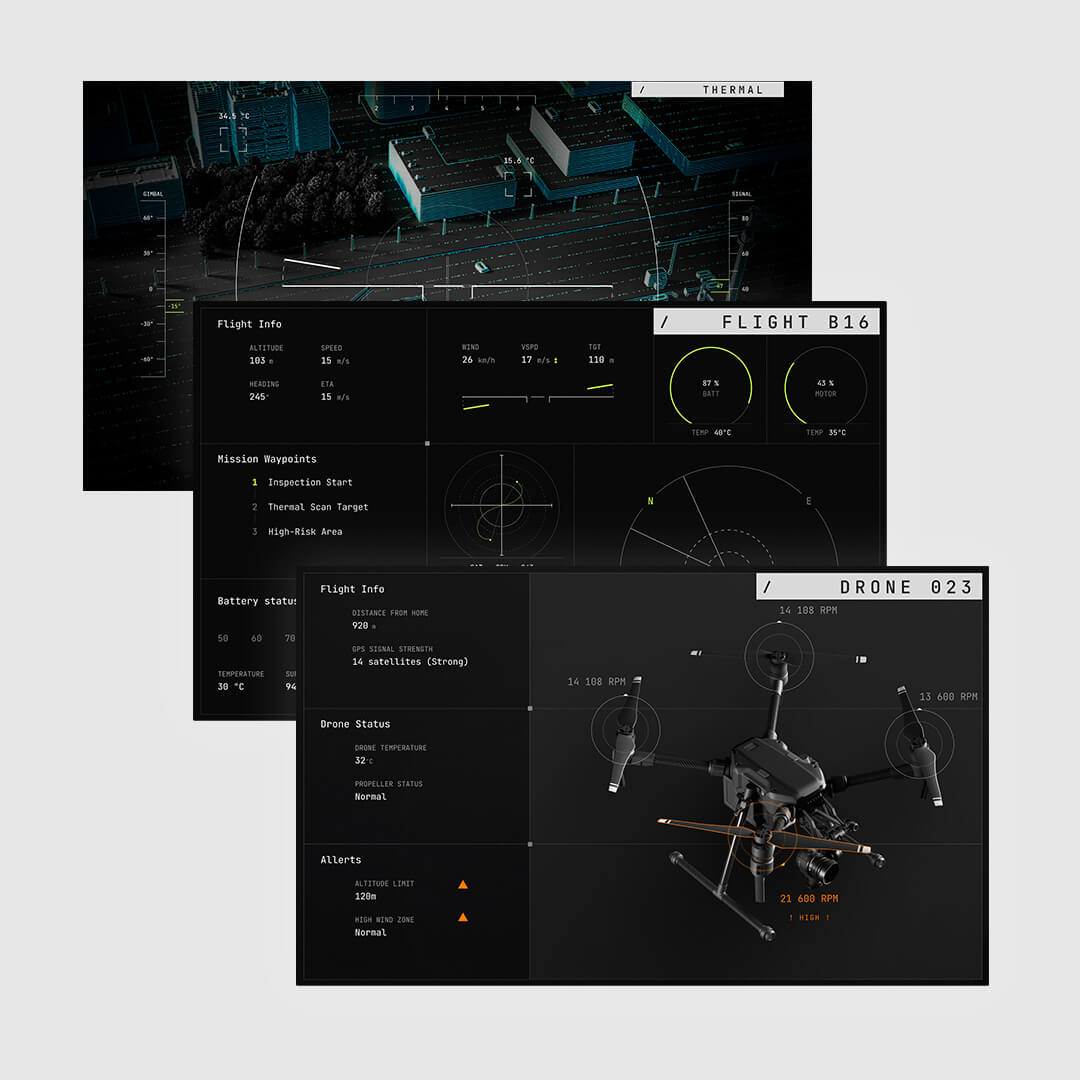
QGroundControl is based on the MAVLink protocol, supports the PX4 and ArduPilot autopilots. By building on Qt as its core cross-platform framework, it inherits the ability to run on all major desktop, mobile, and embedded platforms.
Qt Framework's modules playing a foundational role in QGC and drone technology include:
| QML | All flight instruments, maps, camera feeds, and settings dialogs. |
| Qt Network / Serial | TCP/UDP MAVLink links, serial connections, USB, Bluetooth via Qt network abstraction. |
| Qt Location | Mission planning maps, geofence overlays, and vehicle position tracking. |
| Qt Multimedia | GStreamer integration for live video feeds from drone cameras. |
| Qt Quick 3D | Hardware-accelerated 3D scene for the terrain / building viewer and 3D flight visualisation. |
| Qt Settings / Logging | For configuration persistence and diagnostics. |
| Qt TLS / OpenSSL | Encrypted ground-to-drone and cloud communications. |
Customer Stories
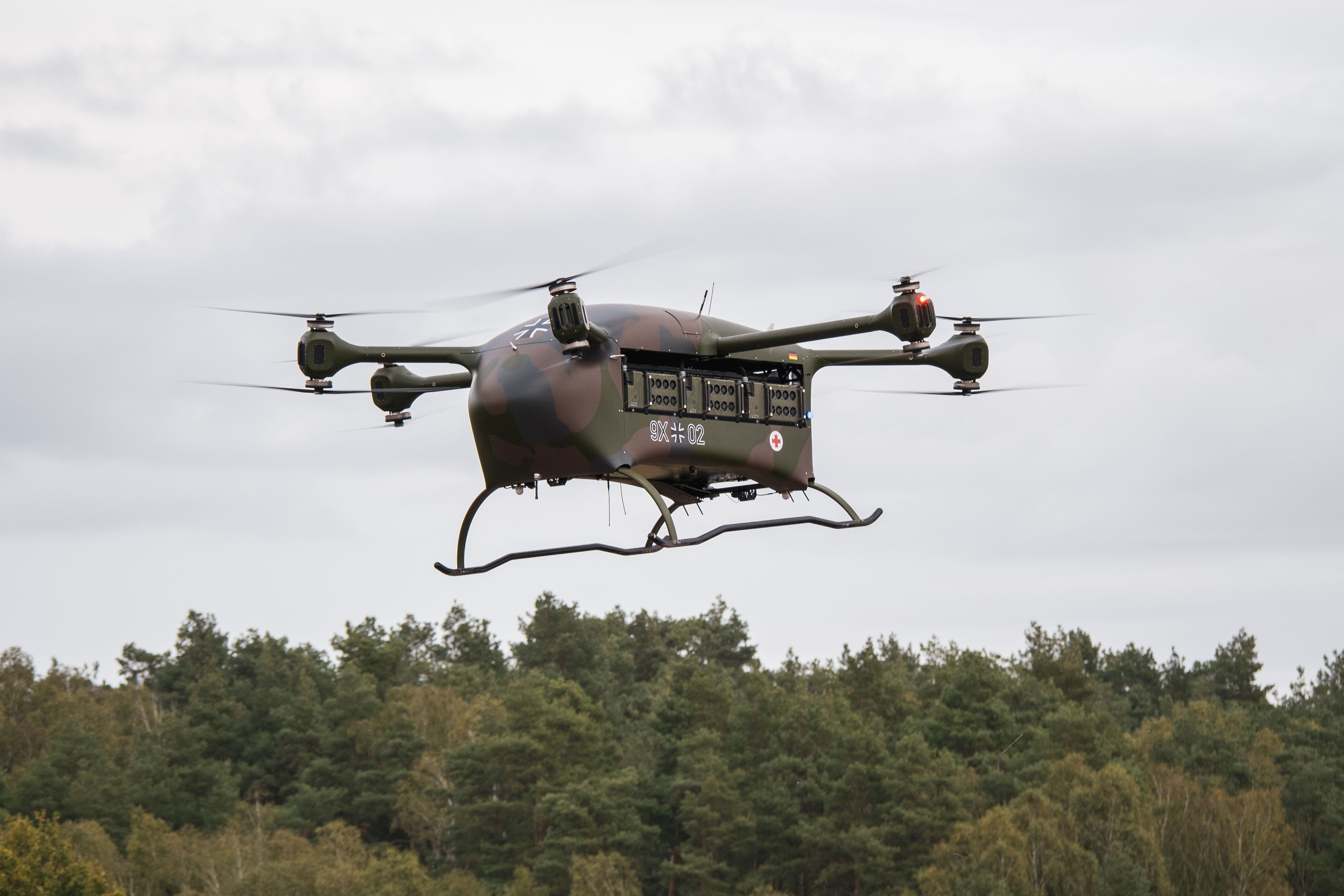
QML enables rapid HMI development and produces compact code that serves as verification documentation.
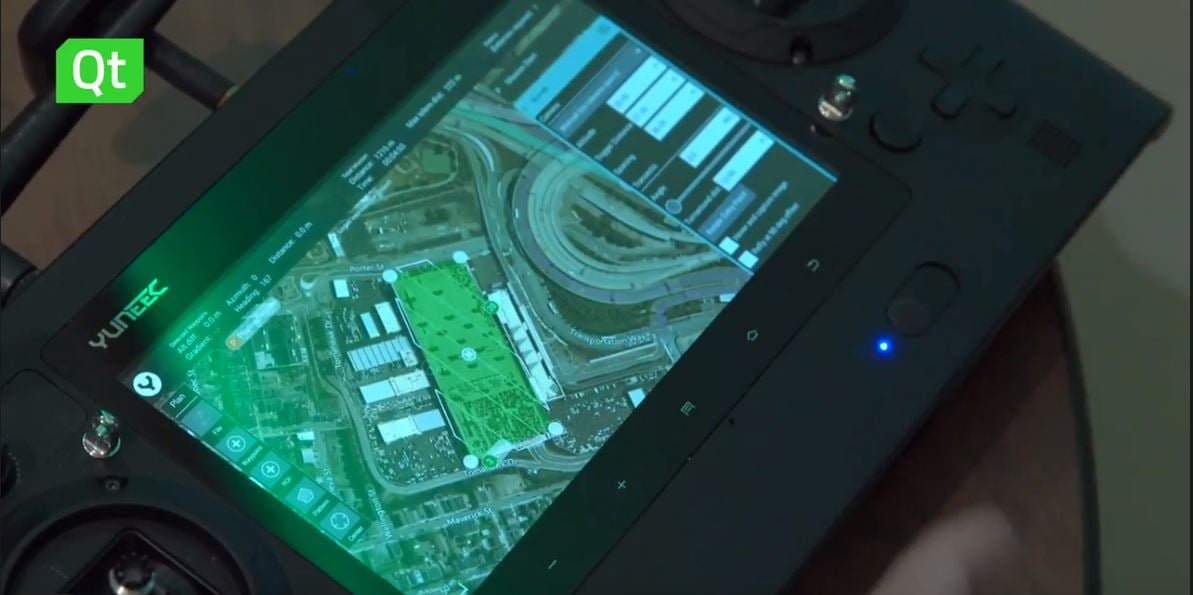
Yuneec uses Qt for their ground control stations, maintaining a lean codebase with a small team, ensuring a unified user experience across platforms, and exploring 3D mission planning enhancements.
.webp)
NXP's drone program accelerated development using Qt, enabling quick updates, new tech integration, and timely market entry, crucial to its success.

The global market leader in geographic information system (GIS) software, location intelligence, and mapping use Qt.