Published On
Nov 5, 2025
Read Time
5 mins

Every QA lead knows the feeling:
A release is finally ready, the team signs off, and within hours of launch, the bug reports start rolling in. Some are small annoyances. Others bring production to a halt. Suddenly, the excitement of shipping turns into another round of late-night fixes.
That’s when it hits you: manual testing alone isn’t enough anymore, as modern software moves too quickly, with too many dependencies and platforms to cover.
That is when ons usually realise that test automation is a necessity.
Still, adding automation to your testing process isn’t just about buying a tool or writing a few scripts. Building sustainable, modern QA automation takes clear strategy, strong structure, and a shared mindset across the team.
Why Many Test Automation Projects Struggle
Most test automation efforts stumble early, often because teams rush into tool selection without sufficient groundwork. Teams start automating without first defining clear goals, assessing skills, or aligning stakeholders. The result is often a fragile collection of tests that no one trusts.
Sustainable automation begins with understanding your objectives and constraints. When everyone involved knows what “success” looks like, from QA to DevOps to product management, your automation strategy becomes much stronger.
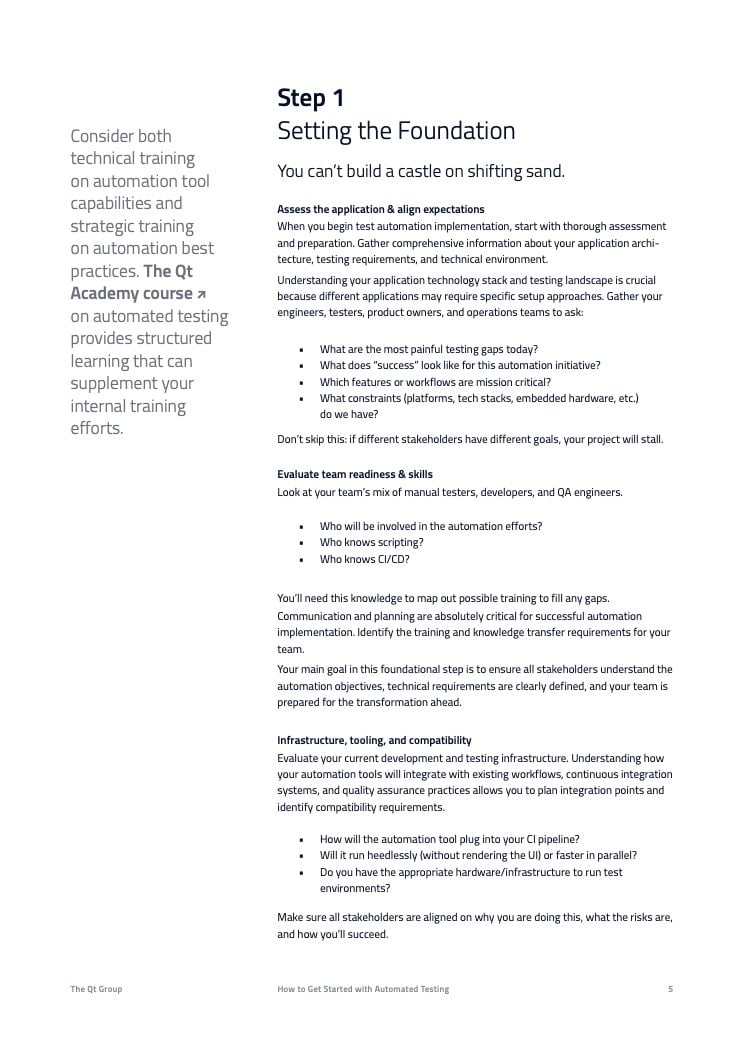
Step 1: Lay the Groundwork for Automation Success
Before you choose any testing tools or frameworks, take stock of where you are.
Ask these essential questions:
-
What testing gaps cause the most risk today?
-
What does success look like to your stakeholders?
-
Which areas of the application are critical for user experience or business logic?
-
Who will maintain your test automation framework over time?
- Who knows scripting?
- Who understands CI/CD?
- What kind of infrastructure can you run automated tests on?
This step might not involve a single line of code, but it sets the foundation for every successful test automation project.
Step 2: Choose the Right Test Automation Tool
The right test automation tool depends on your application stack and delivery process.
Rather than defaulting to the most popular solution, consider how well a tool integrates with your existing ecosystem, whether that’s desktop, web, mobile, or embedded systems.
The general recommendation is to start experimenting with trial licenses or free evaluations before committing. Testing real workflows helps you find a solution that fits your CI/CD pipelines, handles your UI frameworks, and scales with your growth.
Once the tool is in place, validate it with simple smoke tests like app launch or login. The goal here is to confirm compatibility and confidence, not coverage.
Step 3: Start Small and Build Momentum
Instead of trying to automate everything at once, begin with a few meaningful workflows.
Prioritize test cases that are repetitive, high-risk, or time-consuming, the kind that deliver quick wins and build trust in automation.
As you grow, invest in creating a structured test automation framework. Define naming conventions, reusable components, and clear reporting. These early architecture decisions make it far easier to scale without losing control.
Step 4: Expand Automation with Intention
Scaling automation is not about quantity; it’s about value.
As you expand your automated testing coverage, focus on the tests that deliver the greatest return:
-
Regression suites that run daily or nightly
-
Complex UI interactions that are hard to execute manually
-
Repetitive validation steps where human error is common
At this stage, integrate your tests into CI/CD workflows so they run continuously. Define how test results are reported and how failures are triaged. A fast, stable, and visible test pipeline is the backbone of reliable delivery.
Step 5: Measure, Improve, and Evolve
A mature test automation strategy never stands still. Measuring impact keeps it aligned with business outcomes.
Track both quantitative and qualitative metrics, such as:
-
Execution time and coverage growth
-
Defects caught earlier in the cycle
-
Reduction in manual testing hours
-
Team confidence and adoption rates
Use these insights to refine your framework, eliminate redundant tests, and ensure that automation remains an asset rather than a maintenance burden.
Turning Test Automation Into a Lasting Advantage
Moving from manual to automated testing doesn’t mean replacing people with scripts. It means giving teams more confidence, faster feedback, and time to focus on complex, creative testing work.
By following a structured roadmap, from foundation to measurement, you can transform automation from an experiment into a core part of your development DNA.
The handbook "How to Get Started with Automated Testing" breaks this process down step-by-step with framework design tips and tool integration best practices.



Download the Full Handbook
If you’re planning your test automation journey, this guide will help you start strong and scale wisely.
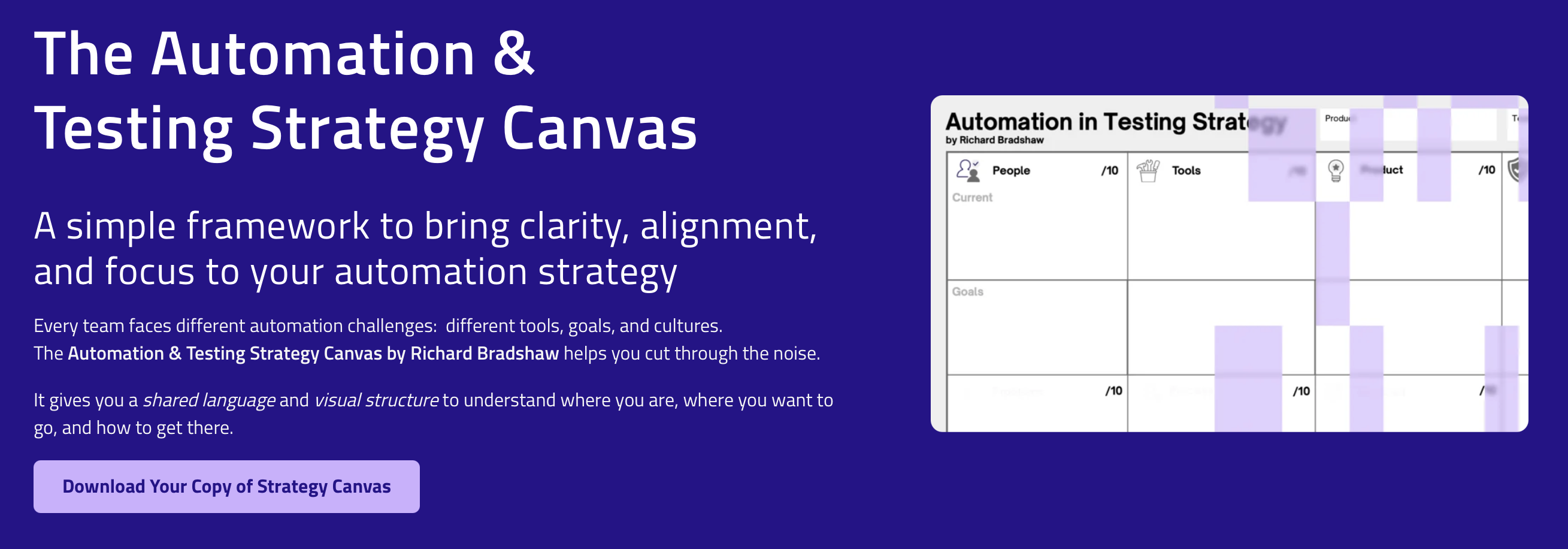
Next Step: The Automation & Testing Strategy Canvas
Once you’ve explored the whitepaper, the next step is turning insight into action.
That’s where the Automation & Testing Strategy Canvas by Richard Bradshaw comes in.
This simple visual framework helps your team bring clarity, alignment, and focus to your automation approach. Every team has different tools, goals, constraints, and cultures, and that can easily create confusion or misalignment.
The canvas, created by Richard, helps you cut through that noise.
It gives you a shared language and a structured way to think, so you can clearly define:
-
Where you are today
-
Where you want to be
-
And the path to get there
Use it in team discussions, planning sessions, roadmap conversations, or retros to make your automation strategy visible, intentional, and collaborative.