What Is the Difference Between Edge AI and Physical AI?
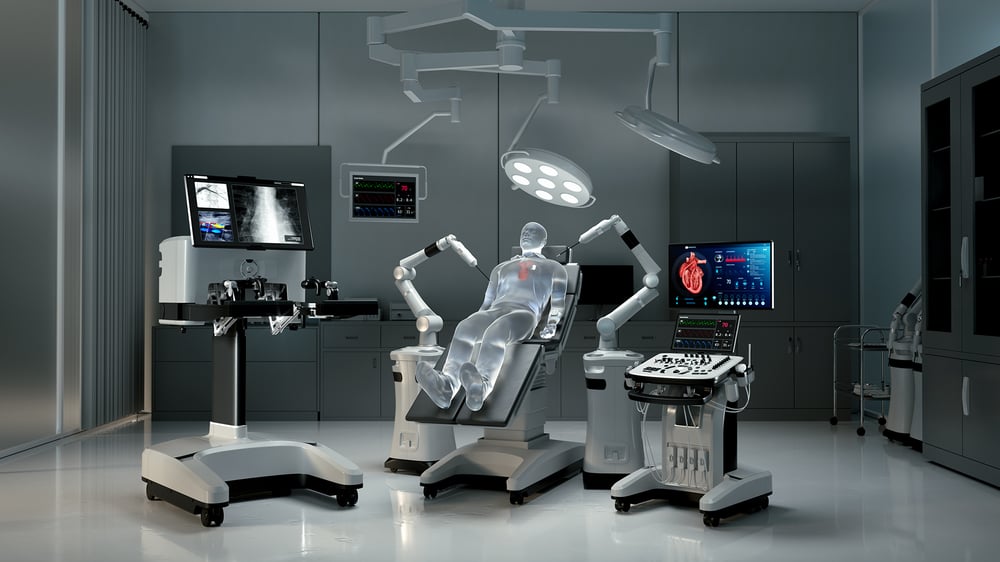
Edge AI runs inference on constrained hardware and outputs information — a classification, a prediction, a score. Physical AI takes that same inference output and uses it to act: driving a motor, a valve, a brake, or a surgical instrument.
The model can be identical in both cases. The firmware underneath it is not in the same risk category.
For embedded development teams building products for automotive, medical, or industrial markets, this distinction is the difference between a system that needs to work well and a system that needs to be certifiable. Once inference output drives a physical action, the software stack beneath the model becomes a safety artifact governed by existing frameworks: IEC 61508, ISO 26262 and IEC 62304.
Physical AI doesn't sit above these standards. It sits inside them.
Why This Matters Now for Embedded Development Leaders
Most physical AI systems today are being built at the intersection of two engineering cultures that historically haven't spoken the same language:
- Machine learning teams optimize for model accuracy, training pipelines, and inference latency.
- Embedded safety teams think in ASIL levels, tool qualification, static analysis, and deterministic execution.
Both groups are competent in their own domain. The risk is in the overlap — specifically, in the host firmware that initializes the system, manages memory, handles interrupts, calls the inference engine, and routes its output to the actuator. That code is written in C or C++, and it carries every obligation any other safety-critical firmware carries: MISRA compliance, static analysis, runtime verification, and traceable testing.
For engineering leaders and program managers responsible for physical AI product development, the practical question is: who owns the firmware layer, and is it being developed under the same rigor as the rest of the safety-critical codebase — or is it being treated as glue code around the model?
The Certification Question Teams Miss at the Prototype Stage
At the demo stage, physical AI systems get evaluated on capability:
- Can the robotic arm avoid the obstacle?
- Does the predictive maintenance model catch the anomaly?
- Can the prosthetic controller respond in under 10 milliseconds?
These are valid prototype questions. They are not the questions that determine whether a product can ship in a regulated market.
The question that actually gates certification is:
Can you demonstrate that the software was produced under a controlled, documented process — using a qualified toolchain, analyzed against defined coding standards, and tested with traceable coverage?
Engineering teams that defer this question until after the model is proven routinely discover it invalidates earlier decisions: toolchain choices, untested execution paths in the inference wrapper, and analysis gaps that only surface during audit. The cost of finding this out scales directly with how late in the project it's discovered — which makes it a project-planning risk, not just an engineering one.
What Changes in the Embedded Development Workflow
Adapting an embedded workflow for physical AI doesn't mean discarding existing safety practices. It means extending them into every part of the system the AI model touches.
1. Treat host firmware as safety-critical from day one
Static analysis — MISRA C/C++, CERT C/C++, CWE — should run inline with every commit, not as a downstream audit step.
2. Add runtime verification, not just static analysis
Static analysis can't catch memory access violations during model execution, stack overflow under peak inference load, or undefined behaviour in the control path between inference output and actuator command. Runtime testing during development can.
3. Test the paths developers naturally skip
Code coverage needs to demonstrate that error-handling branches are actually exercised — the paths developers underweight because they assume the model won't produce a pathological output. Models occasionally do.
4. Plan for toolchain stability across the full device lifecycle
A physical AI product shipping today may still be operating on a factory floor in ten yeras. Every patch and safety update issued over that span needs to trace back to the same qualified toolchain configuration as the original certified release. This makes toolchain longevity a product lifecycle decision, not a procurement afterthought.
Why CI/CD Becomes Safety Infrastructure, Not a DevOps Convenience
As physical AI architectures grow more complex across product generations, consistency becomes the harder engineering problem — harder than getting any single build right.
This is where CI/CD shifts from convenience to requirement. When every commit triggers a build, static analysis, a full test run, and generates structured compliance artifacts automatically, the quality regime is enforced by the pipeline rather than by individual developer discipline. Evidence accumulates from the first commit — it doesn't need to be reconstructed before an audit.
Containerized build environments add a further layer of assurance relevant specifically to physical AI:
- The toolchain, compiler configuration, and analysis tools are packaged into a versioned container image.
- Every pipeline run — developer workstation, cloud runner, on-prem CI server — executes identically.
- When a regulator asks which tool version produced a given binary, under which configuration, the answer lives in the container image, not in someone's memory.
This also solves a practical multi-platform problem: coordinating firmware across processor architectures. A single containerized pipeline spanning Arm Cortex-M and RISC-V — including MCU families such as Renesas RA, RX, RZ, RH850, RL78, and RZ/Five — keeps the compliance posture consistent even as the underlying silicon varies.
What Embedded Teams in Regulated Markets Need in Their Toolchain
For teams evaluating how to build this into their workflow rather than bolt it on later, the toolchain layer needs to cover:
- A certified toolchain (e.g., TÜV SÜD-certified, qualified to IEC 61508, ISO 26262, and IEC 62304) — removing the need to self-validate tool behaviour during audits.
- Headless build tools that integrate with standard CI platforms (GitHub Actions, GitLab CI, Jenkins), so the CI build matches the developer's local build exactly.
- Static analysis embedded in the build step — enforcing MISRA C/C++, CERT C/C++, and CWE standards, flagging violations at commit time.
- Runtime analysis during test execution — catching dynamic defects (memory violations, stack pressure, undefined behaviour in the actuation path) that static analysis alone can't reach.
- Long-term support versions — so a patch issued in year six of a device's life can be traced back to the same qualified toolchain configuration as the original release.
The IAR platform is built to address these requirements directly, giving embedded teams a certified toolchain, integrated static and runtime analysis (C-STAT and C-RUN), and CI-native build tools designed for exactly this workflow.
Summary: The Line That Matters
Edge AI and physical AI share infrastructure. They don't share risk profiles. The embedded teams that will clear certification review are the ones treating firmware as a safety artifact from the first commit — not the ones optimizing the model and hoping the firmware catches up.