Published On
Aug 12, 2025
Read Time
3 mins
Interview series with subject matter experts from Qt Quality Assurance.
In this interview, we have asked Dr. Daniel Simon, Distinguished Software Engineer at Qt Quality Assurance, about static and dynamic code analysis. We are pleased to pass on Daniel's valued opinion and knowledge:
Fundamental Differences Between Static and Dynamic Code Analysis
Daniel, could you please explain the fundamental differences between static and dynamic code analysis for someone new to the field?
Dr. Daniel Simon:
Static code analysis inspects source code without executing it. It analyzes code structure, syntax, and logic to detect bugs, security vulnerabilities, and maintainability issues early in the software development cycle.
Dynamic code analysis, on the other hand, runs the application and monitors its behavior during execution. This helps to identify runtime issues like memory leaks, crashes, or unexpected behavior that might not be visible from static inspection alone.
A mini video explanation can be found 👉 here.
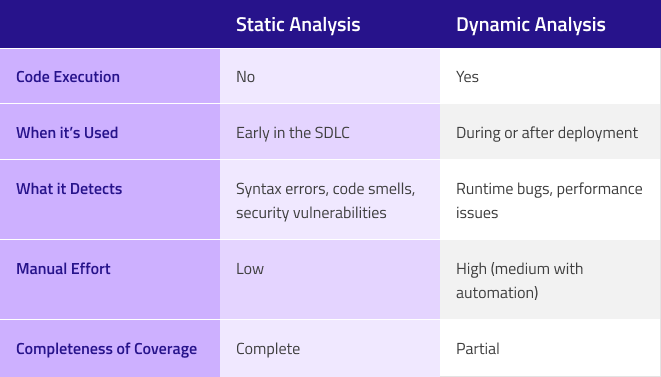
The key differences: Static vs. Dynamic Analysis
Advantages of Static Analysis over Dynamic Analysis
In what scenarios is static code analysis more advantageous than dynamic code analysis?
Static and dynamic analysis complement each other, so in development - you should do both. Static code analysis tools shine in the early stages of development, offering the following benefits:
- Early Bug Detection: Catch issues before code is compiled or executed.
- Vulnerability Scans: Identify SQL injections, XSS, buffer overflows etc. before they become a threat for your software´s security.
- Shift Left Testing: Integrate into CI/CD pipelines to detect issues continuously.
All in all, static code analysis is ideal for teams seeking to build secure, clean, and maintainable code from the start.
Misconceptions about Static Analysis Tools
Are there any misconceptions about the limitations or capabilities of static analysis tools?
Common Misconceptions About Static Analysis Tools are:
- "It replaces dynamic testing" – This is not true. Static analysis complements but doesn’t replace runtime checks.
- "It only finds basic syntax issues" – Modern tools detect deep security vulnerabilities, data flow issues, and architectural flaws to make sure the tool integrates architecture checking.
- "Too many false positives" – While this was once true, today’s tools use advanced heuristics and machine learning to reduce noise.
The reality: Static code analysis is a powerful early-warning system, especially when properly configured and integrated into the dev workflow.
How to Combine Static and Dynamic Analysis?
How can organizations effectively combine static and dynamic analysis in their workflows?
The most successful software teams use both techniques together for full-spectrum code quality:
- Start with Static Analysis in your IDE or CI pipeline to prevent bad code from progressing.
- Use Dynamic Analysis during QA and staging to find runtime-specific issues.
- Automate Both in your DevSecOps toolchain for continuous monitoring and feedback.
- Prioritize Findings Together: Merge results into a unified dashboard for visibility across the dev lifecycle.
Expert Recommendation
Daniel´s recommendation: Use static analysis to enforce coding standards, and dynamic analysis to validate runtime behavior – this creates a safety net from development to production.
Meet the Expert: Dr. Daniel Simon
Dr. Daniel Simon studied computer science at the Saarland University and University of Stuttgart in Germany. After several roles in consulting of different businesses in quality management, he took over responsibility for Axivion's Professional Services.
Following the acquisition of Axivion by the Qt Group, Daniel now supports customers of Qt Quality Assurance with the best possible integration and application of the products Axivion Static Code Analysis and Axivion Architecture Verification.
Got Questions?
Would you like to improve your code quality? Explore how Axivion can help. Contact us anytime and take our interactive tour here.